Concrete Pressure Cleaning — Hotham Street, St Kilda East
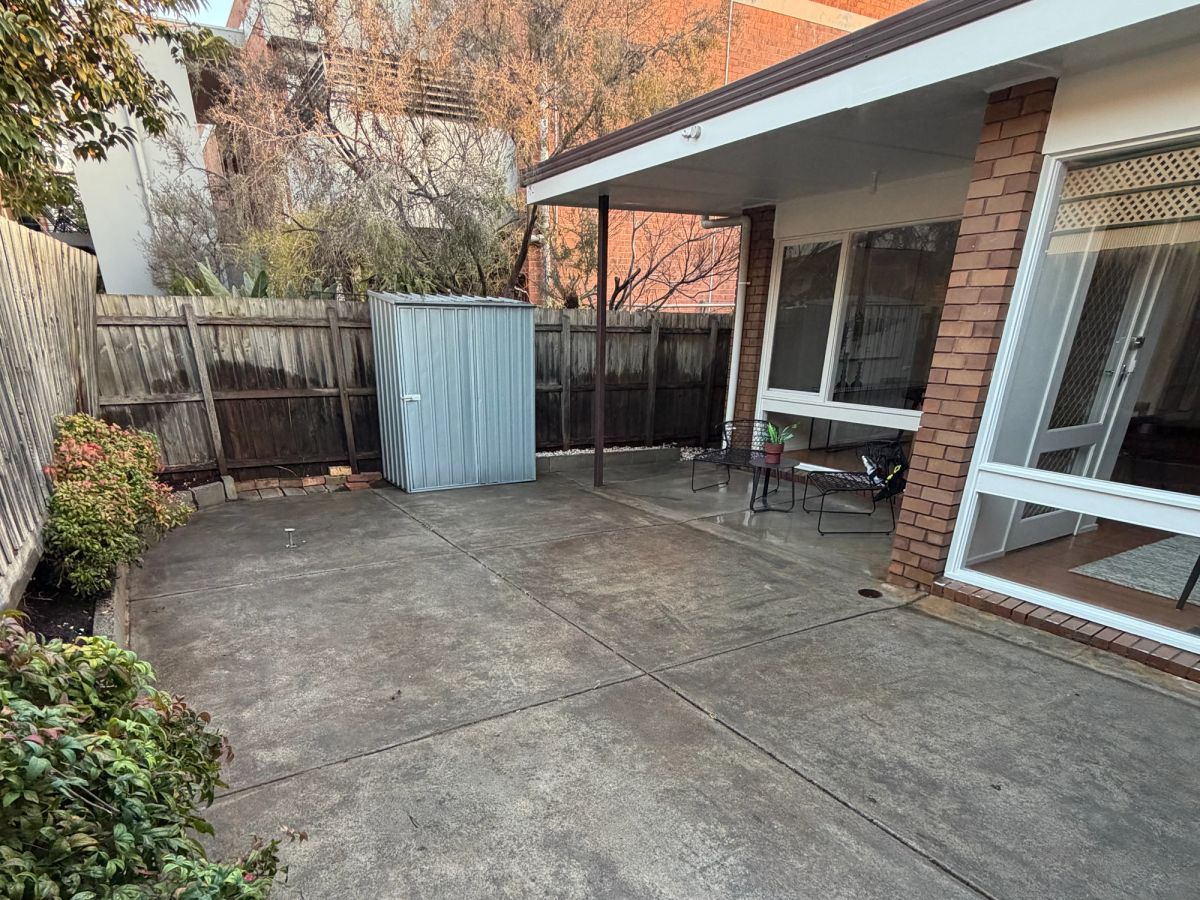
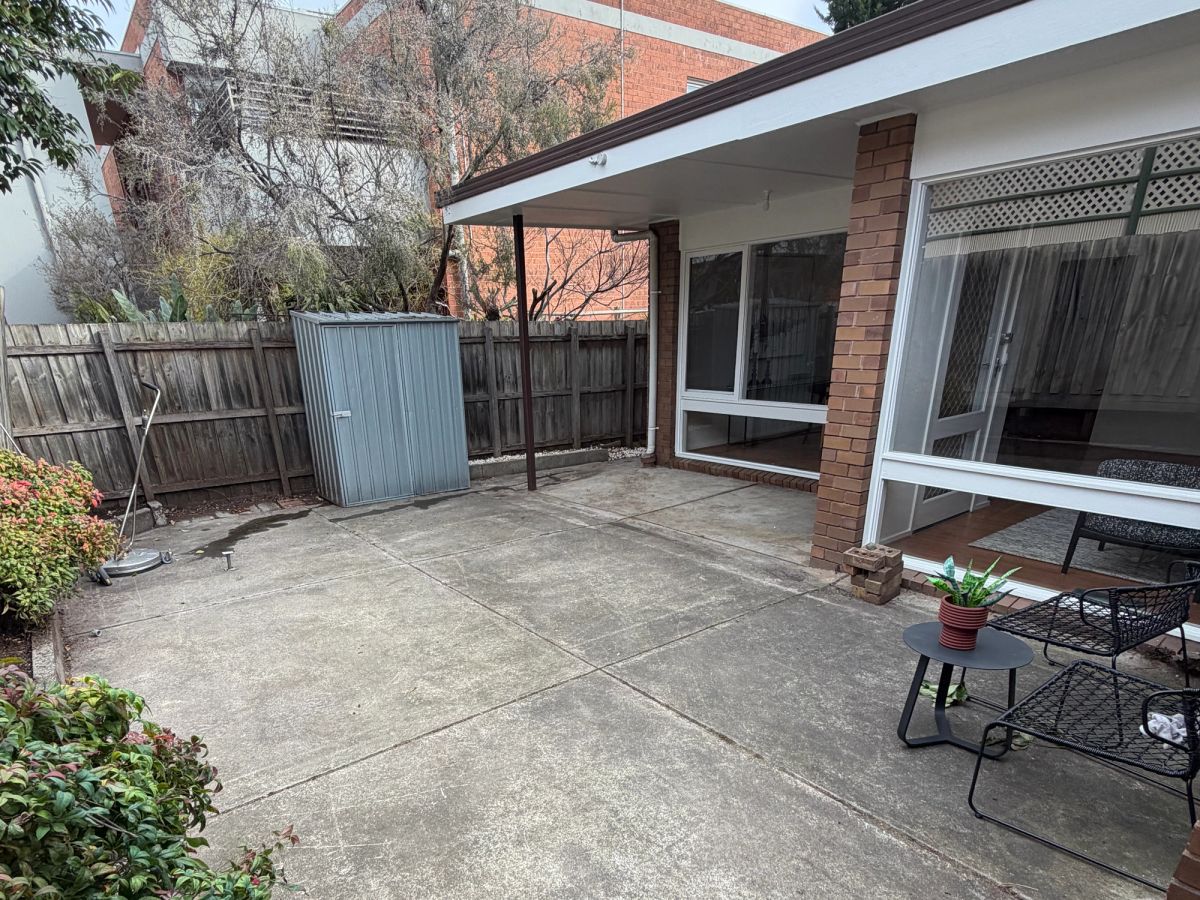
Concrete cleaned on Hotham Street, St Kilda East, in the first week of July. Mid-winter is when concrete looks worst here: it never gets a chance to dry out. The dark film on old concrete is usually not dirt. It is algae and lichen living in the surface, which is why hosing it changes nothing.
- Location
- St Kilda East 3183
- Completed
- 7 July 2026
- Crew
- 1 tech
The problem
Concrete is far more porous than tile, and everything that lands on it soaks in rather than sitting on top. That is why a light wash makes it look clean while wet and no different once it dries — the water darkened the surface, it did not remove anything. Growth rooted into the pores comes back from what is left behind.
What we did
The surface was worked with a rotary cleaner rather than an open wand. An open wand at close range strips concrete in stripes: every overlap between passes leaves a line, and those lines do not fade. A rotary head holds distance and angle constant, so the finish comes out even. Pressure stayed off the limit too, because too much takes the cement paste off and leaves the aggregate proud.
- Surface cleaned with a rotary head, not an open wand
- Pressure kept below the point that exposes aggregate
- Growth treated in the pores, not just rinsed
- Edges and joints worked separately
- Run-off directed away from garden beds
- Before and after photographs supplied
Result
- Even finish across the slab, no striping
- Cement paste intact, aggregate not exposed
- Algae and lichen removed, not just darkened over
- Shaded sections back to the same tone as the rest
Nearby case studies
More projects in St Kilda East
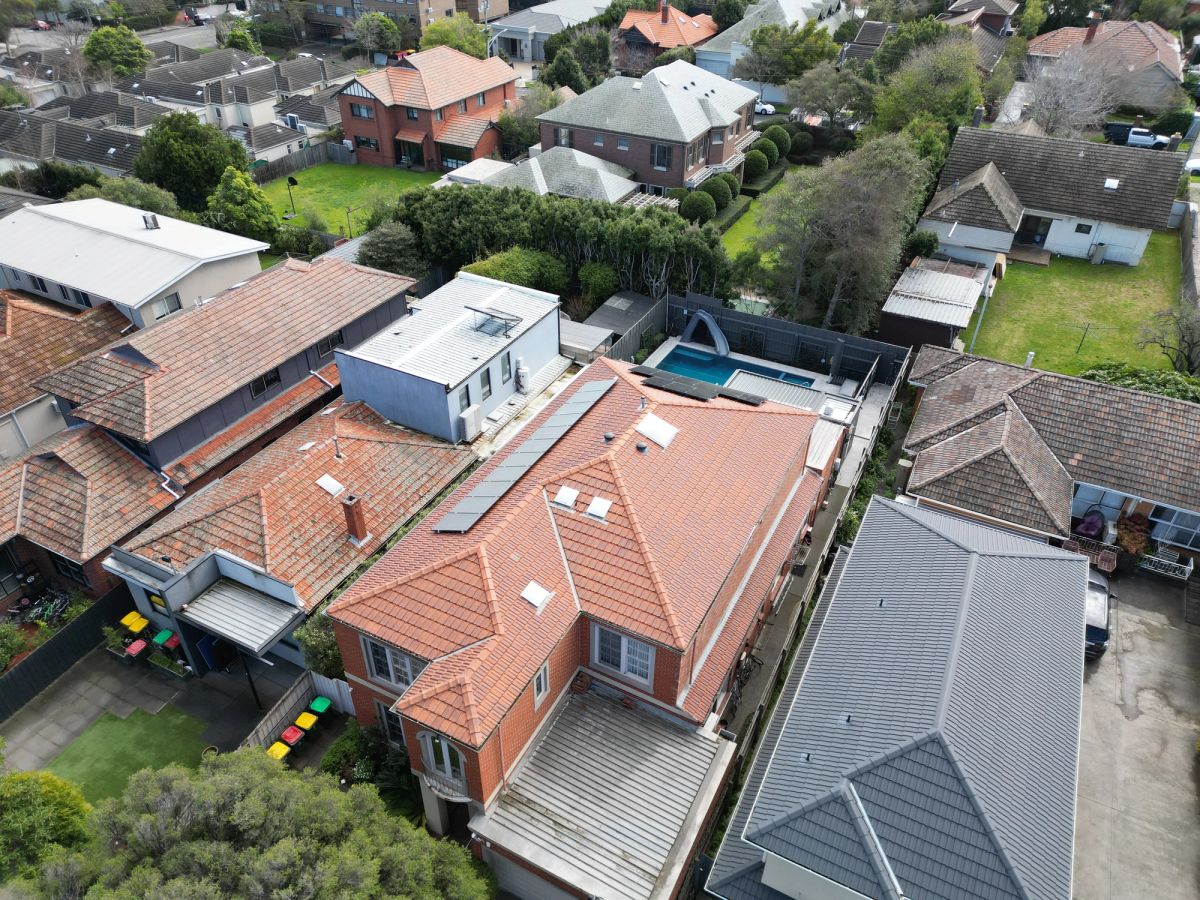
Two hundred square metres of roof on Rockbrook Road, carrying enough moss to change its colour from the street.
Read case study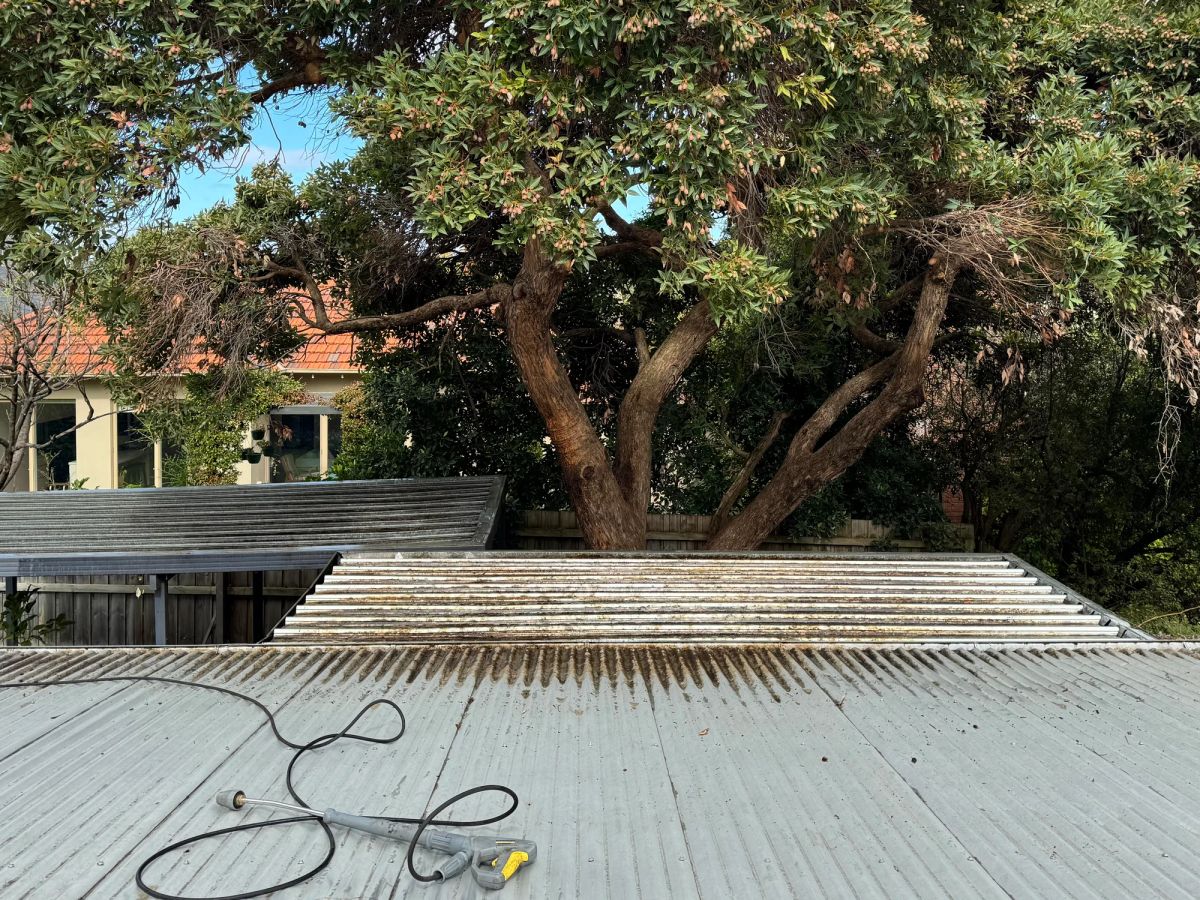
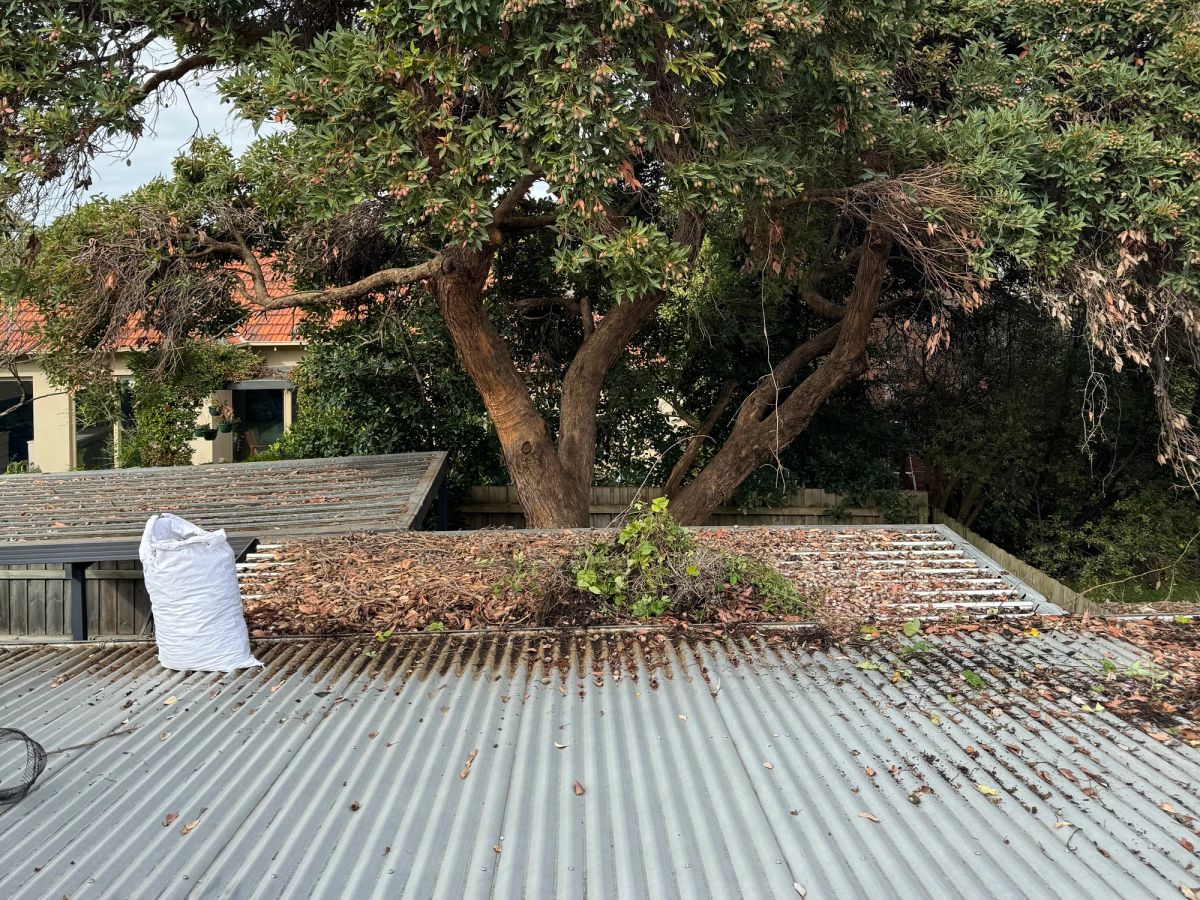
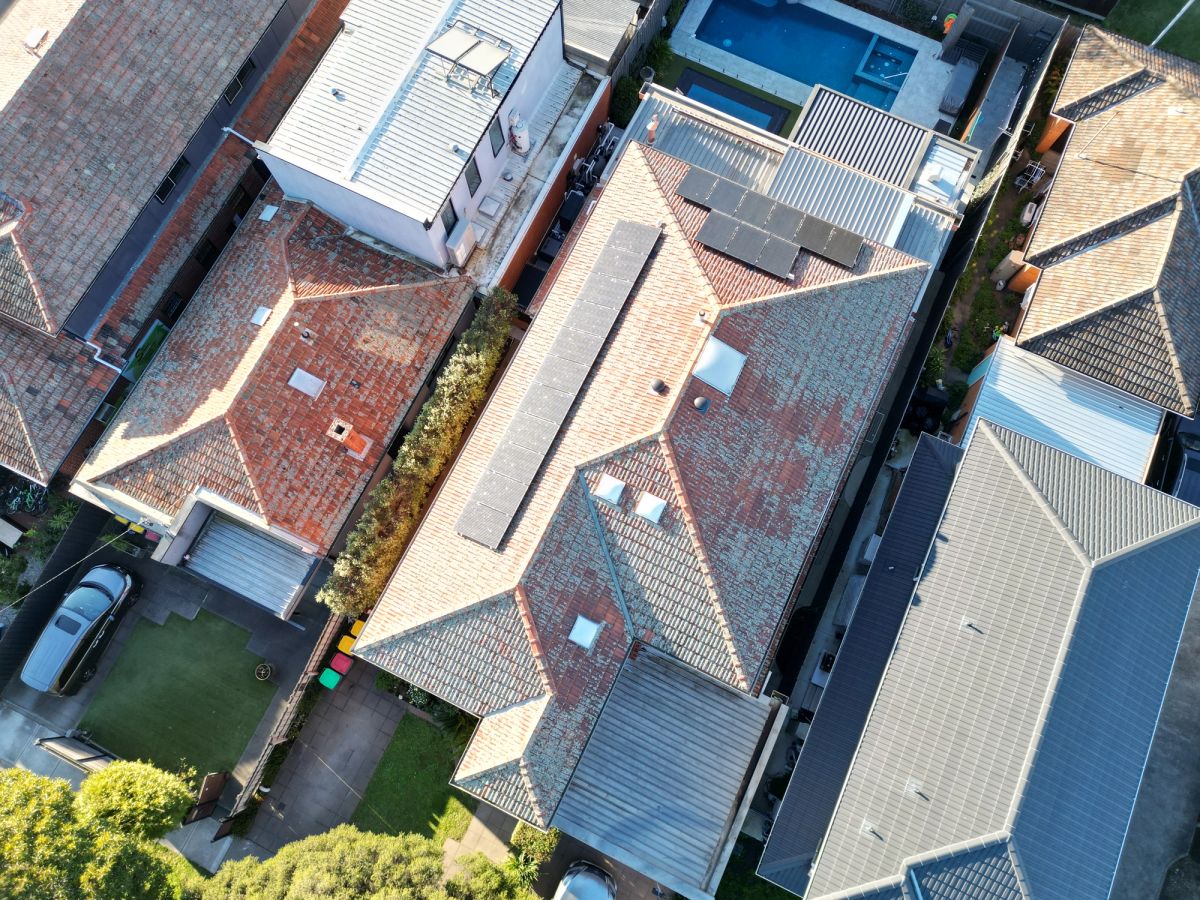
A roof in St Kilda East under large trees, cleared in April 2024. More than ten bags of leaf litter came off it — years of accumulation nobody had taken away.
Read case study