Exterior Cleaning in Canterbury
Old tile roofs under a heavy canopy, so the gutters fill with what the roof grows rather than what the trees drop. Insured crew, photos on every job.
- $20M public liability insurance
- Police-checked, WorkSafe compliant
- 5.0 from 170 Google reviews
- Not happy with the work? You don't pay

Canterbury sits under trees, and that is measurable rather than impressionistic. Boroondara reported 25.7 per cent canopy cover across the municipality in 2022, against 17.17 per cent in Port Phillip down on the bay. Half again as much shade, sitting over housing that mostly predates any thought of managing it.
The suburb exists because of the railway. The line reached here in 1882 and turned a semi-rural area into streets, and the Maling Road precinct that grew outward from the station is Victorian, Federation and interwar almost throughout. That vintage is why so many of these roofs are terracotta.
Put an old porous tile roof under permanent shade and you have described the local problem in one sentence. Most of what we do here follows from it.

What the canopy does to a roof it never leaves
From above the pattern is unmistakable. Roofs in every direction, nearly all of them tiled, and between them a canopy old enough and dense enough that a good part of each roof never sees direct sun.
Shade is not a cosmetic problem. A tiled roof under trees stays damp for days after the rest of the street has dried, and damp is the only thing moss and lichen actually need. The north face comes good and the south face does not.
The tiles are a mixed set here. Terracotta on the older houses, concrete on the ones built later, slate on a few, and they do not behave the same way: terracotta is porous and brittle, concrete goes porous once its surface coating wears off. What they share is that neither dries quickly under a tree.
Monomeath Avenue is the clearest case. It was paved in 1911 and planted with oaks that are now a century old, and oaks are deciduous: they drop the lot at once. On a street like that it lands on roofs rather than in gardens, and from there it ends up in a gutter that was sized for rainfall.

A roof under moss, and what it puts in the gutter
This is what an untouched roof looks like after enough winters under a canopy. Moss across the field of the tiles, lichen in the laps, and a surface holding water rather than shedding it.
The part owners do not expect is what it does to the gutters. Moss sheds constantly, and what it sheds is fine: not leaves but a silt that settles into the base of the channel. From the ground the gutter reads as clear, because the coarse debris is gone and the sediment sits below the line you can see.
That is exactly what the Prospect Hill Road job on this page turned out to be. A terracotta roof, fine material through the runs, and the downpipe outlets holding more of it than the channels did. It was cleared by vacuum from outside the roof line, because nobody should be standing on century-old terracotta to reach a gutter.
The roof itself is a separate decision and a slower one. Moss on terracotta comes off with chemistry and time rather than pressure: the glaze on those tiles is thin, and taking it off makes the roof grow back faster than it did before.
Services we run in Canterbury
The work we take on around Canterbury. Each card opens the full service page.
Gutter cleaning
Vacuumed, downpipes flushed and flow-tested, photo report the same day.
See detailsSolar panel cleaning
Panels washed with demineralised water, frames included, output stops dropping off.
See detailsRoof cleaning
Terracotta and Colorbond, moss and lichen treated to slow regrowth.
See detailsWindow cleaning
Glass, frames and tracks, inside and out, streak-free on the dry check.
See detailsPressure cleaning
Driveways, paving and concrete brought back without scarring the surface.
See detailsSoft washing
Render, cladding and painted surfaces washed at low pressure.
See detailsJobs we've finished in Canterbury
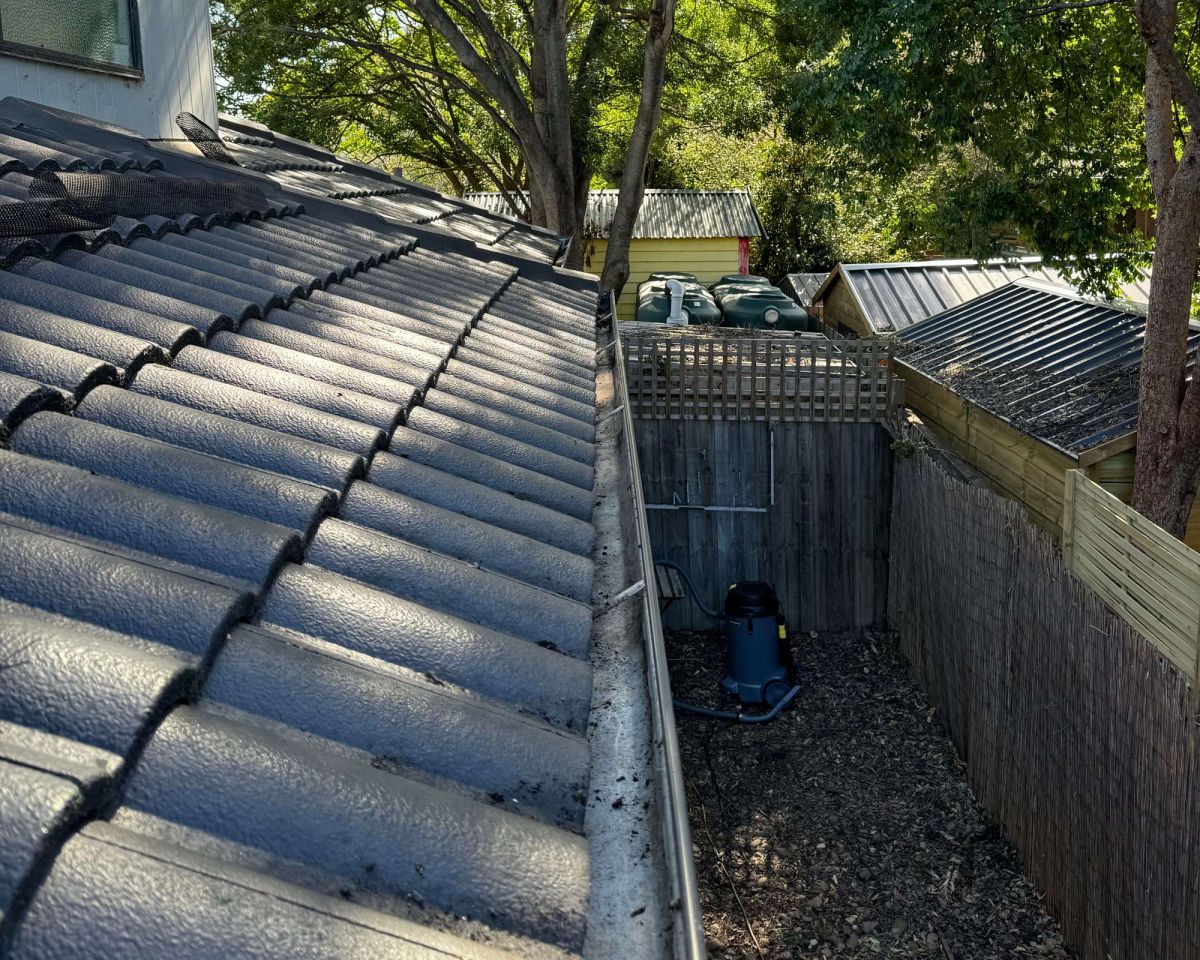
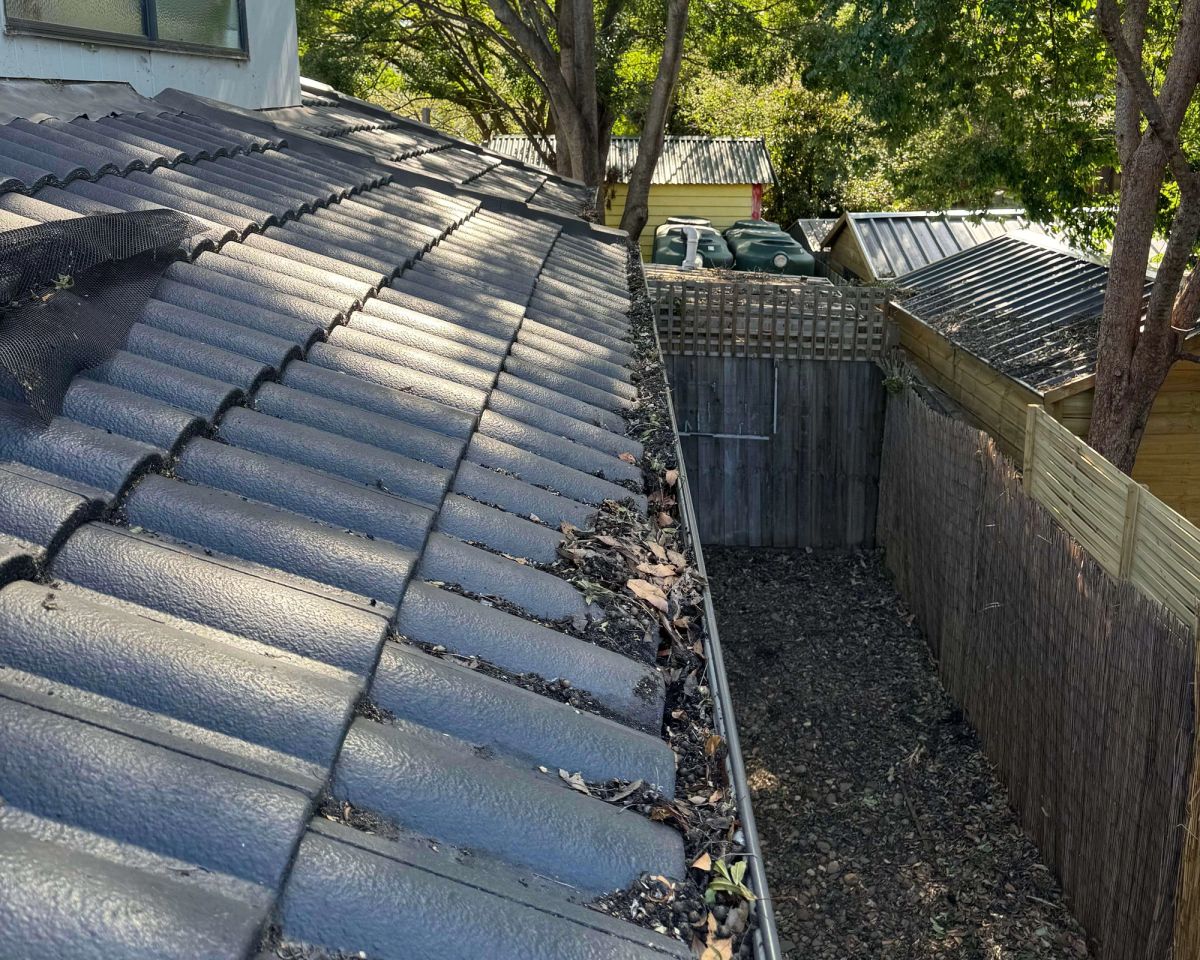
A Canterbury home with a terracotta tile roof, cleared in the middle of a Melbourne winter. Two and three quarter hours on site for a single technician.
Read case studyQuestions we get on these streets
Why does my roof have moss when my neighbour's does not?+
Aspect and canopy, almost always. A roof that gets sun for most of the day dries out between showers. One under a mature tree, or facing south, does not, and moss needs nothing else.
My gutters look clear from the ground. Is that enough?+
Not on a mossy roof. What moss sheds is fine sediment, and it settles below the line you can see from the footpath. The gutter looks empty and the outlet is where it has actually collected.
Do you have to walk on the roof to clear the gutters?+
No, and on terracotta we will not. The runs are cleared by vacuum from outside the roof line, which is how the Prospect Hill Road job was done. Century-old tiles crack underfoot and the crack stays quiet until rain finds it.
Would pressure get the moss off the roof faster?+
Faster, and at the cost of the glaze. Strip that thin fired surface and the tile underneath is porous, so it holds more water and grows back sooner than it did. On terracotta the method is chemistry and patience.
How often does a roof under trees need doing?+
It depends on what is over it rather than on a schedule. A roof with limbs directly above it loads far faster than one with clear sky, and we would rather look at yours once than put you on a cycle that suits the invoice.
Rated by Melbourne
Canterbury jobs are posted to our Google profile with before-and-after photos as they finish.