Exterior Cleaning in McKinnon
A suburb that went up in one decade, walls finished in stucco, and a school zone that decides what a house is worth. Insured crew, photos on every job.
- $20M public liability insurance
- Police-checked, WorkSafe compliant
- 5.0 from 170 Google reviews
- Not happy with the work? You don't pay
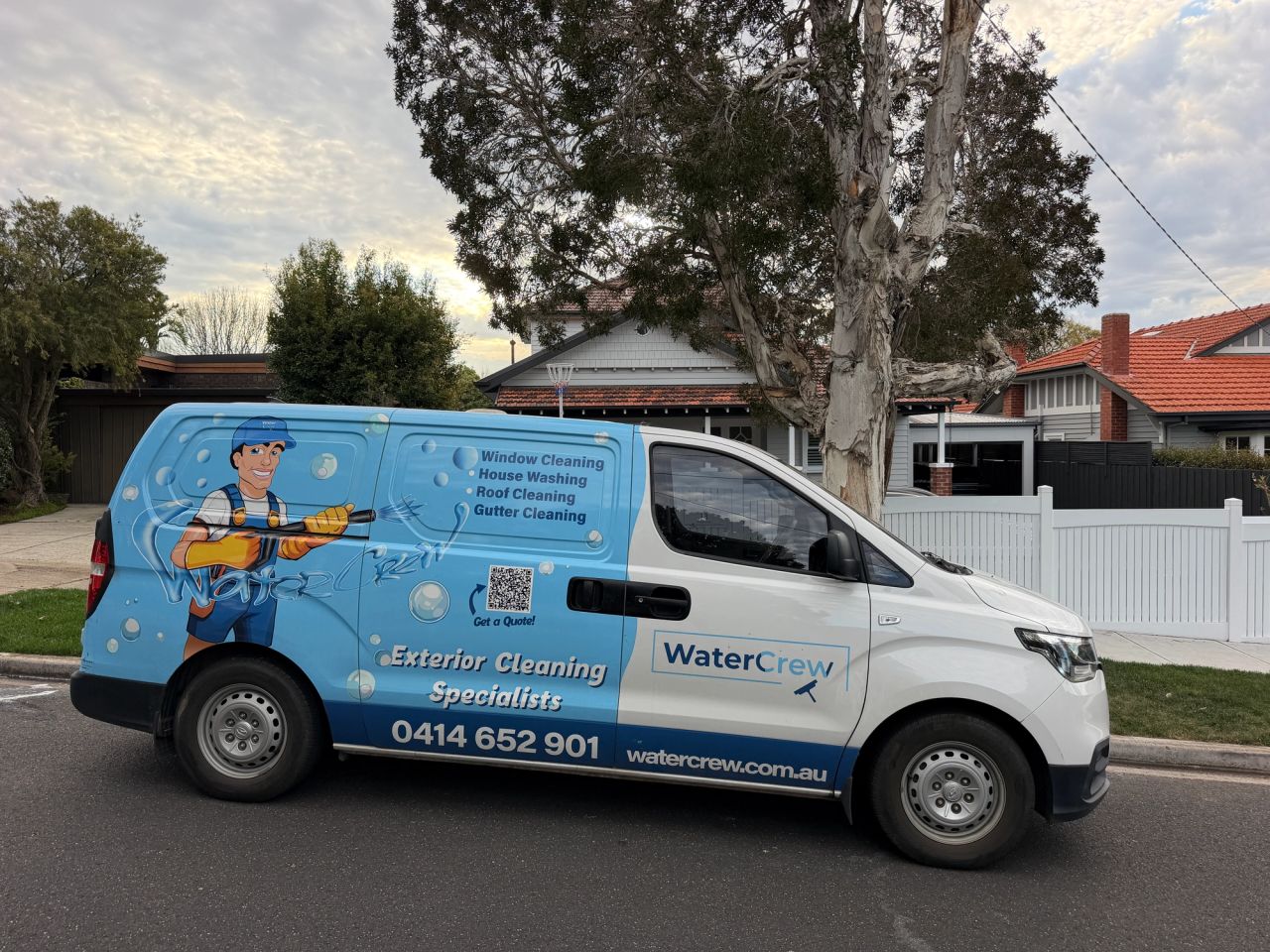
McKinnon had seventy-five residents in 1921 and just over twelve hundred by 1933. A suburb does not grow like that gradually. It gets subdivided, sold and built in one push, and everything from that push is now the same age.
What went up was the California bungalow: low to the ground, wide eaves, and walls finished in stucco. That render is the single most important thing about cleaning a house here, because it is the one surface on the property that cannot take pressure.
Stucco is a thin coloured skin over a softer base. A lance that a concrete driveway would shrug off cuts a line through it, and the line does not blend back in. The walls here come clean with a solution, contact time and a rinse, which is what house washing is, and with nothing else.
The roofs went on at the same time as the walls, the street trees were planted when the blocks were sold, and ninety years later all of it arrives at the same problem in the same year.
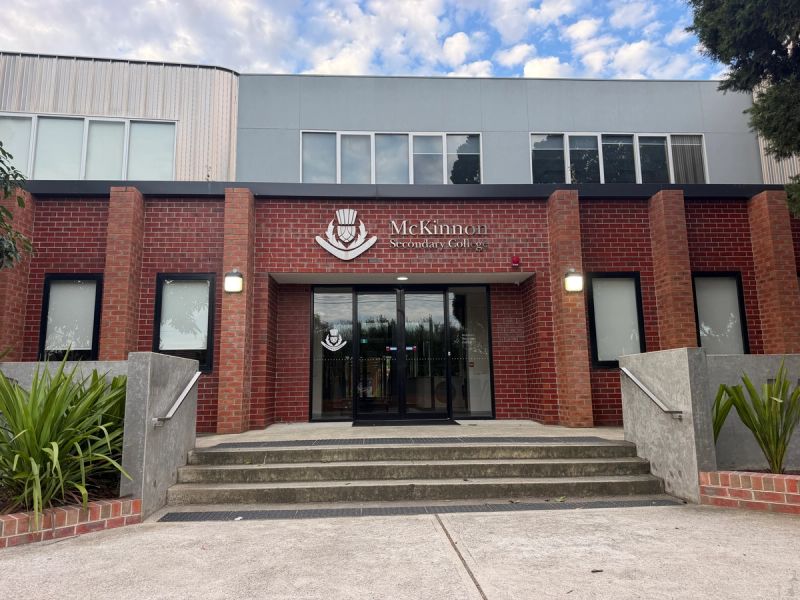
The zone line runs through the middle of it
Most suburbs have one property market. McKinnon has two, and the boundary between them is a school zone that runs through the middle of the place rather than around it.
The zone reaches into parts of Ormond, Bentleigh and Bentleigh East as well, and inside it a house carries a premium the same house one street outside does not. Owners here know exactly which side of that line they are on.
What that changes for us is when the phone rings. In a lot of suburbs a house gets washed once it has gone visibly green. Here it gets washed because it is going to market, and the exterior is what a buyer sees in the first photograph before reading a word of the listing.
So the work here is deadline work. The photographer has a date, the first open is the Saturday after, and the walls, the window cleaning and the paths all have to be right at once rather than one at a time.
We will also say when a house does not need it. A place washed eighteen months ago and standing in the open is usually still fine, and saying so costs one job and keeps the next five.
Nobody is home when the work happens
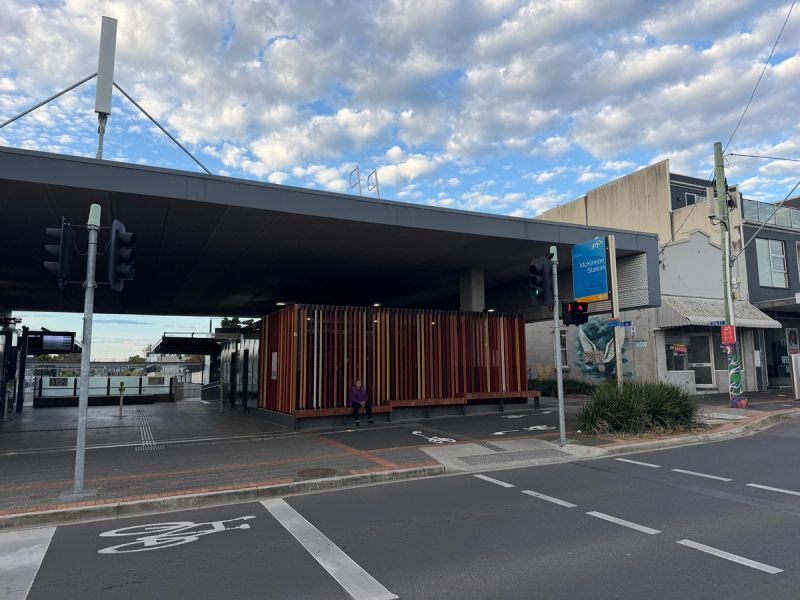
The Frankston line went under McKinnon Road on 1 August 2016. Before that the boom gates on this crossing were down for up to forty-five minutes of a two-hour morning peak, and the trench that fixed it took a thousand people and a quarter of a million cubic metres of soil.
What it left is a suburb organised around a walk to the platform. People leave early and come back after dark, and that shapes how a job here actually runs more than the houses do.
You do not need to be home. What we need is side access and an outside tap, and the rest happens while the house is empty.
Which is exactly why the photographs matter more here than any description does. If nobody watched the work, a set of before and after images from matching angles is the only honest account of what was done, and it lands the same day rather than on request.
The strip around the station is the other half of the suburb. Shopfront glass and a tiled entry are looked at from thirty centimetres away by somebody deciding whether to walk in, and that work happens before trade rather than during it.
Services we run in McKinnon
Gutter cleaning
Vacuumed, downpipes flushed and flow-tested, photo report the same day.
See detailsSolar panel cleaning
Panels washed with demineralised water, frames included, output stops dropping off.
See detailsRoof cleaning
Terracotta and Colorbond, moss and lichen treated to slow regrowth.
See detailsWindow cleaning
Glass, frames and tracks, inside and out, streak-free on the dry check.
See detailsPressure cleaning
Driveways, paving and concrete brought back without scarring the surface.
See detailsSoft washing
Render, cladding and painted surfaces washed at low pressure.
See detailsJobs we've finished in McKinnon
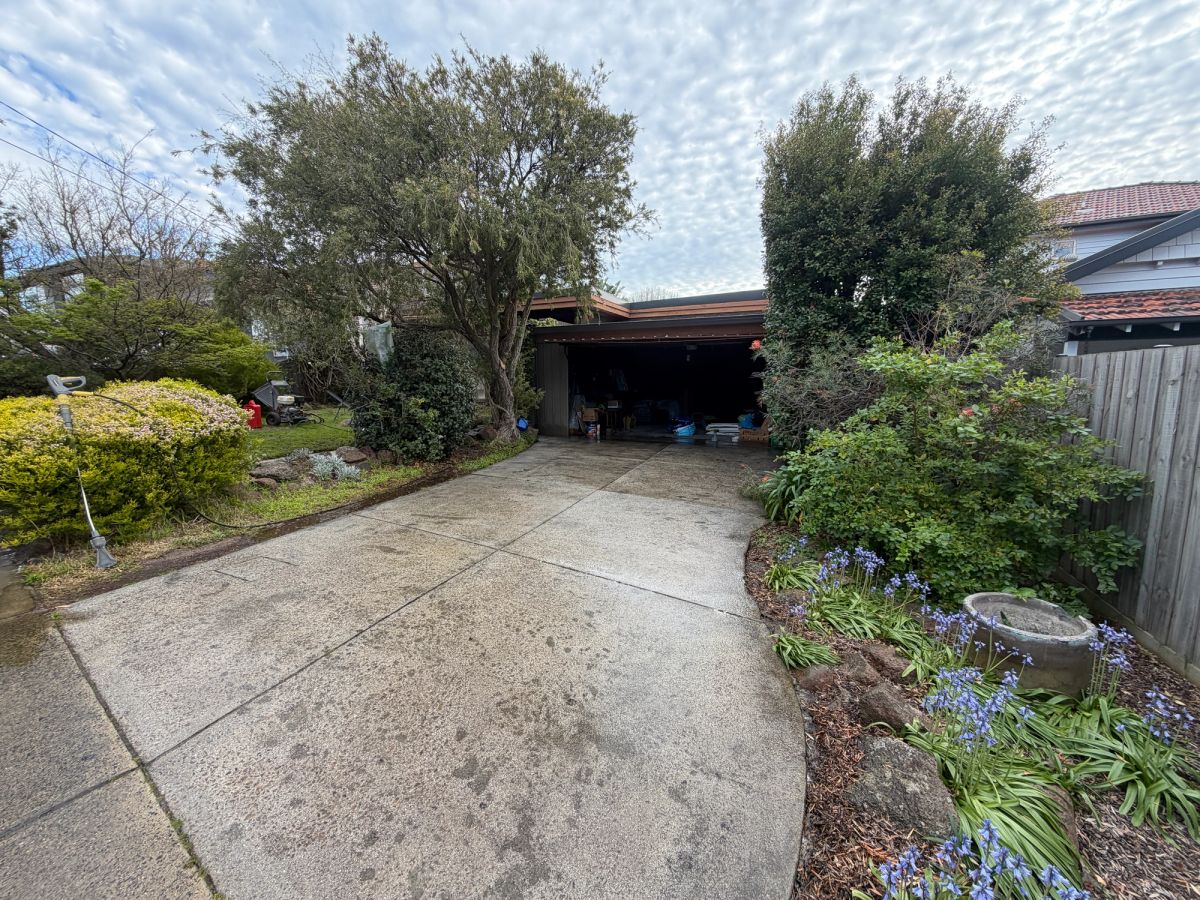
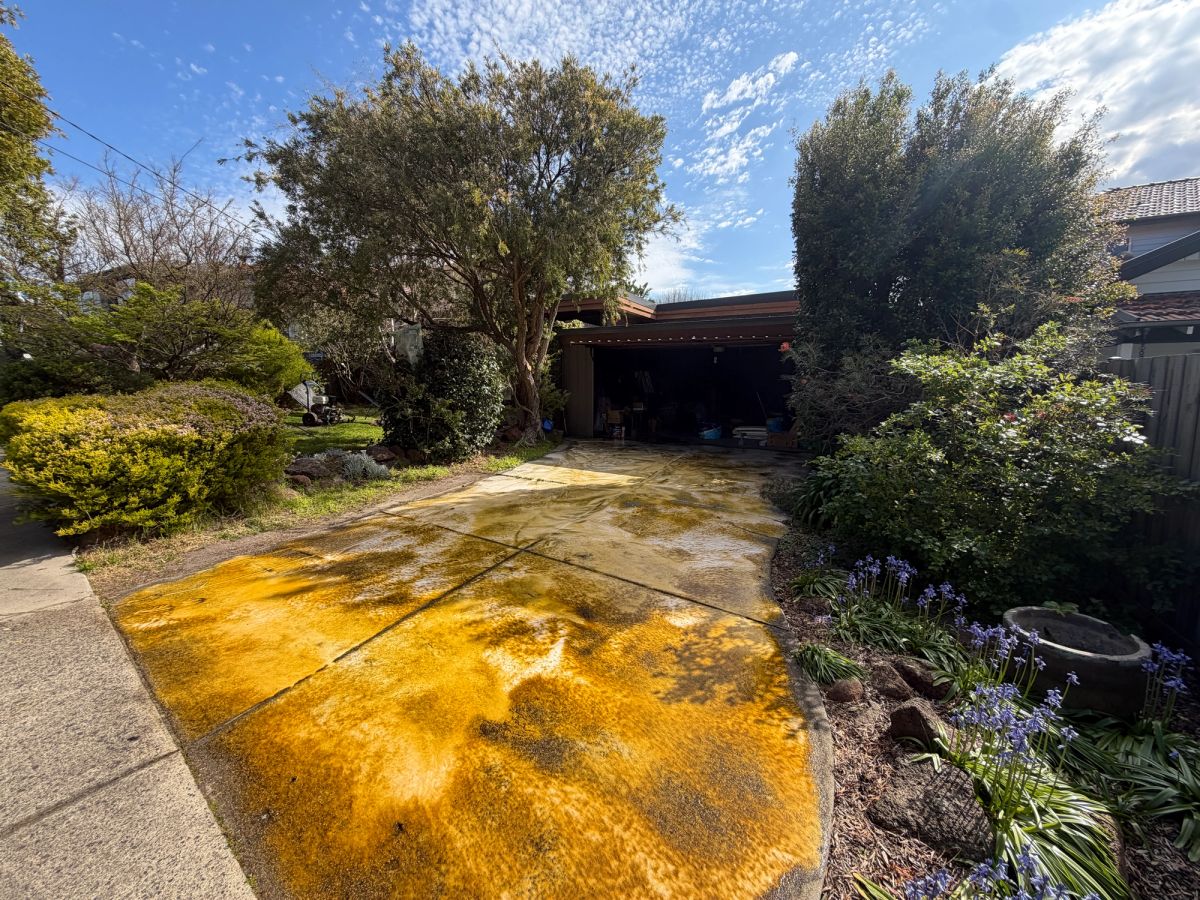
Concrete driveway cleaning on Amelia Street, McKinnon. The slab had ingrained dirt and established moss growth, treated with a cleaning solution and cleaned with a surface cleaner.\n\nThe chemical treatment broke down the growth before pressure cleaning, and the surface cleaner attachment gave an even finish across the whole driveway.
Read case study Building washing
Three adjoining townhouses on Draper Street, McKinnon, with rendered walls that had lost their original colour under years of surface growth and airborne grime.
Read case studyWhat owners in the zone ask us
Will a pressure wash damage stucco walls?+
It can, and on a 1930s bungalow that is the main risk on the property. Stucco is a thin coloured coat over a softer base, and a narrow tip held close cuts a line through it that never blends back. The walls get a cleaning solution, time to work and a low-pressure rinse. Pressure is for the driveway, not the house.
We are listing in three weeks. What order should it happen in?+
Walls first, glass afterwards, hard ground last. Windows cleaned before the walls get dirty again on the first rinse, and the driveway collects whatever comes off everything above it. One visit in the right order costs less than three visits in the wrong one.
Do I need to be home?+
No, and most people here are not. We need side access and an outside tap. The photographs go to you the same day, which on an empty house is the whole point rather than a nicety.
How often does a house here need washing?+
It depends on the aspect rather than the age. A north-facing wall in the open can go years. The same wall on the shaded side under a canopy will not, and the streets here were planted when the blocks were sold, so there is a lot of canopy.
Do you clean the shops along McKinnon Road?+
Glass, awnings and the tiled entry, yes, and outside trading hours. What we do not do is the weekly retail round with a bucket and a squeegee. That is a different business built on density, and a local window round will do it better and cheaper than we could.
Rated by Melbourne
McKinnon jobs are posted to our Google profile with before-and-after photos as they finish.