Graffiti Removal Melbourne
Tags off brick, render, metal, glass and timber. Chemical first, low pressure second, and a straight answer on what will not come off. From $275.
- $20M public liability insurance
- Police-checked, WorkSafe compliant
- 5.0 from 170 Google reviews
- Not happy with the work? You don't pay
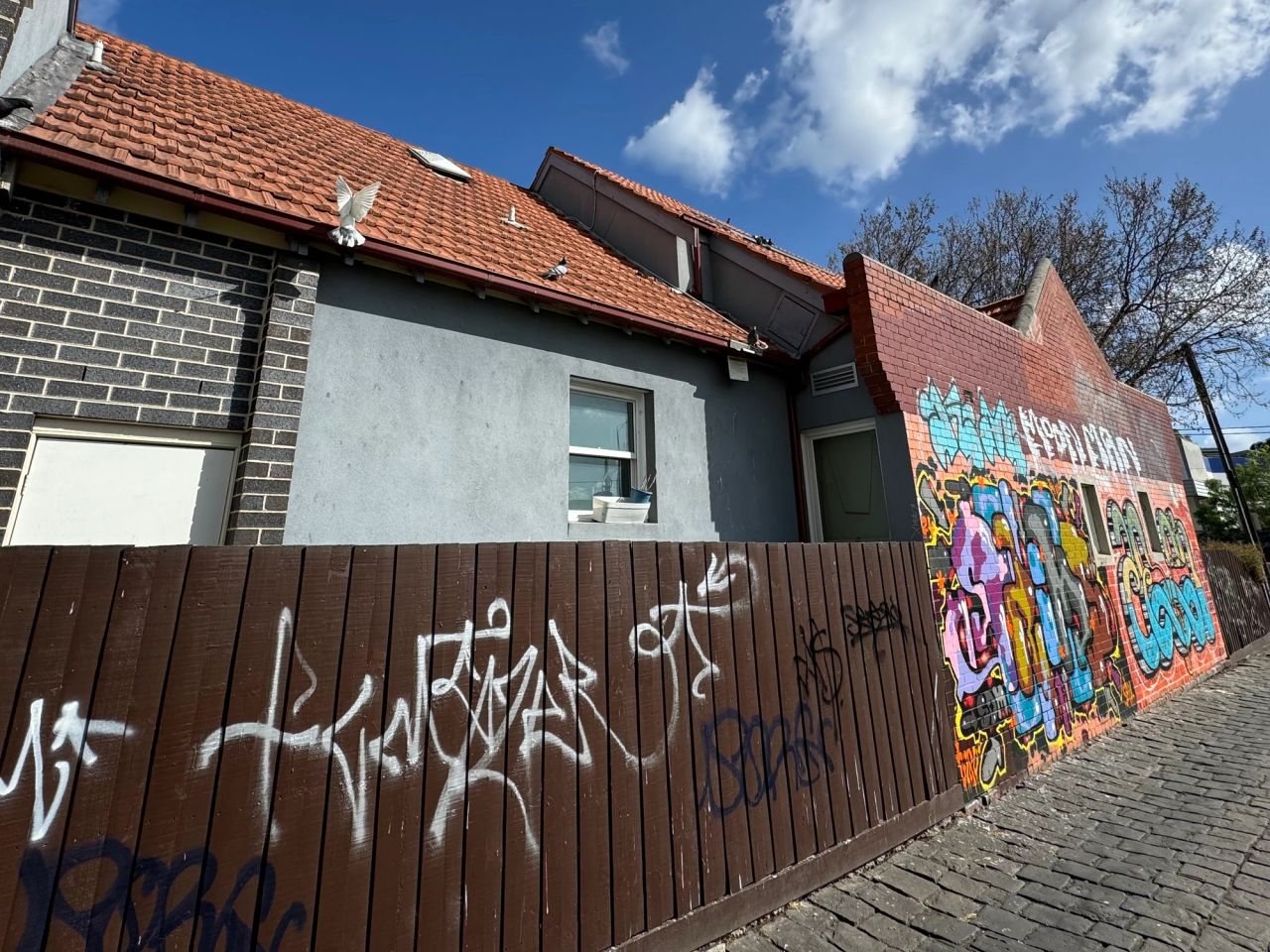
Graffiti removal starts at $275, and the thing that moves that number most is not the size of the tag. It is how long the paint has been sitting there. Fresh paint is on the surface. Paint that has had a fortnight of sun on it has started going into the surface, and those are two different jobs at two different prices.
Brick, render, concrete, roller doors, glass, powder-coated metal, painted timber. Each one takes a different remover and a different dwell time, and choosing wrong is how a tag turns into a patch that draws more attention than the tag did.
Chemical first, pressure second, and low pressure at that. Anything strong enough to blast paint off masonry is strong enough to drive the pigment further in and cut a clean halo around the mess.
Why the first week decides what comes off
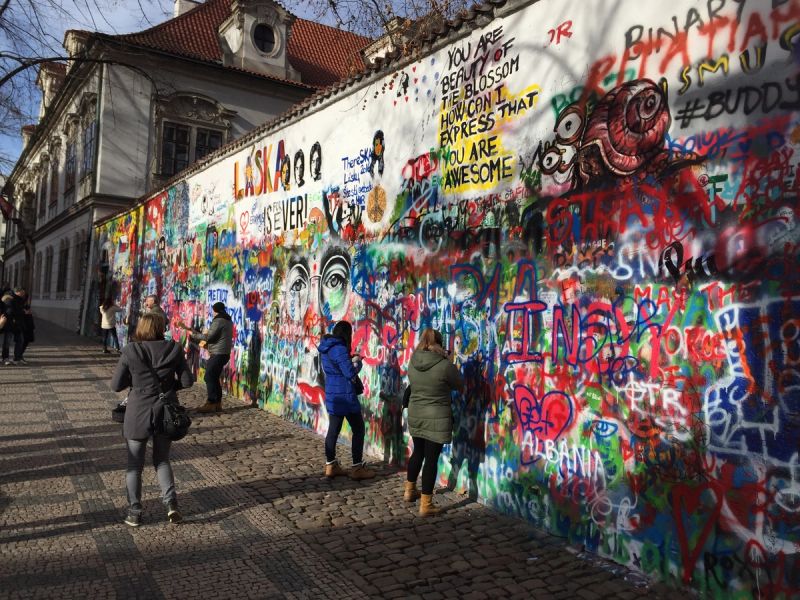
Aerosol paint dries in two stages, and only the first one is quick. The solvent flashes off in minutes, which is why a tag is touch-dry before the person who sprayed it has got home. The binder then goes on hardening for days, and on anything porous the pigment keeps travelling into the surface the whole time it does.
That is the entire reason a graffiti clean up is quoted differently in week one and week four. Nothing about the paint changed. What changed is where it is.
On McIlwrick Street in Windsor we were called to a frontage that had been hit overnight — paint across the facade, the tessellated verandah tiles and the step below. It came off with solvent because it had not gone anywhere yet. The tiles were the delicate part of that job, not the paint.
Left long enough on soft brick or unsealed render, the same paint stops behaving like a coating and starts behaving like part of the wall. It can still be dealt with. But the honest word for it is reduction rather than removal, and you will hear which of the two you are buying before you book, not afterwards.
The surface decides more than the paint does
Two walls hit by the same can on the same night can be an hour apart in work and hundreds apart in price. What separates them is what the paint landed on. Graffiti removal is priced off the surface, not off the paint, and this is the list that decides it.
- Glass. The easiest surface there is. Paint sits on top of it, glass is chemically indifferent to almost everything, and it tolerates a blade where nothing else would.
- Sealed concrete, glazed brick, powder-coated metal. Non-porous, so the pigment has nowhere to go. Removal here is usually complete rather than partial.
- Roller doors and Colorbond. A thin factory coating over steel. The problem is not the tag, it is that a solvent aggressive enough to shift it will soften the coating underneath at a similar rate. Weaker product, more passes, more patience.
- Unsealed render and soft brick. Porous, and often already painted. The remover has to take the tag without taking what is under it, which is the slowest work on this list.
- Bare timber, decking and fencing. Open grain and nothing protecting it. Paint goes straight in. This is frequently a sanding job for a carpenter rather than a cleaning job for us, and we will say so.
- Heritage brick, bluestone and sandstone. Soft, unsealed, and expensive to get wrong. These get a test patch every single time, and occasionally the answer after the test patch is that we are not the right people to touch it.
How a graffiti clean up actually runs
Six steps, and the first two happen before any product comes out of the van. Most of the damage done to walls during graffiti removal happens because somebody skipped them.
- 1
Photos before anyone drives out
Send a photo of the tag and a photo of what it is on. The large majority of these jobs are quoted from that, which saves you a site visit and saves us charging for one.
- 2
The substrate gets identified
Before any product is chosen we establish what the surface actually is and whether it is coated, sealed or bare. Guessing at this step is what turns a cleaning job into a repair job.
- 3
A test patch, somewhere you will not see it
Remover and dwell time are set on a small area low down or around a corner. Set per surface, not per job — a frontage with render, tile and stone is three tests, not one.
- 4
The paint is lifted, not blasted
Solvent does the work and time does the rest. Pressure comes in only to rinse, and it stays low, because force is what drives pigment into a porous surface and leaves a scoured patch behind.
- 5
Residue neutralised and rinsed off
The remover is neutralised so nothing carries on working on the surface after we have left, and the run-off is kept off planting and paving where it matters.
- 6
Photographed both ways, sent the same day
Before and after sets land with you the same day. That matters more than it sounds if you are reporting the vandalism, claiming on it, or answering to a committee about it.
Graffiti removal prices in Melbourne
Graffiti removal is quoted from a photograph in most cases. One fixed number to start from, and everything above it depends on what the paint landed on and how long it has been there. A single tag on a roller door and a sprayed frontage are not the same job, and neither of them is priced by the hour.
from — one visit, product, low-pressure rinse and the photo set
The minimum covers attendance, the remover, the rinse and the before-and-after photographs. Several surfaces treated in one visit are quoted together and come out below the same surfaces booked separately, because the expensive part is getting there and testing, not the cleaning. Access work — ladders, scaffold, or a traffic plan where the wall faces a road — is quoted as its own line so you can see what is access and what is removal.
What makes one tag cost more than another
Five things move a graffiti removal quote, and only one of them is the size of the paint.
- How old it is. Week one is a wash. Month three can be repeated applications and a shadow that never fully goes.
- What it landed on. Sealed and non-porous is quick. Porous, previously painted or heritage is not.
- Where it sits. A tag at head height off a footpath is one price. A wall that needs ladder work, a scaffold, or a traffic plan because it faces a road is another, and that cost is access, not cleaning.
- What is underneath it. Taking a tag off a painted wall sometimes takes the paint with it. At that point you are choosing between a visible shadow and a repaint, and repainting is not our trade.
- Whether it keeps happening. A wall hit once a month is a different conversation from a one-off, and the honest answer there is usually not more cleaning.
Nothing here is charged by the hour, and we would be wary of anyone who charges by the hour for graffiti removal. Hourly rates put the risk of a slow surface on you rather than on the contractor who chose the product.
Where we will talk you out of it
Four questions people ask before booking graffiti removal. One of the answers is that you should not book at all.
“Can't you just blast it off? That would be quicker.”
It would, and on porous masonry you would see the result for years. High pressure forces pigment deeper into brick and render, then scours a clean rectangle around it. The tag stops being readable and starts being a permanent bright patch shaped like a tag. On sealed concrete blasting is defensible. On anything that drinks, it is not.
“This fence gets tagged every month. Can we set up a regular clean?”
We would rather you did not. Booking graffiti removal on the same fence twelve times a year is the most expensive way to lose that argument. A wall that is repeatedly hit needs the wall changed — lighting, planting across the face, a different surface, or a sacrificial coating applied by a contractor who does that trade. We do not apply anti-graffiti coatings and we are not going to pretend that repeat cleaning is the same thing.
“Can you guarantee all of it will come off?”
On glass, sealed concrete and powder-coated metal, in practice yes. On porous surfaces that have been left for weeks, no, and no honest operator will tell you otherwise before seeing it. What you will get is a straight call after the test patch: removal, or reduction with a shadow left behind. You decide which one is worth paying for.
“The tag is on a wall we do not own. Can you do it anyway?”
Not without the owner's say-so. Removing paint means putting chemicals on somebody else's surface, and if the render lifts we would both rather that conversation had happened first. If the wall is on shared property, the owners corporation is who signs it off.
Graffiti jobs with the before and after
 Pressure cleaning
Spray paint removed from the front of a property on McIlwrick Street, Windsor, four days into May. Vandalism overnight, with paint across the facade, the tessellated verandah tiles and the step below.
Read case study
Google reviews
What clients wrote afterwards on Google
Recent verified feedback from local clients who booked exterior cleaning with WaterCrew.
★★★★★ GoogleJuly 2026"Very happy with the service. They were clean, professional and left everything tidy Plus the job was done beautifully Many thanks!"
MelbourneView on Google ↗

★★★★★ GoogleJune 2026"Highly recommend Eren and his WaterCrew. Have used for gutter cleaning and will in future use for terracotta roof tile cleaning & window cleaning. They do a very thorough and professional job at competitive rates. Also, they are polite, friendly and well spoken."
CanterburyView on Google ↗

★★★★★ GoogleJune 2026"WaterCrew Cleaning recently cleaned the windows at my home in Chadstone and did an excellent job. The team was professional, friendly, and easy to deal with. The windows look crystal clear, and the service was completed on time and to a very high standard. I would highly recommend WaterCrew Cleaning to anyone looking for reliable window cleaning services in Chadstone."
MelbourneView on Google ↗

★★★★★ GoogleJune 2026"New age equipment, timely with very satisfactory results. Highly recommend crew for exterior/interior and flyscreen cleaning. Gutters cleaning available as well Best crew I came across for sometime and reasonably priced. Collin"
HamptonView on Google ↗

Who books a graffiti removal service
A shopfront or roller door
Hit overnight, trading at nine, and the tag is on the route your customers walk in by. These are the jobs where the age of the paint is measured in hours and the result is best.
An owners corporation
Common property, so graffiti removal is a committee decision and has to be documented as much as done. The photo set matters here as much as the wall does.
A warehouse or industrial fence
Long runs of wall, low foot traffic, and a repeat target. Quoted per visit, and usually the conversation ends up being about lighting rather than about cleaning.
A managing agent acting for an owner
Needs sign-off before work starts and an invoice that matches the report afterwards. We write the scope so it reads the same to you and to the owner paying it.
Reading a graffiti removal quote
Graffiti removal services are easy to sell and hard to compare, because the thing being sold is a promise about a surface nobody has looked at yet. Four questions separate the quotes.
Did they ask what the surface is? A price given over the phone without that question is a price for the easy version of the job. It moves once somebody arrives, and it usually moves upward.
Do they do a test patch? Anyone confident enough to skip it is confident about a surface they have not tested. That confidence is not free — it is your wall carrying the risk.
What happens if the surface is damaged? Ask for the public liability certificate rather than the words. Ours is $20 million and the certificate goes out with the quote if you want it, which is the only version of that claim worth anything.
Are removal and repainting quoted as the same job? They are different trades. An operator who offers to clean it and, failing that, paint over it has an incentive to fail at the first one. We do not repaint, which is a limitation, and it is also why our answer about what will come off is worth reading.
The cheapest quote on a porous wall is very often a quote for blasting. It is genuinely cheaper, it is genuinely faster, and you will be looking at the result long after the saving stops feeling like one.
When removal ends and repainting begins
There is a point in any graffiti removal on a porous surface where more chemistry stops helping and starts costing you the wall. Past it, each application takes a little more of the render and a little less of the paint.
We stop there and tell you. What is usually left is a shadow — the shape is visible in the right light, the colour is gone. On a back fence most people live with it. On a shopfront most people repaint, and a painter will do that better and cheaper than a cleaning contractor pretending to be one.
If the graffiti is on a rendered or painted facade and the wall was tired before the vandalism, the sensible order is sometimes reversed: clean the whole elevation rather than spot-treat one patch, because a spotless rectangle on a grey wall is its own kind of eyesore. That is a different service and it is priced differently — see building facade cleaning.
None of this is an upsell. It is the reason we ask for a photo of the whole wall and not just the tag.
Questions we get about graffiti
How quickly should I call after it happens?+
As soon as you have a photo. Fresh paint has not gone into the surface yet, and on porous walls that difference is the difference between removal and a permanent shadow. The paint does not care what day of the week it is; it starts curing immediately.
Do you do graffiti removal on heritage buildings?+
Sometimes, and always after a test patch. Soft unsealed brick, bluestone and sandstone are unforgiving, and on a listed building there may be conditions on what can be applied at all. If the safe answer is a conservation specialist rather than us, that is what you will be told.
Will it damage the paint that is already on the wall?+
It can, and that is the honest limitation on any previously painted surface. The remover cannot tell the difference between the tag and the coating under it. We work up from the mildest product that shifts anything, and we stop before the wall starts paying for it.
Do you apply anti-graffiti coatings?+
No. It is a separate trade with its own products and its own warranties, and offering it badly is worse than not offering it. If your wall is a repeat target we will say so and tell you what the options are, including the ones we do not sell.
Can you match the price of a graffiti clean that was quoted by the hour?+
Not usually, and that is deliberate. Hourly pricing on this work moves the risk of a difficult surface onto you. A fixed price means the person who chose the product and the dwell time is the person carrying the cost of choosing wrong.
Do you clean the whole wall or just the tagged area?+
Whichever leaves the wall looking right, and that is worth settling before the graffiti removal starts. On a uniform surface spot treatment is invisible. On a weathered wall it can leave a clean rectangle that stands out as much as the paint did, and cleaning the full elevation is the better job.
Is the run-off a problem for my garden or the drain?+
It is managed. The remover is neutralised before rinsing, and the rinse is kept off planting and away from drains where the surface allows it. On sites where run-off is a real constraint, tell us at the quote stage, because it changes the method rather than the price.
What if the paint does not all come off?+
You will know before the graffiti removal starts rather than after. The test patch tells us which of removal or reduction is realistic, and you get that call while you can still decide not to spend the money. Nobody gets an invoice for a result they were promised and did not receive.
About the expert

Ihor Sydorenko
Founder & Lead Rope Access Technician (IRATA Level 3) — WaterCrew Cleaning
Ihor has worked on ropes since 2013, starting on high-rise facades in Kyiv, where he founded and still runs the rope-access company Альпіністи Київ. He holds IRATA Level 3 — the highest grade in the international rope-access system, covering work supervision, safety planning and rescue.
- ✓ IRATA Level 3 rope access technician
- ✓ Working safely at heights
- ✓ Construction induction
- ✓ First aid