Exterior Cleaning in Hampton
Salt off the bay arrives here with sand in it, and most of the suburb was built in one decade. Both change the work. Insured crew, photos on every job.
- $20M public liability insurance
- Police-checked, WorkSafe compliant
- 5.0 from 170 Google reviews
- Not happy with the work? You don't pay

Hampton sits on the bay between Brighton and Sandringham, so the salt story applies here the way it applies to the whole Bayside strip. That part is not what makes the work different.
What makes it different is what the salt arrives with. This close to the foreshore the film on a wall or a window is not just salt, it is salt with sand in it, and sand behaves nothing like salt.
The second thing is the age of the place. Hampton was market gardens until the 1930s, and when the gardens were subdivided the suburb went up quickly. A large share of it was built within a few years of itself.
So the roofs are the same age as each other, the gutters are the same profile, and the trees planted when the blocks were sold are now ninety years old. That has practical consequences on almost every job here.

Salt is half of it, sand is the other half
Salt is chemical. It is an electrolyte, it does not rinse away on its own, and it keeps working under the haze you can see on glass, frames and render.
Sand is physical, and that is the difference nobody plans for. Wind carries it off the beach and it ends up in the same film as the salt, which turns that film into a very fine abrasive sitting on every surface facing the water.
It changes the order of work more than the method. On a house this close to the foreshore, the first pass is always a rinse, before anything touches anything. Wipe a salted window that has sand in the film and you have not cleaned the glass, you have sanded it.
The same grit ends up in the gutters, and it does not behave like leaf litter. Sand does not break down and it does not float, so it settles in the bottom of the run and stays there, adding weight and shallowing the fall until water starts standing.
Window tracks and door sills are where owners notice it first. The other surface that collects it is the one nobody thinks of as glass: the roofs here carry a lot of solar, and a panel set at a shallow angle facing the sky takes the same salt and grit a window does with nobody wiping it weekly. That makes solar panel cleaning near the water a different job to the same work four suburbs inland.

Hampton Street is a different job to the streets behind it
Fifty-odd cafes, restaurants and shops sit along one strip running through the middle of a residential suburb. That strip is a different kind of work to the houses either side of it, and it is judged differently.
A house is looked at from the footpath. A shopfront is looked at from thirty centimetres away, by somebody deciding whether to walk in. Glass, awnings, signage and a tiled entry that gets walked over all day are the whole first impression, and salt film shows on every one of them.
The strip also gets the worst of what the bay sends. Shopfront glass is large, vertical and unshaded, so the salt and grit film that a house wears on one elevation covers the whole frontage here, and it goes hazy faster than anything residential.
Which is why this work happens outside trading hours. An entrance cannot be wet at nine in the morning, and no shopkeeper wants a hose across the doorway while customers are choosing whether to come in.
Behind the shopfronts the buildings are the same age as the houses around them. Hampton was market gardens until the 1930s, and the strip and the streets went up together, so the parapets and the original gutter profiles up there are as old as the terracotta on the roofs behind.
Services we run in Hampton
Gutter cleaning
Vacuumed, downpipes flushed and flow-tested, photo report the same day.
See detailsSolar panel cleaning
Panels washed with demineralised water, frames included, output stops dropping off.
See detailsRoof cleaning
Terracotta and Colorbond, moss and lichen treated to slow regrowth.
See detailsWindow cleaning
Glass, frames and tracks, inside and out, streak-free on the dry check.
See detailsPressure cleaning
Driveways, paving and concrete brought back without scarring the surface.
See detailsSoft washing
Render, cladding and painted surfaces washed at low pressure.
See detailsJobs we've finished in Hampton
 Building washing
A double-storey house on Holyrood Street being prepared for sale, booked through the agent rather than by the owner.
Read case study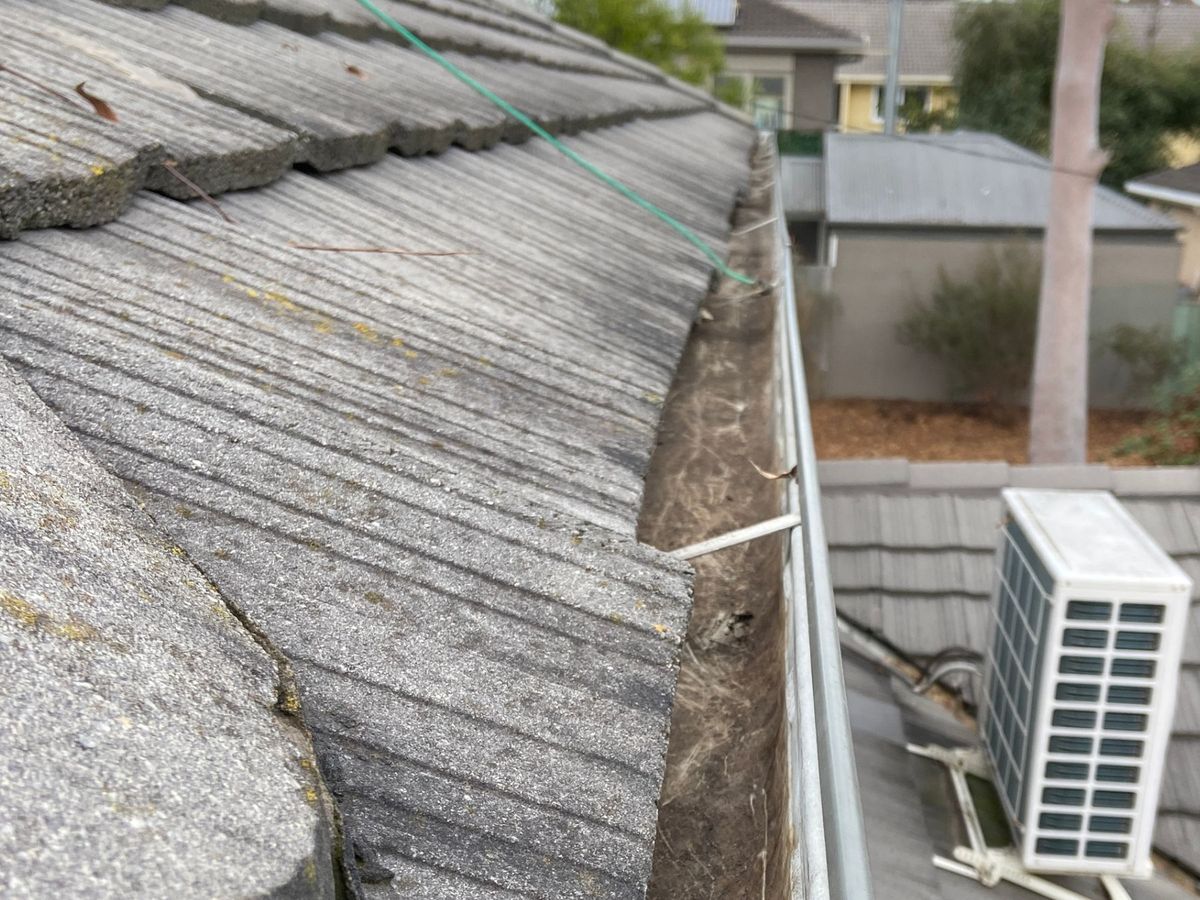
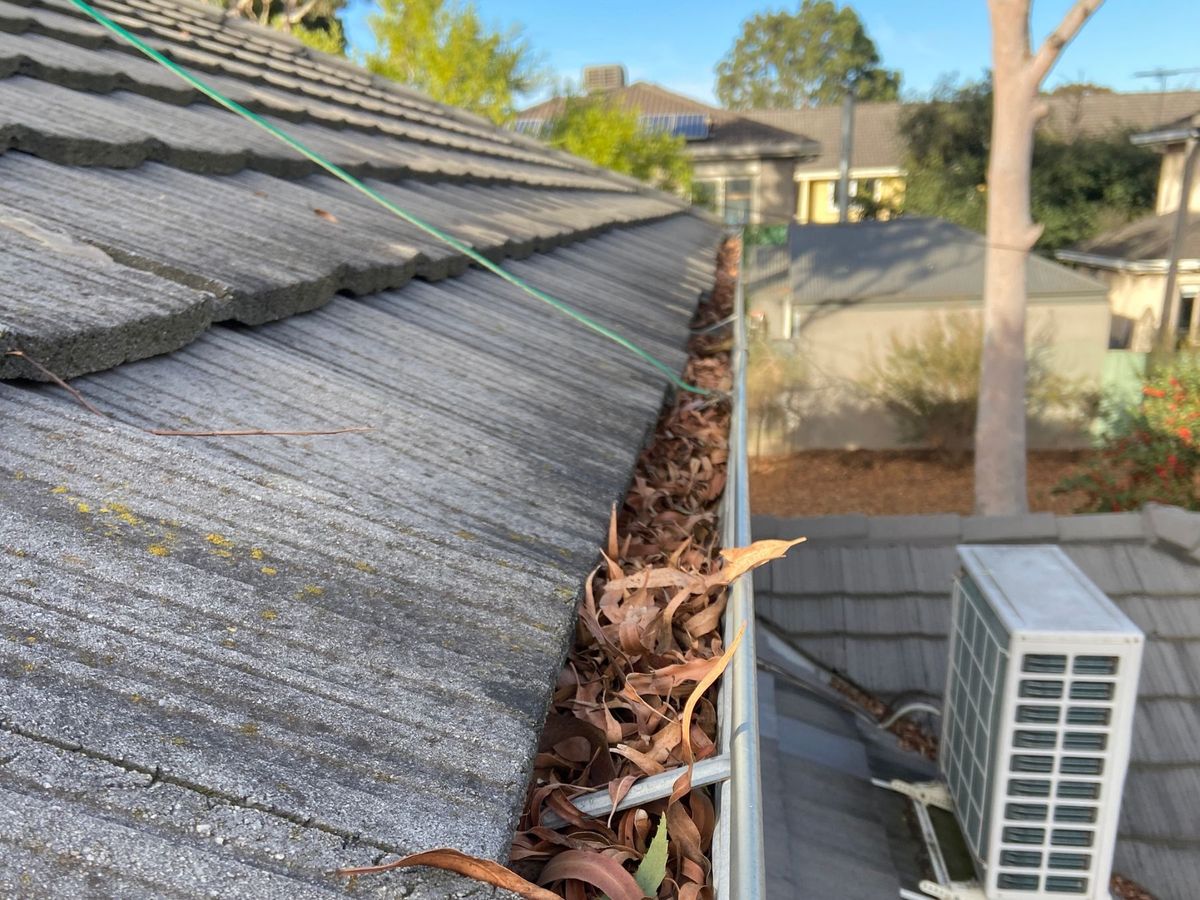
A badly blocked gutter on Bluff Road, Hampton, cleared at the start of June. Filled to the lip with leaves, and three and a half hours on site for one technician.
Read case study Window cleaning
Window cleaning on a double-storey house on Hoyt Street with an awkward shape and awkward glass to match.
Read case studyWhat people near the beach ask us
Is Hampton the same as Brighton for salt damage?+
On salt, broadly yes — the whole strip gets it off the south-westerlies. The difference is how much sand comes with it. Streets within a few blocks of the foreshore carry noticeably more grit in the film, and that changes how a surface has to be handled rather than how often.
Why do my gutters fill with grit instead of leaves?+
Because sand does not rot down. Leaf litter breaks apart and some of it washes through; sand settles in the bottom of the run, stays there and builds up. It is heavier than people expect, and enough of it will pull the fall out of a gutter that was hung level to begin with.
My windows have gone hazy and cleaning them does not help. Why?+
Usually one of two things, and often both. Salt sits on the glass as a film that plain water does not lift, and if anyone has wiped that film while there was sand in it, the glass now has fine scratching that no cleaning will remove. It is the main reason we rinse before we touch anything here.
How often should a house this close to the water be washed?+
More often than one four streets inland, and the elevation facing the bay more often than the rest of the house. We would rather quote the exposed side on a shorter cycle than pretend the whole house needs the same treatment at the same interval.
My house is 1930s. Is the roof still original?+
Often, and that decides the method before anything else. Terracotta from that era is brittle and its glaze is thin, so it takes chemistry and patience rather than pressure, and it gets walked as little as the job allows.
Rated by Melbourne
Hampton jobs are posted to our Google profile with before-and-after photos as they finish.