Window Cleaning — Hoyt Street, Hampton
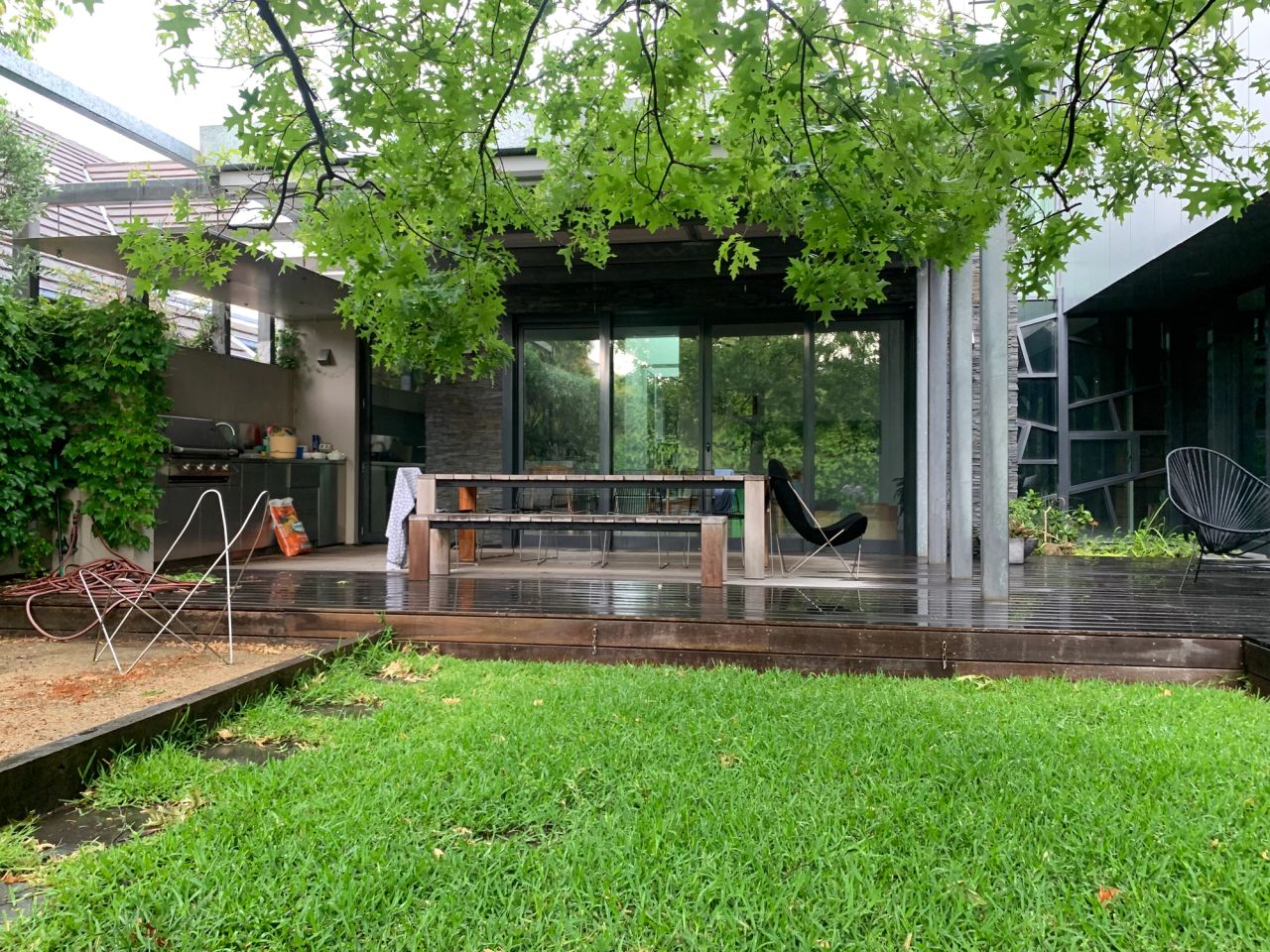
Window cleaning on a double-storey house on Hoyt Street with an awkward shape and awkward glass to match. One technician, four hours. Most of that time went into reaching the windows rather than into cleaning them.
- Location
- Hampton 3188
- Completed
- 8 November 2023
- Duration
- 4 h
- Crew
- 1 tech
- Property
- Double-storey house
The problem
A rectangular two-storey house is a straightforward window job: you work along one elevation, then the next. This one is not rectangular. The building steps in and out, and the glass follows it, so almost every upper opening sits somewhere a ladder cannot simply be leaned. Glass over a lower roof, glass above a paved courtyard with no level footing, glass set back under an overhang deep enough that a pole has to come at it from an angle. None of those are difficult on their own. Together they mean the job is a sequence of access problems with a window at the end of each one.
What we did
Four hours for one person on a house this size is not slow work at the glass, it is time spent repositioning. Each opening got the approach it needed rather than the approach that was quickest, because forcing a ladder onto ground that is not level is how people end up in hospital and how sills get damaged. Where a water-fed pole could reach, the glass was done from the ground with purified water, which leaves nothing behind as it dries and means nothing touched the glass at all. Where the overhang was too deep for a pole to work square to the window, the approach changed rather than the standard. This close to the bay the sequence matters as much as the method. Glass here carries salt with fine sand in it, so everything gets rinsed before anything touches it. Wiping that film dry is how glass picks up scratching that no later clean removes.
- All external glazing cleaned across both storeys
- Frames and sills done with the glass
- Water-fed pole from the ground wherever the geometry allowed it
- Access reassessed at each opening rather than forced
- Every pane rinsed before contact, given the salt and sand in the film
Result
- Every opening reached and finished, including the ones over the lower roof
- No drying marks on the glass and no scratching from grit in the film
- Sills and frames left clean rather than streaked from run-off
- Whole house completed in a single four-hour visit
Nearby case studies
More projects in Hampton
 Building washing
A double-storey house on Holyrood Street being prepared for sale, booked through the agent rather than by the owner.
Read case study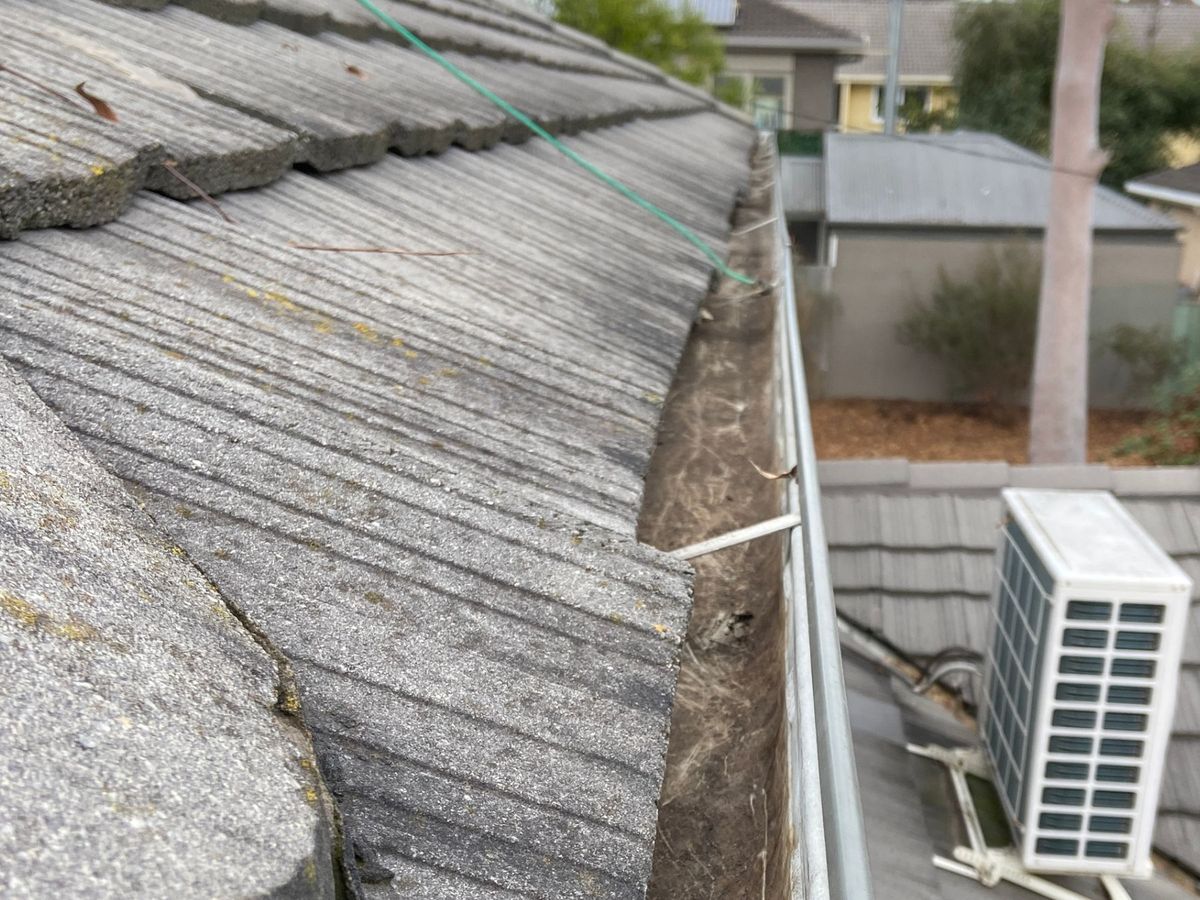
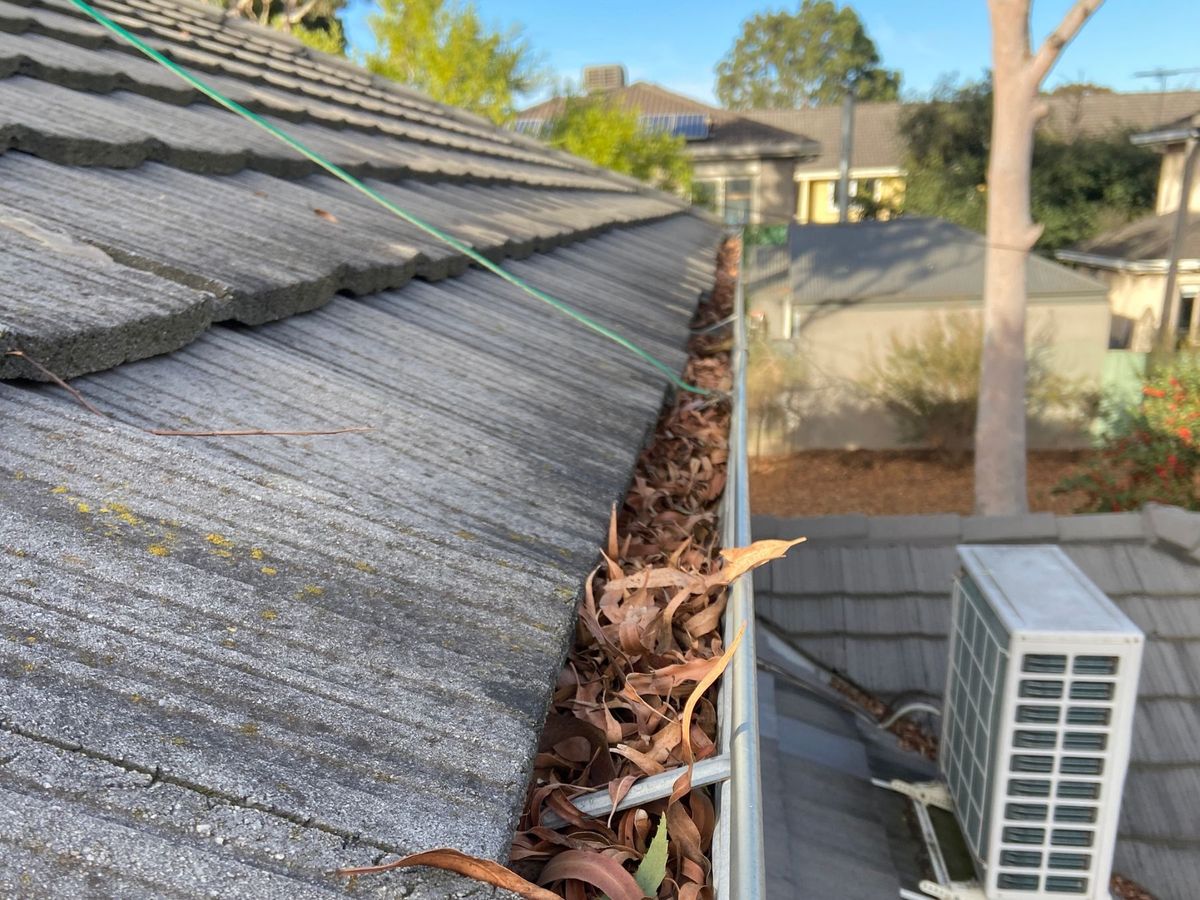
A badly blocked gutter on Bluff Road, Hampton, cleared at the start of June. Filled to the lip with leaves, and three and a half hours on site for one technician.
Read case study