High Rise Window Cleaning Melbourne
Rope access for towers, hotels and strata where a lift cannot stand. IRATA Level 3 on every job, two technicians minimum, from $1,540.
- $20M public liability insurance
- Police-checked, WorkSafe compliant
- 5.0 from 170 Google reviews
- Not happy with the work? You don't pay
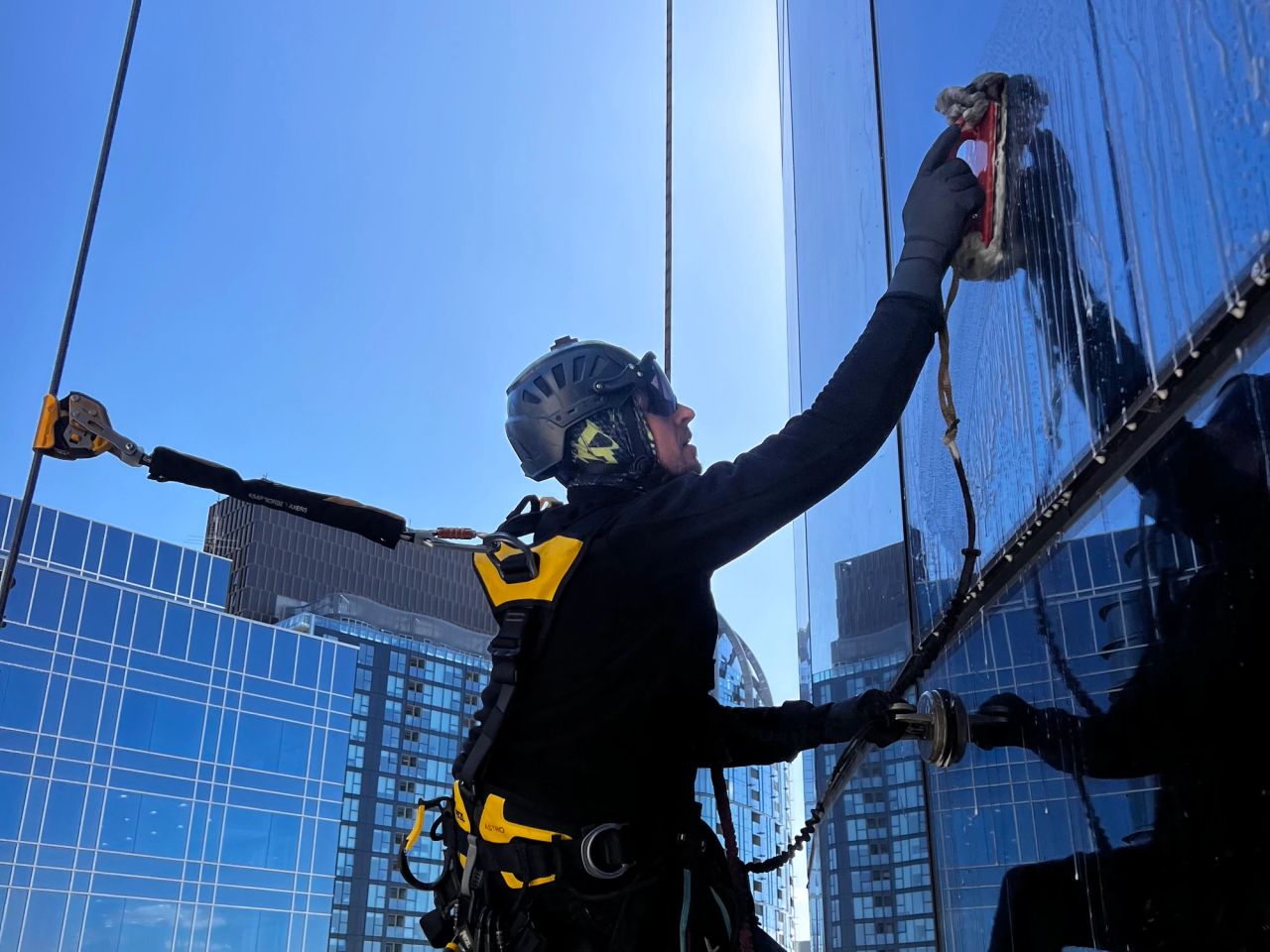
High rise window cleaning is priced by the building, not by the pane. A job starts at $1,540 with two technicians on site, and the figure moves with the number of drops, the anchors available and when the building will let you work.
Every job is run under IRATA Level 3 certification. That matters less as a badge than as a fact about who is on the rope: Level 3 is the grade that can supervise a site and effect a rescue, and it is the reason two technicians is a minimum rather than a preference.
Offices, hotels, serviced apartments and strata-managed towers. Glass first, but the same access does facade cleaning, gutters at height and anything else a pole cannot reach.
When a boom lift is the wrong answer
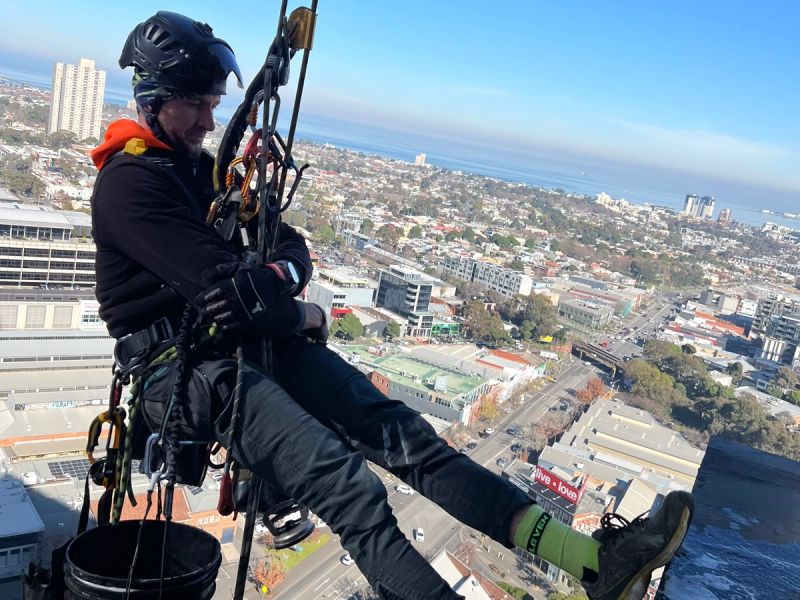
The instinct on a tall building is to hire a lift, and on plenty of buildings that is correct. It stops being correct in four situations, and most towers have at least one of them.
- The lift needs somewhere to stand. Hard standing, level, close enough to the wall, with a clear route in from the street. A laneway elevation, an internal courtyard or a building sitting on its boundary offers none of that.
- It needs the ground to be available. A footpath closure means a permit and traffic management, and both are quoted as their own lines because both cost money whether the machine is working or waiting.
- It needs reach, and reach is measured from where the machine can actually sit rather than from the wall. A lift rated to twenty metres is rated from its own base, and if the base has to sit ten metres back, the top of the building is out of range.
- Rope access does not use the ground at all. It works from above, which is why it reaches elevations a lift cannot see and why it can work on a building that has to stay open underneath.
What abseil window cleaning actually involves
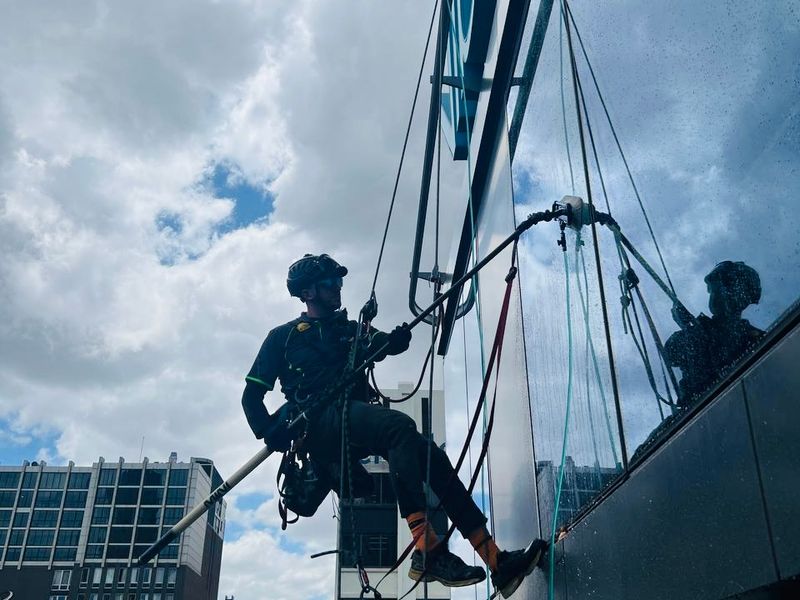
Abseil window cleaning is a controlled descent on two independent systems: a working line that carries the technician and a backup line that catches them if the first one fails. Neither is trusted alone, and that redundancy is the whole discipline.
- Anchors are checked before anyone loads them. Where a building has certified anchor points we use them and record what we used; where it does not, the approach changes rather than the standard. Installing or certifying anchors is a different trade with its own accreditation and we do not offer it.
- Two technicians go on every job. One is on the rope and one stays at the top, in communication, able to start a rescue without waiting for anybody to arrive. A single rope access cleaner on a building is not a cheaper version of this job, it is a different and unacceptable one.
- Abseiling window cleaning, rope access and industrial abseiling are three names for one discipline, and the vocabulary is not what varies between operators — the certification is.
- The glass itself is the straightforward part. Purified water and a squeegee on the way down, working with gravity rather than against it, so nothing that has been cleaned gets rinsed over again on the next pass.
What a rope access cleaner has to hold
Four things worth asking for on any quote for work at height, including ours. A company holding a certification is not the same as the certified person turning up.
$20 million public liability
Most quotes say “fully insured” and stop there. This is the number behind it, and the certificate of currency goes to the building with the quote rather than after the job.
IRATA Level 3, the top grade
IRATA runs three grades. Level 3 is the highest, and the one that can supervise a site and carry out a rescue. It is held by the founder, who attends, and it is why two technicians is the minimum.
Working safely at heights
The Australian unit of competency for work above two metres, held alongside a WorkSafe Victoria construction induction card. Both are sent by name before anything is rigged.
First aid at the top of the rope
Rope rescue is only half of it. The IRATA technician on site holds a current first aid certificate, because the minutes that matter happen well before an ambulance reaches a rooftop.
What the building gets in writing before we start
A facilities manager or a strata committee is not buying clean glass. They are buying the confidence that nothing goes wrong on their building, on their insurance, during their trading hours.
So the paperwork goes out before the quote is accepted rather than after. A Safe Work Method Statement written for that specific building and its specific access, not a template with the address swapped.
IRATA certification for the technicians attending, by name. This is worth checking on any quote you receive: a company holding a certification is not the same as the certified person being the one who turns up.
Certificates of currency, construction induction cards, and a notice to residents or tenants that the building can send out under its own name. We write that notice; it lands better from the building than from a contractor.
None of this is unusual for the industry. What is unusual is how often it arrives late, after somebody has already agreed a price.
| What goes wrong | What causes it | What it costs | How to prevent it |
|---|---|---|---|
| Permanent etching of the glass | Alkali and other runoff from the concrete, render and masonry above the glass, left on the surface to dry | Replacement rather than cleaning. AGWA calls this etching permanent, and no wash reverses itNo published figureAGWA, A Guide to Glass and Glazing | Wash on a cycle, so runoff never sits long enough to bond |
| Glass that no longer cleans up | Leachate from concrete and rust from steel combining with dew or condensation, then allowed to harden | Specialist restoration, or replacement where restoration fails. AGWA's instruction is to flush it immediatelyNo published figureAGWA, A Guide to Glass and Glazing | Contamination flushed off when it appears rather than left for the next scheduled visit |
| The same wash costs more every year | Surface film turns into a bonded deposit, and one pass down a drop becomes two or three | AGWA notes that protecting glass greatly simplifies the cleaning task laterNo published figureAGWA, plus trade experience | An annual cycle rather than a wash ordered after somebody complains |
| Frames and seals go before the glass does | The same runoff sits on powder-coated frames and sealed joints, which are softer than what they hold | Resealing or reglazing rather than cleaningNo published figureTrade experience | Frames and sills cleaned with the glass, not treated as an extra |
| Deterioration falls outside the policy | Strata policies respond to events. Gradual deterioration and lack of maintenance are commonly excluded | Carried by the owners corporation rather than the insurerNo published figurePolicy wording varies — check your own | A documented maintenance record, so the distinction is not argued after the fact |
| The statutory duty is not discretionary | Section 46 of the Owners Corporations Act 2006 requires an owners corporation to repair and maintain common property | Exposure at VCAT, and to lot owners seeking orders and compensationNo published figureOwners Corporations Act 2006 (Vic), s 46 | Common property maintenance scheduled and minuted rather than reactive |
Sources
Australian Glass and Window Association, A Guide to Glass and Glazing — the glass care and glossary sections. Owners Corporations Act 2006 (Vic), section 46. Policy exclusions vary by insurer, so check your own wording.
High rise window cleaning prices in Melbourne
One fixed number, and everything above it quoted after somebody has looked at the building. Two towers of identical height can differ by thousands once the drops are counted and the anchors are found.
from — two IRATA technicians, one day, rigging and ground zone included
The minimum includes GST, both technicians, rigging, the ground zone and the documentation pack. Out-of-hours work, permits and traffic management where the ground has to be closed are quoted as separate lines so you can see what is access and what is cleaning.
What moves the number up or down
Six things move a high rise cleaning quote, and the height of the building is not the first of them. Two towers of the same storey count can sit thousands apart before anyone has counted a pane.
- Number of drops. A drop is one descent down one line of glass. A narrow tower with a lot of glass per drop is cheaper per pane than a wide building with the same area spread across twice as many descents.
- Anchors. A building with certified points where they are needed is a straightforward job. One where the usable anchors are in the wrong places takes longer to rig for the same glass.
- Glass condition. Clean glass on a schedule takes a fraction of the time of glass that has not been touched in three years and now carries mineral staining rather than dirt.
- Hours. Working outside trading hours on a hotel or a retail podium is a different rate to a Tuesday morning on an office tower.
- The ground below. A public footpath means exclusion zones, signage and a spotter for the whole time the work is live.
- What else is on the elevation. Balconies, louvres, sunshades and signage all slow a descent down, and on some buildings they are most of the elevation.
The quote separates these rather than folding them into one rate per square metre, so a committee comparing two prices can see where the difference sits.
How a job runs, from first call to final photo
It starts with looking at the building, from the footpath and from the roof. Nothing useful can be quoted from an address and a photograph, because what decides the job is where the anchors are and what is underneath.
Then the documents go to whoever manages the building, and the building sends its notice to occupants: which elevations, which days, windows closed, balconies clear, nothing left on a sill.
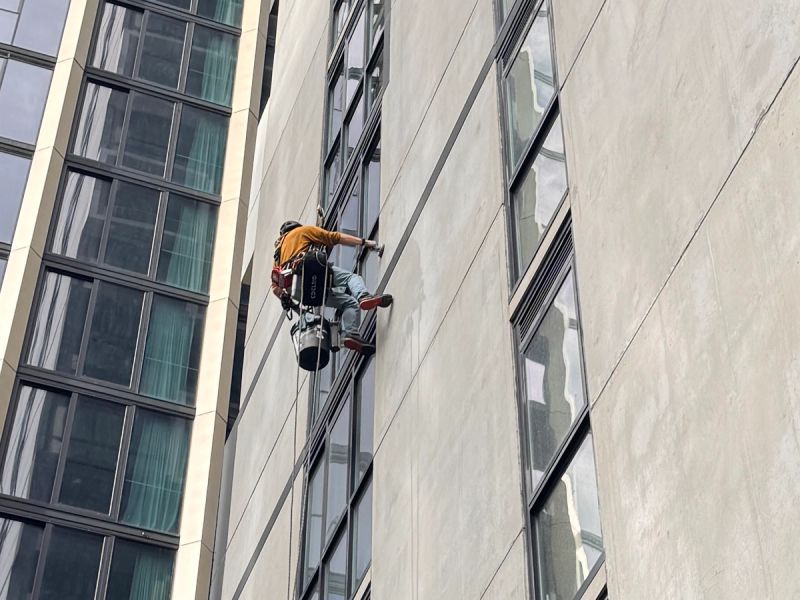
On the day, the ground zone goes in first. Cones, signage and a technician at the base for as long as anyone is on rope. Then the descents, elevation by elevation and drop by drop.
On a hotel in Albert Park that was four days with three technicians to cover the full envelope. Three towers on Gladstone Street in South Melbourne, twenty-two to twenty-five storeys, took a crew of four about three weeks.
Photographs at the end, elevation by elevation, because on a tall building the person paying has no way to inspect the work themselves.
Towers and hotels we have worked on
 Window cleaning
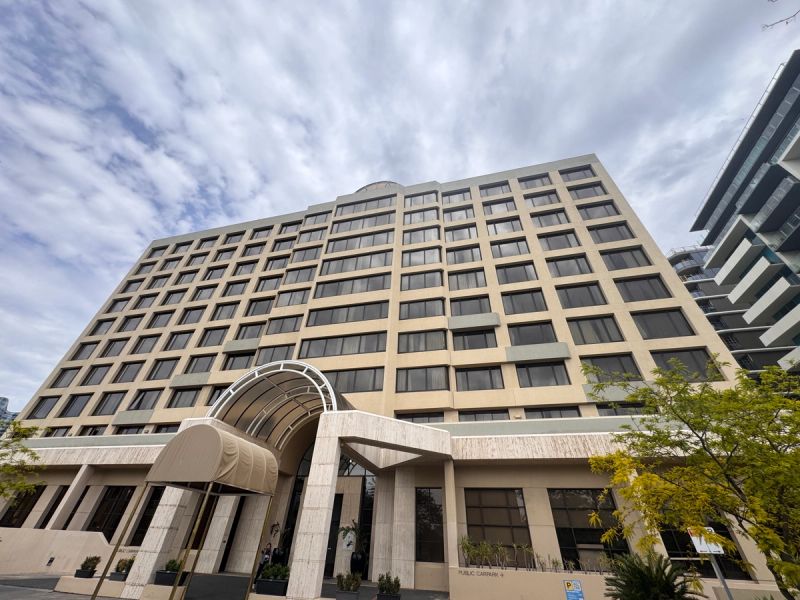
High rise window cleaning at the View Hotel on Roy Street, Albert Park, carried out by rope access with a crew of three over four days.
Read case study Window cleaning
Three residential towers on Gladstone Street, South Melbourne, between twenty-two and twenty-five storeys, with all external glazing cleaned by rope access over three weeks by a crew of four.
Read case study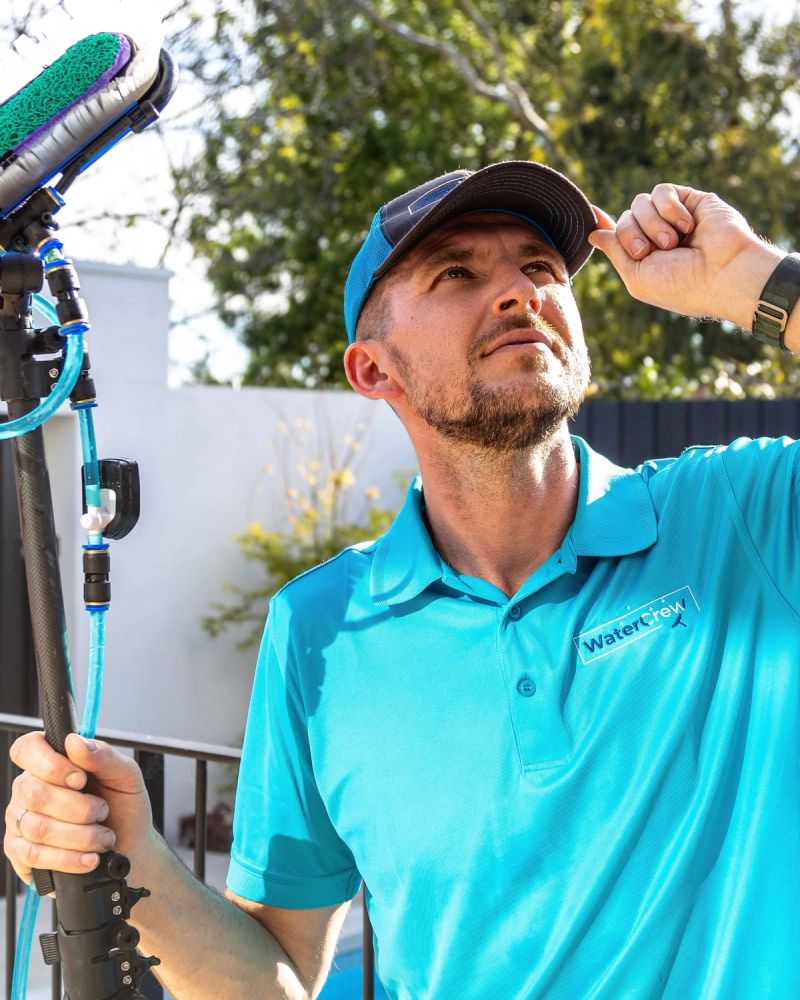
Google reviews
What clients wrote afterwards on Google
Recent verified feedback from local clients who booked exterior cleaning with WaterCrew.
★★★★★ GoogleJuly 2026"Very happy with the service. They were clean, professional and left everything tidy Plus the job was done beautifully Many thanks!"
MelbourneView on Google ↗

★★★★★ GoogleJune 2026"Highly recommend Eren and his WaterCrew. Have used for gutter cleaning and will in future use for terracotta roof tile cleaning & window cleaning. They do a very thorough and professional job at competitive rates. Also, they are polite, friendly and well spoken."
CanterburyView on Google ↗

★★★★★ GoogleJune 2026"WaterCrew Cleaning recently cleaned the windows at my home in Chadstone and did an excellent job. The team was professional, friendly, and easy to deal with. The windows look crystal clear, and the service was completed on time and to a very high standard. I would highly recommend WaterCrew Cleaning to anyone looking for reliable window cleaning services in Chadstone."
MelbourneView on Google ↗

★★★★★ GoogleJune 2026"New age equipment, timely with very satisfactory results. Highly recommend crew for exterior/interior and flyscreen cleaning. Gutters cleaning available as well Best crew I came across for sometime and reasonably priced. Collin"
HamptonView on Google ↗

Four kinds of building that book rope access
An owners corporation
Common glass, shared cost and a committee that has to compare quotes. Usually scheduled annually, because on a tower nobody can see the state of the glass from their own balcony.
An office building
Tenant-facing and judged on it. These jobs run to a calendar rather than to a complaint, and the facilities manager wants the paperwork before the price.
A hotel or serviced apartments
Occupied every night of the year, so the work is planned around guests rather than around the crew. Rope access almost always, because a lift cannot block a hotel entrance.
A building with no ground to stand on
Laneway elevations, internal courtyards, boundary walls. These are the buildings that call after a lift company has already told them no.
The cheaper quote, and what is missing from it
There is almost always a cheaper number available on work like this, and it is worth understanding what produces it before choosing on price. Three things account for most of the gap, and only one of them is efficiency.
One technician instead of two. This is the most common way a quote gets cut, and it is the one that matters: it removes the person whose job is to get the other one down if something goes wrong.
A certification that belongs to the company rather than to the person on the rope. Ask which technician is attending and what grade they hold. It is a fair question and a straight answer takes ten seconds.
A method statement written for a different building. Generic paperwork is not a document, it is a formality, and it is worthless the moment anything is actually reviewed.
We would rather lose a job on price than match it by removing the second technician. That is not a sales position, it is the only version of this work that is defensible afterwards.
Skyscraper window cleaning and what limits height
Height is rarely the constraint people expect. A rope does not care whether it is hanging twenty metres or eighty, and the technique at the top of a tower is the same as at the top of a four-storey walk-up.
What changes with height is time and weather. Wind closes a job faster than anything else, and above a certain height it does so on days that feel calm at street level. A tower that takes three weeks includes days when nobody went on rope at all.
The other limit is the building itself. Anchors, parapets and the roof structure decide what is reachable, and some buildings were designed around a maintenance unit that has since stopped working.
Where a building has a working BMU, the cradle is usually the right tool and we will say so. Skyscraper window cleaning is not a competition between methods; it is a question of which one that specific building was designed for.
Rope access cleaning is not only about glass
Once there is a technician on a rope, the glass is one of several things that can be dealt with on the same descent, and doing them together costs far less than mobilising twice.
Facade panels and render on the elevations a pole cannot reach. Gutters and box gutters at height, which on a tall building are otherwise a genuine problem to inspect at all.
Solar arrays on roofs that have no safe edge access. Signage, light fittings and anything else mounted where nobody can otherwise stand.
High rise building cleaning quoted as separate visits by separate trades is how a strata budget disappears. If a building needs three things at height in the same year, they belong in one mobilisation.
Questions facility and strata managers ask
Why does it start at $1,540?+
Because rope access takes two certified technicians and a day, whatever the building. One person on a rope is not a cheaper version of this work, it is an unsafe one, and there is no half-day rate that changes that.
Is the IRATA certified technician actually on site?+
Yes, and it is the right question to ask any contractor. A company can hold certification while sending uncertified people to do the work. Ask for the attending technician and their grade, on every quote you receive.
Do you install or certify anchor points?+
No. That is a separate accreditation and a separate trade. We use the anchors a building already has, we check them before loading them, and where they are inadequate we say so rather than working around it.
Can you work while the building is occupied?+
Almost always, and most of our work is on occupied buildings. What it needs is a notice to occupants a few days ahead and agreement on hours, which for retail and hotel frontages usually means early or late.
What happens if the weather turns?+
Work stops. Wind is the limit, and above a few storeys it closes a day that feels calm from the footpath. This is why a tower is quoted in weeks rather than days, and why we do not promise a finish date on a fixed calendar.
Do you clean the inside of the glass too?+
Not from the rope. Interior glass is a separate visit organised through the building, because it needs access to occupied floors and it does not need a rope access technician to do it.
What documents do we get?+
A Safe Work Method Statement written for your building, IRATA certification for the attending technicians, certificates of currency, induction cards, and a notice you can send to residents under your own name.
Can other work be done on the same descent?+
Yes, and it is the cheapest way to do anything at height. Facade panels, gutters, solar and signage can be handled while the rigging is already up, rather than paying to mobilise twice.
About the expert

Ihor Sydorenko
Founder & Lead Rope Access Technician (IRATA Level 3) — WaterCrew Cleaning
Ihor has worked on ropes since 2013, starting on high-rise facades in Kyiv, where he founded and still runs the rope-access company Альпіністи Київ. He holds IRATA Level 3 — the highest grade in the international rope-access system, covering work supervision, safety planning and rescue.
- ✓ IRATA Level 3 rope access technician
- ✓ Working safely at heights
- ✓ Construction induction
- ✓ First aid