Roof Moss Removal & Treatment Melbourne
Not a wash. A course of two or three applications months apart that kills the growth at the root, for owners who care about the roof rather than a deadline. From $495.
- $20M public liability insurance
- Police-checked, WorkSafe compliant
- 5.0 from 170 Google reviews
- Not happy with the work? You don't pay
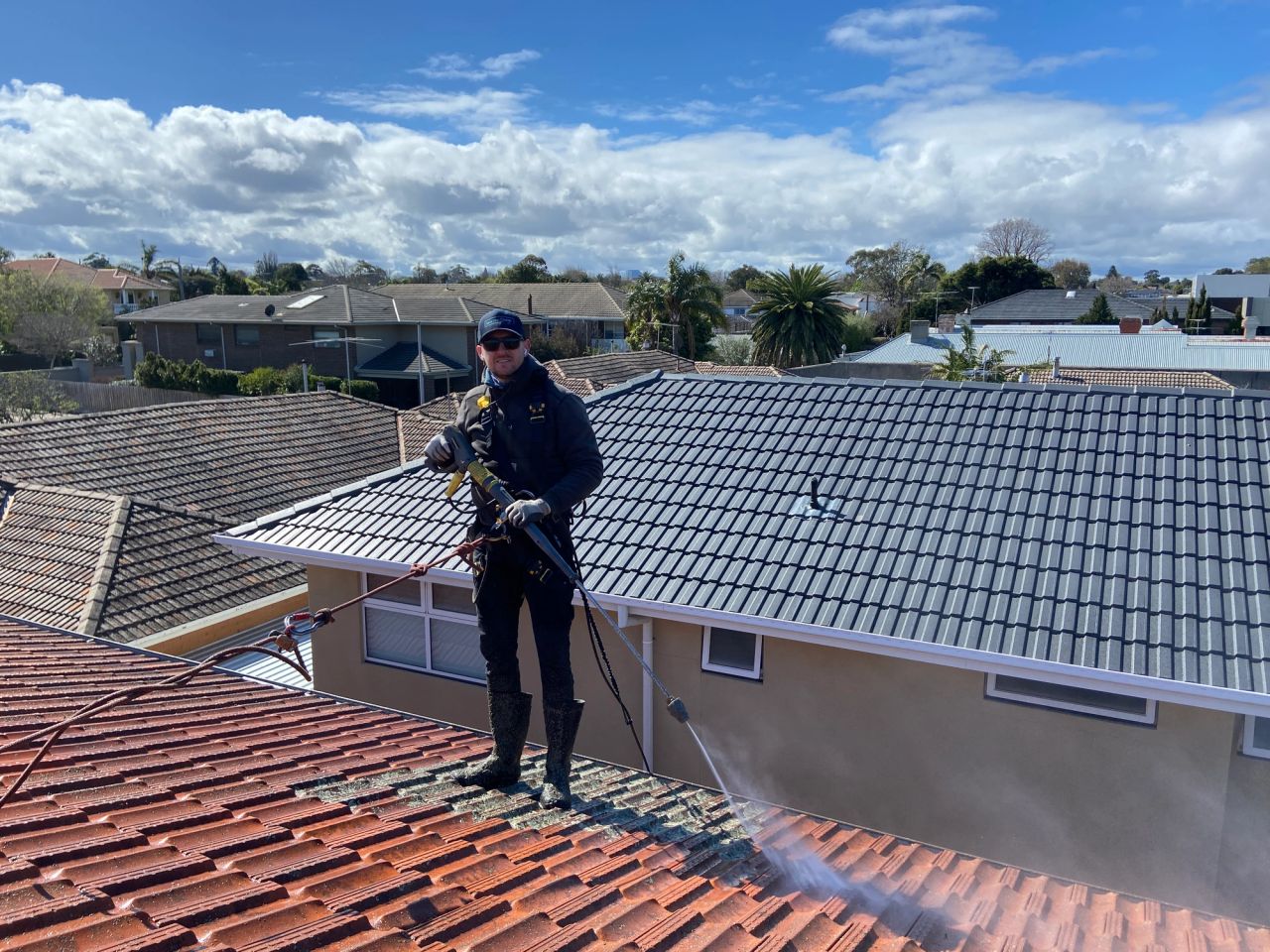
Roof moss removal starts at $495, and the first thing to know is that this is not a wash. Nothing gets cleaned on the day. We go up, apply a product that kills the growth at the root, and come down.
It is also not a single visit. A treatment is a course of two or three applications, two to three months apart, because growth that has been living in a tile for a decade does not die on one exposure. The weather sheds it between visits.
That makes it the slow option, and the expensive one per visit, and the right one only for a particular owner: somebody whose roof matters more than their calendar. If you need a clean roof by a date, you want roof washing instead, and the next block explains which is which.
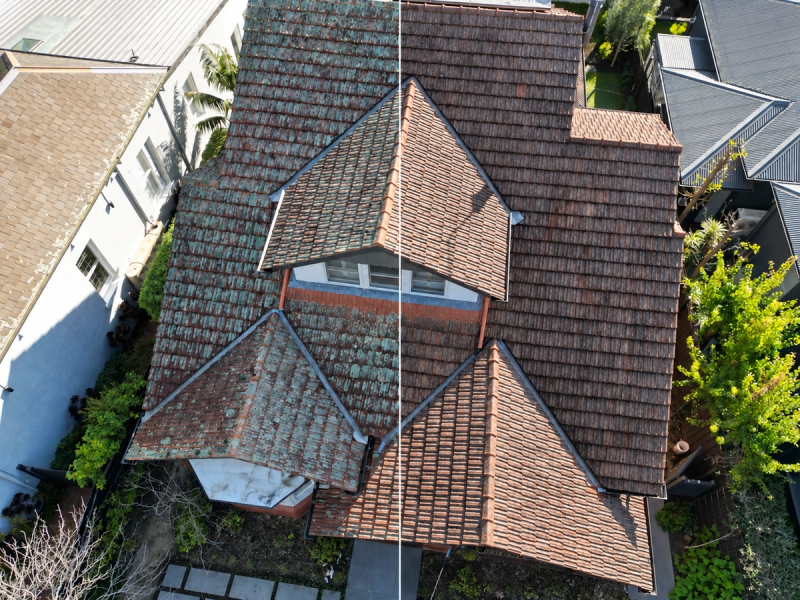
Two ways to get it off, and a deadline picks one
Moss and lichen on a roof have two answers. Which one is right for you is usually decided by a date in your diary rather than by anything about the roof.
A roof wash is one visit and a result that day. Product goes on, the roof is washed and rinsed, and by the afternoon it is clean. That is what you want when something is booked: a solar installer coming in the morning, listing photographs on Thursday, a handover, a tenant moving in. It starts at $352 and is priced by material and area, so a large or steep roof runs well past that. See roof washing.
A treatment is a course, and on the day it changes nothing you can see. We apply, we leave, and the roof looks much as it did. The growth dies over the following weeks, ordinary weather takes it off, and then we come back and do it again — two or three times across most of a year, until it stops returning.
The treatment costs more per visit, because most of what you are paying for is the product rather than the day. It also asks for patience nobody selling a wash has to ask for.
Neither is a cheaper version of the other, and neither replaces the other. Plenty of roofs get the wash first because something is booked, then the treatment afterwards because the owner does not want to be back here in three years.
What a roof moss treatment includes
Each application in a roof moss treatment covers the whole roof plane, not the patches you can see from the driveway. Growth that has not surfaced yet is already in the tile, and treating only what shows is why a roof goes green again in a season.
- Every surface of the roof, not the visible growth. Including the shaded southern side, which is usually worse and usually the part nobody photographs.
- Material identified before anything is applied. Terracotta, concrete tile, Colorbond, slate and polycarbonate do not take the same product at the same strength.
- Applied and left. No scrubbing, no brushing, no rinsing and no pressure. The product has to stay on the roof to work, so washing it off would undo the visit.
- One price per application, and you decide after each one. Two is typical and three is common on established lichen, but the roof decides that, not a package sold in advance.
- Photographs at every visit, so the change between applications is a record rather than a memory.
Three things are deliberately not in the price. Repairs of any kind — cracked tiles, re-bedding or re-pointing ridge caps is roof plumbing, a licensed trade, and we are a cleaning contractor. Coating or painting. And gutter clearing, because what comes off the roof over the following month has to land somewhere and most of it lands in the gutters. Say so at quote stage and it gets priced with the job rather than becoming a surprise.
The first visit, and the two after it
A roof moss treatment runs across most of a year. Here is what happens, and when.
- 1
The roof is looked at, not guessed at
From the ground, from a drone, or from the roof itself where it is safe to be there. Pitch, material, condition and how the growth is sitting all change the quote, and none of them can be read off an address.
- 2
Material and condition confirmed
Porous terracotta, sealed concrete tile, Colorbond and slate take different products at different strengths. A roof at the end of its life gets a different conversation instead of a different product.
- 3
Treatment applied across the whole plane
Applied to the full roof surface rather than the visible patches, and worked into the shaded elevations where the growth is thickest and least visible from the street.
- 4
Nothing is scrubbed or blasted
The roof is left alone after application. No brushing, no scraping, and no pressure on the surface at any point.
- 5
Two to three months of weather
Nothing happens on site. The growth dies, dries out, loses its grip and comes off in the rain and wind. This gap is the working part of the service, not a delay in it.
- 6
The second application, and a third if it needs one
We come back to what the weather left and treat what survived, which is always less than the first time. You will have seen the change yourself by then, so the decision to do another is made on evidence rather than on a schedule agreed months earlier.
Roof moss removal prices in Melbourne
Roof moss removal is priced per application, on area, pitch and access rather than on the number of bedrooms. Most roofs can be priced from aerial imagery and a couple of photographs, without anyone needing to be home.
from — whole roof plane treated, photographs each visit
Most of what you are paying for is the product, which is why an application costs more than you might expect for a visit with no washing in it. Every application is the same price, and you decide after each one whether the roof needs another — two is typical, three is common on established lichen, and nothing is booked in advance. Gutter clearing, access work on steep or two-storey roofs, and anything needing a licensed roof plumber are quoted as separate lines.
What moves the price on a roof
Five things, and the size of the house is only loosely one of them.
- Area and pitch. A steep roof is slower, needs different access and is a different safety proposition. Two houses with the same footprint can be a long way apart once the pitch is measured.
- Material. Lichen on Colorbond roof sheeting is usually a lighter job than the same growth on porous terracotta, because there is less for it to hold on to, and it is priced that way.
- Access. Two storeys, no safe ladder point, a roof crowded with solar panels, or a site where the only approach is through a neighbour's property. Access is quoted as access, separately from the treatment.
- How far gone it is. Thin surface moss and forty years of established lichen are the same service and not the same day.
- What has to be cleared afterwards. Gutters, mostly. Worth deciding before rather than after.
Roofs are quoted on area, pitch and access, never by the hour. An hourly rate on a roof puts the cost of a slow, awkward or dangerous roof onto you instead of onto the contractor who agreed to climb it.
Where we will tell you not to book
Four things people say before booking. One of the answers is that you should keep your money.
“Can't we just leave it? It comes and goes anyway.”
On some roofs that is genuinely true. A Colorbond roof with decent pitch, full sun and clear gutters sheds light moss on its own, and paying somebody to hurry that along is money you did not need to spend. On porous terracotta under trees, on the shaded side, it does not go anywhere — it thickens and roots in. Which of those you have is worth establishing before you spend anything, and our article on moss and lichen walks through how to tell.
“Wouldn't it be cheaper to just paint or coat the roof?”
Coating is a separate trade with its own products and its own warranty, and we do not do it. But it is not an alternative to this, it is a job that needs this done first. Coating over live growth is one of the standard reasons a roof coating fails years early, and any coating contractor worth hiring will tell you the same. If you are having the roof coated, the treatment is preparation, not a competing quote.
“The roof is at the end of its life and we are replacing it soon.”
Then do not spend the money here. Treatment improves how a roof looks and slows what growth does to the surface. It does not add years to a roof that has already run out of them, and it will not change a single line of a replacement quote. Put it toward the new roof.
“Why does one application cost more than a whole roof wash?”
Because you are buying the product rather than the day. A wash is labour and water with a modest amount of chemistry; a treatment is a considerable amount of a specific product carried onto a roof and left there. It is also worth saying that a wash is quoted from $352 and a large or steep roof runs well past a thousand, so the two are closer than the starting numbers suggest. If what you want is a roof that looks better this week, a roof wash is the cheaper and more honest thing to buy, and the link to it is in the first block above.
The before and after, months apart
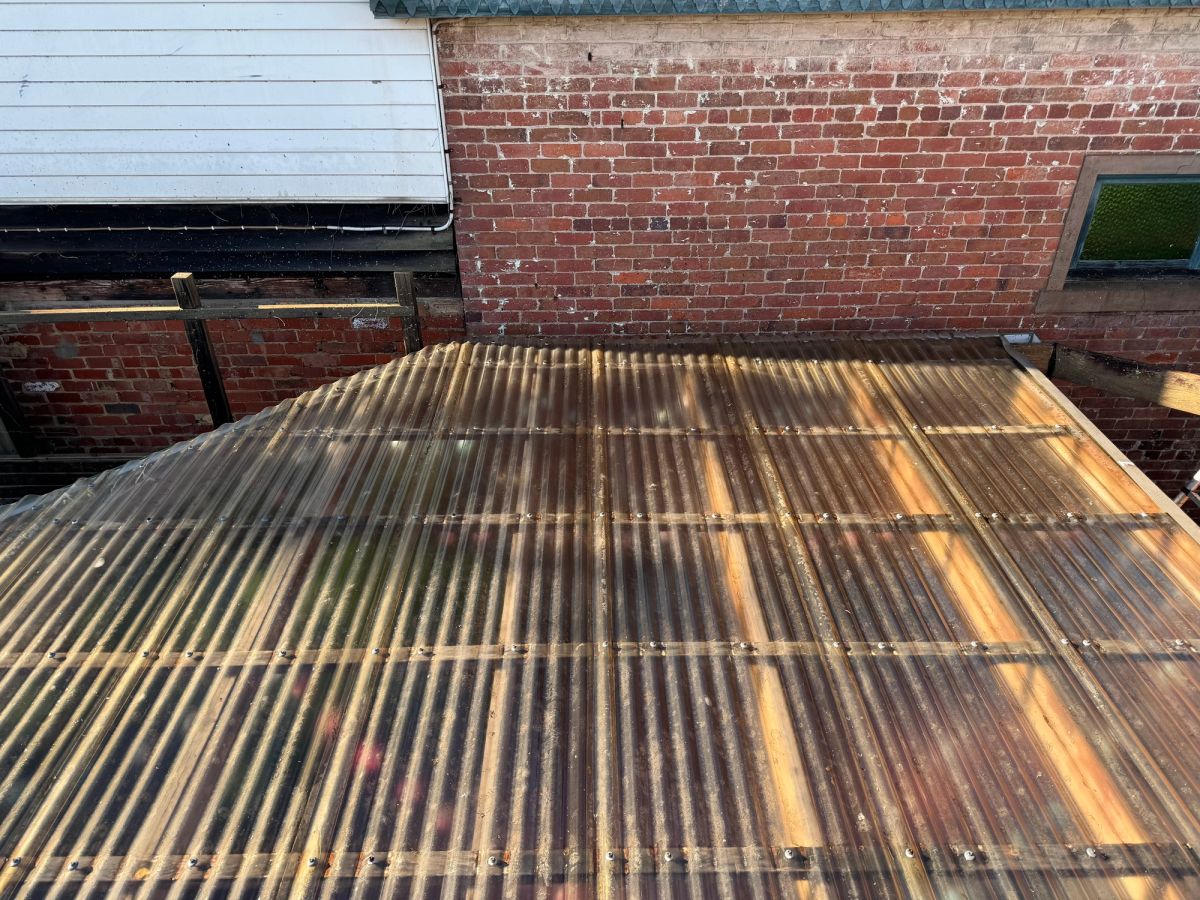
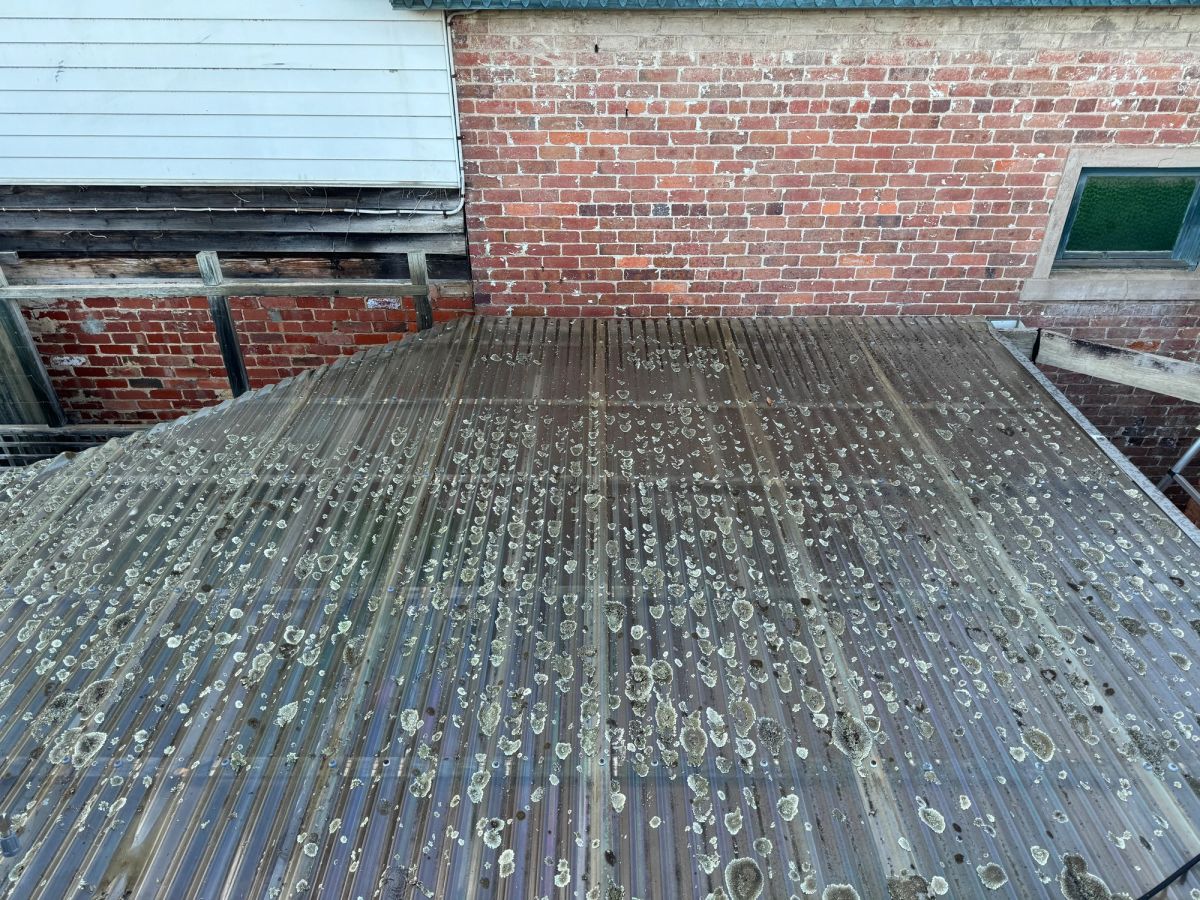
A pergola roof on Gordon Street, Elsternwick — clear polycarbonate sheeting, completely covered in moss on the upper face. From underneath the light coming through had gone grey and green.
Read case study
Google reviews
What clients wrote afterwards on Google
Recent verified feedback from local clients who booked exterior cleaning with WaterCrew.
★★★★★ GoogleJuly 2026"Very happy with the service. They were clean, professional and left everything tidy Plus the job was done beautifully Many thanks!"
MelbourneView on Google ↗

★★★★★ GoogleJune 2026"Highly recommend Eren and his WaterCrew. Have used for gutter cleaning and will in future use for terracotta roof tile cleaning & window cleaning. They do a very thorough and professional job at competitive rates. Also, they are polite, friendly and well spoken."
CanterburyView on Google ↗

★★★★★ GoogleJune 2026"WaterCrew Cleaning recently cleaned the windows at my home in Chadstone and did an excellent job. The team was professional, friendly, and easy to deal with. The windows look crystal clear, and the service was completed on time and to a very high standard. I would highly recommend WaterCrew Cleaning to anyone looking for reliable window cleaning services in Chadstone."
MelbourneView on Google ↗

★★★★★ GoogleJune 2026"New age equipment, timely with very satisfactory results. Highly recommend crew for exterior/interior and flyscreen cleaning. Gutters cleaning available as well Best crew I came across for sometime and reasonably priced. Collin"
HamptonView on Google ↗

Who calls us about moss on roof tiles
A tiled roof under trees
The shaded southern plane is always worse than the street elevation, and it is the one nobody sees until a neighbour mentions it or the house goes on the market.
A house going on the market
The roof is in every aerial photograph on the listing. Worth booking early, because this is the one service that looks better at settlement than it does at the open for inspection.
A roof carrying solar panels
Growth around and under the panel rails, and access that has to work around the array. Usually quoted together with a panel clean, since the crew is already up there.
An owners corporation or agent
Common roof, shared cost, and a committee approving several invoices across a year rather than one. The likely number of applications and the per-visit figure go out in writing with the quote.
How to read a roof lichen quote
Roof lichen is quoted by people who mean four different things by it, and the quotes look similar until you ask. Four questions separate them.
Is it priced per application, or sold as a package? Ask what happens if the roof needs one more than the package covers, and get that answered before the first visit rather than after the last one. A fixed number of visits promised for a roof nobody has yet watched through a season is a guess with a price on it.
Is it priced on area and pitch, or by the hour? A lichen removal roof job quoted hourly transfers the risk of a difficult roof from the contractor to you, and roofs are exactly where that risk lives.
Who goes up there, and what happens if a tile breaks? Ask for the public liability certificate rather than the assurance. Ours is $20 million and it goes out with the quote if you want it. Ask also whether the person on the roof is trained to be at height, because on a two-storey roof that is not a formality.
Does it include repairs or repointing? If it does, ask to see the roof plumber licence. Cleaning and roof plumbing are different trades with different registration, and a quote that quietly mixes them is a quote worth reading twice.
None of these four questions is about price, and all four of them change what the price means.
When the course ends, and what comes after
There is no standing arrangement at the end of this, and nobody will ring you every spring. When the roof stops coming back, we stop coming out.
Moss on roof surfaces comes back on a schedule set by the roof, not by the calendar: shade, overhanging branches, pitch, and gutters that hold water against the edge. A roof with none of those stays clear for years once the growth is dealt with. A roof with all four will be green again whatever anybody sprays on it, and the fix there is the branches and the gutters rather than a fourth visit.
So when we finish, you get told which of those two roofs you have. If it is the second one, the useful advice is about trees and drainage, and it is free, because selling you another application would be selling you the wrong thing.
We do not install copper or zinc strips either. What they do and do not achieve is set out in the article, and fixing metal to a roof is roof plumbing rather than cleaning in any case.
And if what turns up in a few years is dirt rather than growth — the roof reads darker but nothing is rooted in it — the cheaper job is roof washing, not this.
Questions about moss and lichen on roofs
How long does the whole thing take?+
Most of a year. Two to three months between applications, and typically two or three of them, so plan on six to nine months from the first visit to a roof that is done. Some roofs want another after that. If six months is longer than you have, this is not the service you want.
How is a lichen removal roof job priced?+
Per application, on area, pitch and access, and the same figure each time. Never by the hour. Most roofs can be measured from aerial imagery and a few photographs from the ground, so nobody needs to be home for a quote.
Is a roof moss cleaner something I could just buy and apply myself?+
Products exist and some of them work. The reason to think carefully is not the chemistry, it is that the application happens on a wet, sloped surface two storeys up, and roof falls are not a minor category of accident. The article covers what is realistic to do yourself.
Will it damage the roof, the plants or the pets?+
The roof is the point of the exercise, so no. Planting is protected and rinsed where run-off reaches it, and the site is left wet rather than treated. Keep pets off the affected garden until it has dried, which is usually the same afternoon.
What about mould rather than moss or lichen?+
Mould on roof surfaces is usually a surface problem rather than a rooted one, and it generally lifts with a soft wash instead of this treatment. Roof mould removal and this job get confused constantly, and the test is simple: if it wipes off a tile with a cloth, it is not this. If it has to be pulled off, it is.
Do you treat Colorbond as well as tiles?+
Yes, along with slate and polycarbonate. Colorbond usually has less growth holding on and is often the cheaper job, but the product and strength change with the material, which is settled before anything is applied.
Can you do the gutters at the same time?+
Yes, and the order matters. Most of the dead growth reaches the gutters in the months after each application, so gutters cleared on the day of a visit get a second load afterwards. The sensible point is after the final application, and it is quoted then.
What if there is still growth after the application I thought was the last one?+
Then it needs another, and it is charged like the others. That is the honest shape of this service and it is worth understanding before you start: we apply the product and the roof does the rest, and how many exposures a particular roof needs depends on the species, the tile, the aspect, the shade and the weather that season. What you get instead of a guarantee is control — you see the result of each application before deciding to pay for the next.
About the expert

Ihor Sydorenko
Founder & Lead Rope Access Technician (IRATA Level 3) — WaterCrew Cleaning
Ihor has worked on ropes since 2013, starting on high-rise facades in Kyiv, where he founded and still runs the rope-access company Альпіністи Київ. He holds IRATA Level 3 — the highest grade in the international rope-access system, covering work supervision, safety planning and rescue.
- ✓ IRATA Level 3 rope access technician
- ✓ Working safely at heights
- ✓ Construction induction
- ✓ First aid