Cleaning Roof Tiles in Melbourne
The method is decided by what the roof is made of, not by how dirty it looks. Terracotta, Colorbond, concrete tile and metal each take something different.
- $20M public liability insurance
- Police-checked, WorkSafe compliant
- 5.0 from 170 Google reviews
- Not happy with the work? You don't pay
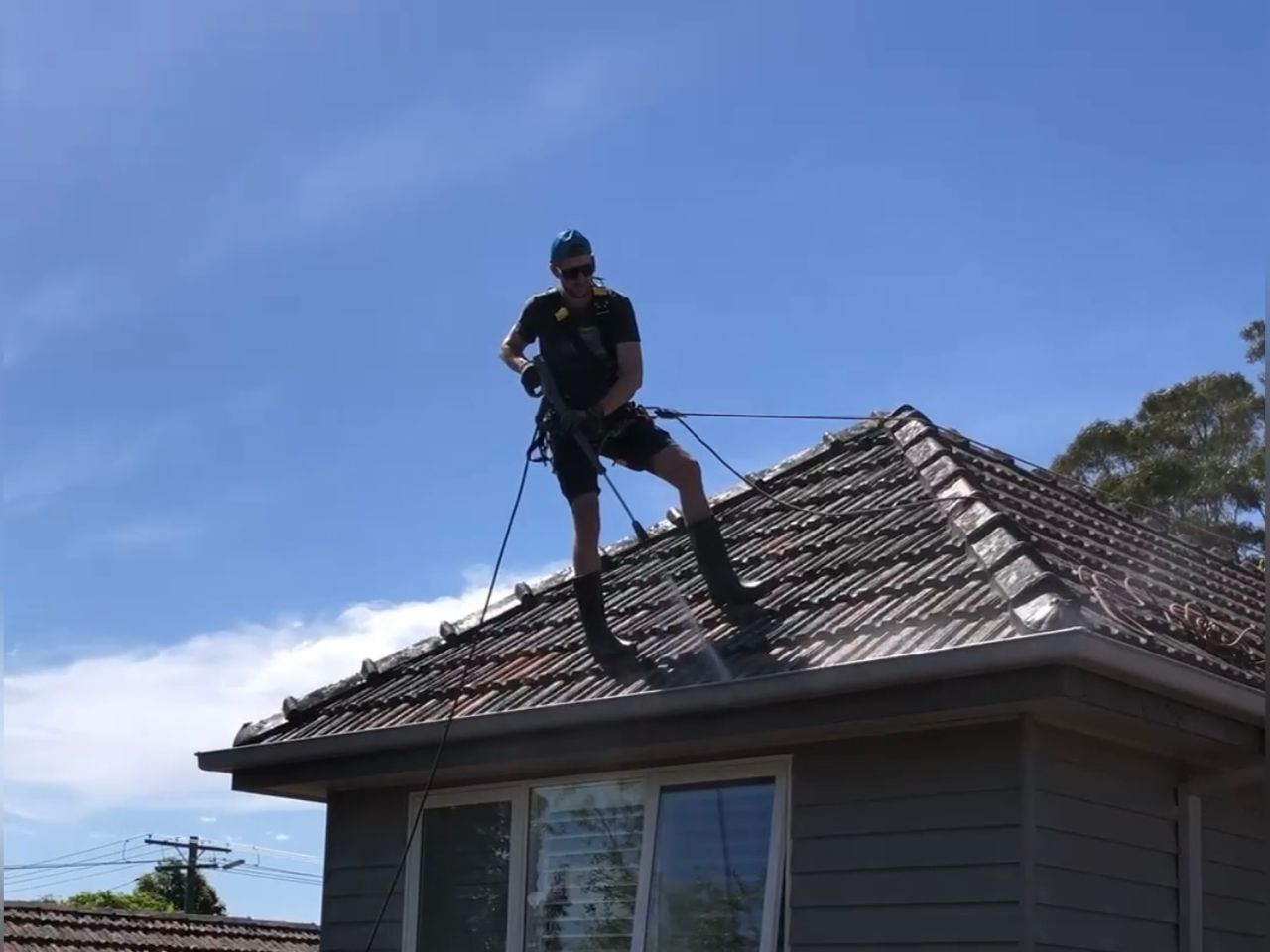
A roof is the one surface on a house nobody inspects. It is looked at from the street at an angle, in passing, and by the time it reads as dirty from down there it has been holding growth for years.
The method is not a preference, it is decided by the material. Terracotta, Colorbond, concrete tile and older galvanised steel all fail in different ways, and the setting that is safe on one of them is what ruins the next.
A roof wash starts at $352 including GST on coated steel, $462 on terracotta and $638 on concrete tile. What moves it from there is the pitch and how much of the roof can be reached from the edge.
Why roof pressure cleaning is the wrong name for it
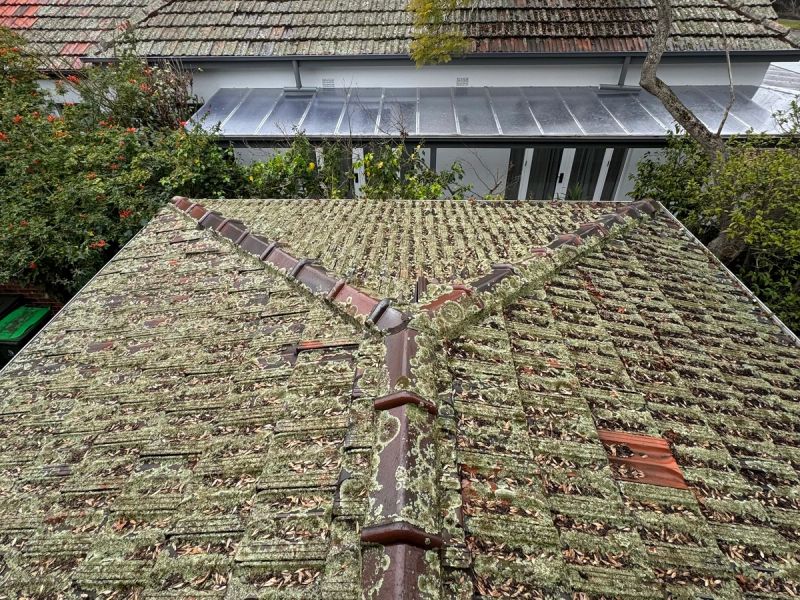
Roof pressure cleaning is what people search for and it describes about a third of the work. Most Melbourne roofs are cleaned at pressures closer to a garden hose than to a machine, and the ones that genuinely need force are the exception rather than the default.
The reason is what is actually on the roof. Growth sits in the pores of a tile and under the laps of a sheet, and it is removed by chemistry and time rather than by force. Force removes the growth and the surface it was living on at the same speed. Where the growth is established lichen rather than surface grime, the answer is a course of roof moss removal rather than a wash.
The other reason is what the roof is holding up. A tile roof is a set of loose components resting on battens, and every one of them is a place for water to get under if it is moved. A sheet roof is fixed, but the fixings and the seals around them are eighty years old on plenty of houses here.
So the question is never how much pressure. It is how little will do the job, and what has to go on the surface first so that the little is enough.
There is one honest exception, and it is a concrete tile roof in sound condition with nothing but grime on it. That surface takes real pressure and comes up well, which is why the method has a reputation it only half deserves.
Cleaning roof tiles: what the material decides
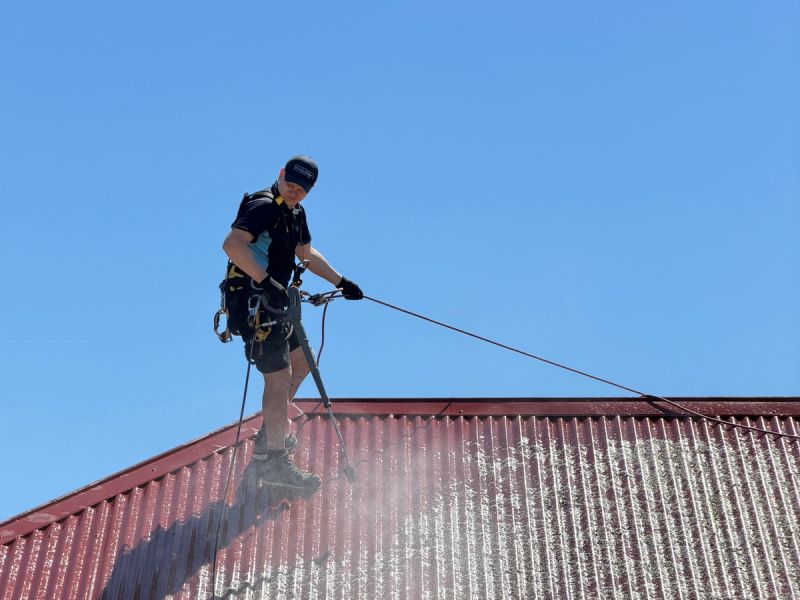
Cleaning roof tiles and cleaning a sheet roof have almost nothing in common except the ladder. Four materials cover most of Melbourne, they fail in different ways, and they are not equally difficult. The order below runs from the easiest to the hardest, and it is also the order the prices run in.
Colorbond and coated steel. The straightforward one, and usually the flattest. Steel with a factory coating that handles washing well and hates two things: abrasives, and anything alkaline left sitting on it. The failure is not dramatic, it is chalking and fading that shows up a year later on the northern faces first.
Older galvanised and zincalume. Common on sheds, extensions and anything pre-Colorbond. Thinner, often already rusting at the laps, and the wash is as much about not making a hole as about cleaning.
Terracotta. Fired clay with a glaze on the face. The glaze is what sheds water, and it is thin. Take it off with pressure and the tile underneath is porous, so it holds water, grows more, and gets heavier every winter. Terracotta is also brittle with age: it cracks underfoot and the crack does not show until rain finds it.
Concrete tile. The hardest of the four, and the one people expect to be the easiest. The colour sits in a surface coating rather than through the body, and once that coating has worn off the body underneath is porous. Growth then roots into the tile instead of sitting on it, which is slow work to clear and impossible to rush.
The tiles themselves are the other half of it. Concrete tiles are smaller than they look from the ground, so there are more of them per square metre, more joins, and more edges. Aged ones go fragile at those edges, so the roof carries less weight and takes more care than a terracotta roof of the same size.
| What goes wrong | What causes it | What it costs | How to prevent it |
|---|---|---|---|
| Glaze stripped off terracotta | Pressure on a fired clay tile | Permanent. The tile is porous from then on and grows back fasterNo published figureTrade experience, no published figure | Chemistry and a rinse, never force, on terracotta |
| Colour washed off concrete tile | Pressure on the surface coating that carries the colour | Recoating the roof to get the finish backNo published figureTrade experience, no published figure | Treat concrete tile as coated, not as concrete |
| Cracked tiles found next winter | Weight and traffic on brittle century-old clay | A leak in one spot, a ceiling stain in anotherNo published figureTrade experience, no published figure | Work from the edge where possible, cross on batten lines |
| Water driven under the laps | A jet aimed uphill on a sheet or tile roof | Moisture in the roof space, found from insideNo published figureTrade experience, no published figure | Always work down the fall, never up it |
| Coating chalking on Colorbond | Abrasives, or product left to dry on a hot roof | A dull, uneven roof that no later wash restoresNo published figureTrade experience, no published figure | No abrasives, and rinse before anything flashes off |
| Gutters blocked by the clean itself | Everything off the roof going into gutters nobody cleared afterwards | Overflow into the eaves in the next heavy rainNo published figureTrade experience, no published figure | Clear gutters and downpipes after the roof, not before |
Sources
No published dollar figure exists for any of these on a Melbourne roof, so none is quoted. Every row is trade experience and says so in the row.
Where a roof soft wash stops and a plumber starts
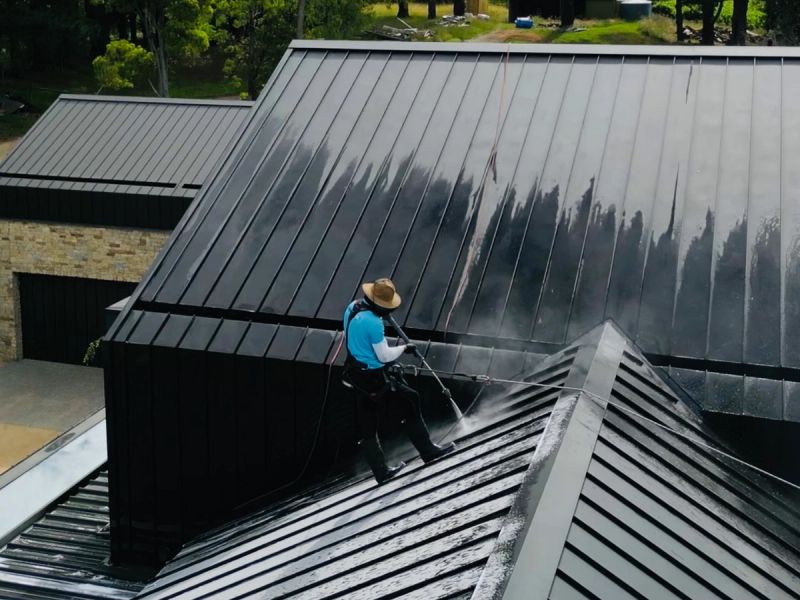
A roof soft wash covers the roof surface, the valleys, the ridge capping as far as it is sound, and the gutters if they are in the job. Valleys matter more than the open field of the roof: they carry everything the rest of it sheds, and a blocked valley backs water under the tiles either side of it.
The wash is done off the roof wherever the access allows. Nobody walks terracotta if there is another way, and on a steep or brittle roof the difference between working from the edge and working from the field is the difference between a clean and a repair bill.
What we do not do, because it needs a licence we do not hold:
- Replacing or rebedding tiles, ridge capping or flashing
- Repointing, repainting or coating a roof
- Anything involving the plumbing, the flashings around a penetration, or the structure
That boundary is worth knowing before you book. Roof repair, roof restoration and roof painting are the work of a licensed roof plumber, and a cleaner who offers all four is offering at least one of them without the ticket.
What you get from us instead is a photograph of anything we find. Cracked tiles, lifted capping, a valley that is failing, rust at a lap: it goes to you with a plain description so you can put the right trade on it.
Roof pressure cleaning prices in Melbourne
The material sets the price because the material sets the method. A coated steel roof is washed and rinsed. A terracotta roof is chemistry and patience. A concrete tile roof that has lost its coating is the slowest of the three, and it is priced as such.
from — coated steel, the simplest of the four
from — thin glaze, brittle with age, no pressure
from — porous once the coating goes, and slow to clear
All prices include GST and start from the roof, the valleys and the ridge line. Pitch and access move the figure from there, and gutters are quoted with the roof rather than after it.
Roof tile cleaning cost, and what moves it
Five things move the number:
- The material, because it decides the method before anything else does
- The area, and the pitch, since a steep roof is slower per square metre than a flat one
- How much of it can be reached from the edge rather than from the field
- What is growing on it, and how long it has been there
- Whether the gutters and valleys are in the job
A roof tile cleaning cost quoted without knowing the material is a guess, because terracotta and concrete tile take different products, different pressures and different amounts of time on the same square metre.
The same goes for a roof pressure washing price given over the phone. Pitch is the part nobody mentions and the part that changes the day: a roof steep enough to need harness and rope is a different job to one you can walk, and you cannot hear the pitch down a phone line.
Send a photo of the house from the street and one from the back if you have it. Say what the roof is made of if you know. That is enough for a figure rather than a range.
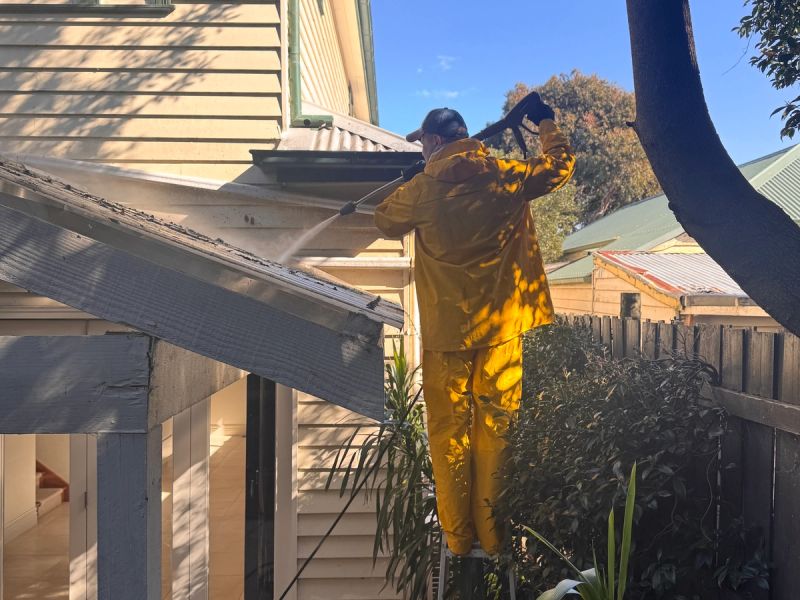
Soft wash roof cleaning, step by step
The roof gets looked at before anything is decided. Material, pitch, condition of the capping, state of the valleys, and whether the gutters can take what is about to come off the roof.
Soft wash roof cleaning then works in the order water does. Product goes on from the ridge down, it is given the time it needs, and it comes off with a rinse rather than with force. Working uphill means rinsing over what is already done, which is how streaking happens.
Gutters and downpipes get cleared afterwards rather than before. Everything that comes off a roof lands in them, so cleaning them first means doing them twice.
The result keeps improving for a few weeks after we leave, and that surprises people. Growth that has been killed rather than blasted off breaks down and washes away in the next few rains, so a roof that looks eighty per cent done on the day looks finished by the end of the month.
Nothing is walked that does not have to be. Where the roof has to be crossed it is crossed on the batten lines, and on a brittle terracotta roof it is not crossed at all.
Terracotta, Colorbond and concrete tile
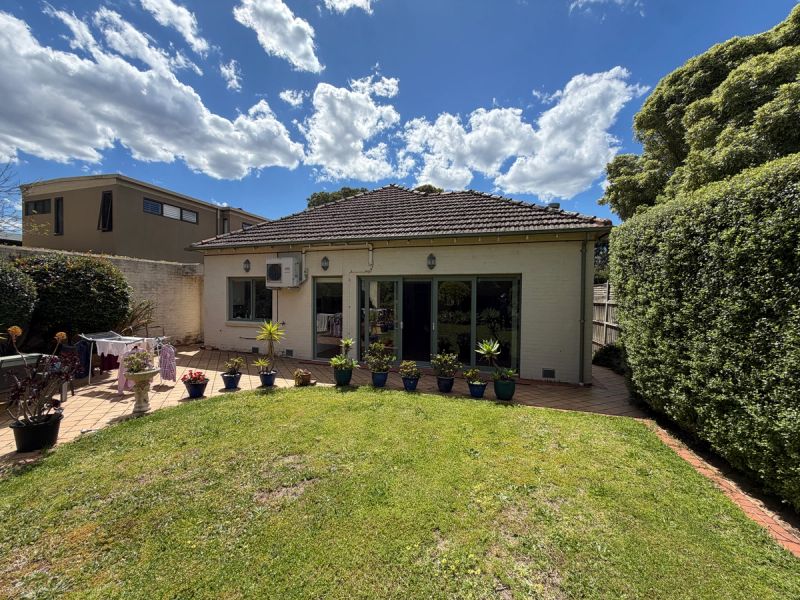 Gutter cleaning
A single-storey house on Mountview Road, Malvern, where the gutters are cleared every six months and the downpipes had blocked anyway. Gutters, downpipes and all the glass inside and out, in one visit.
Read case study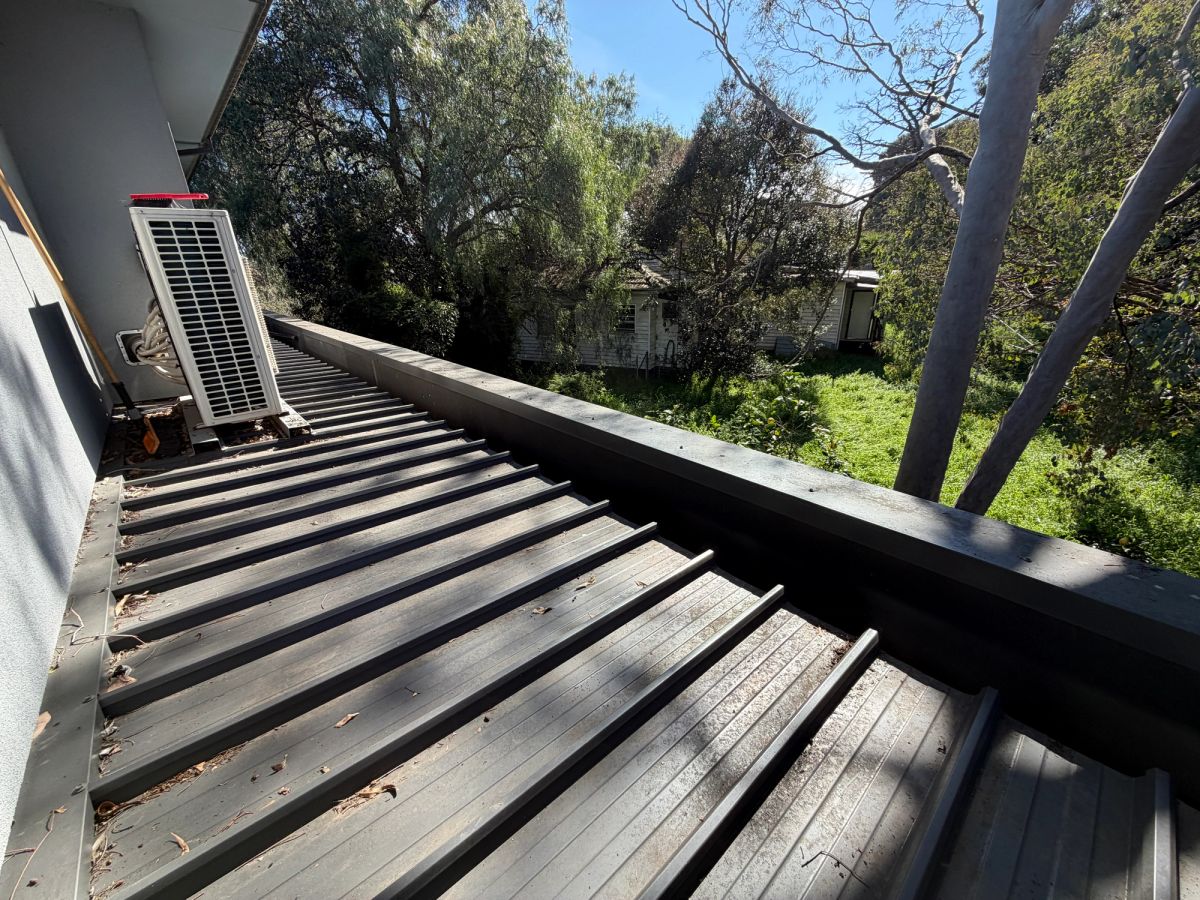
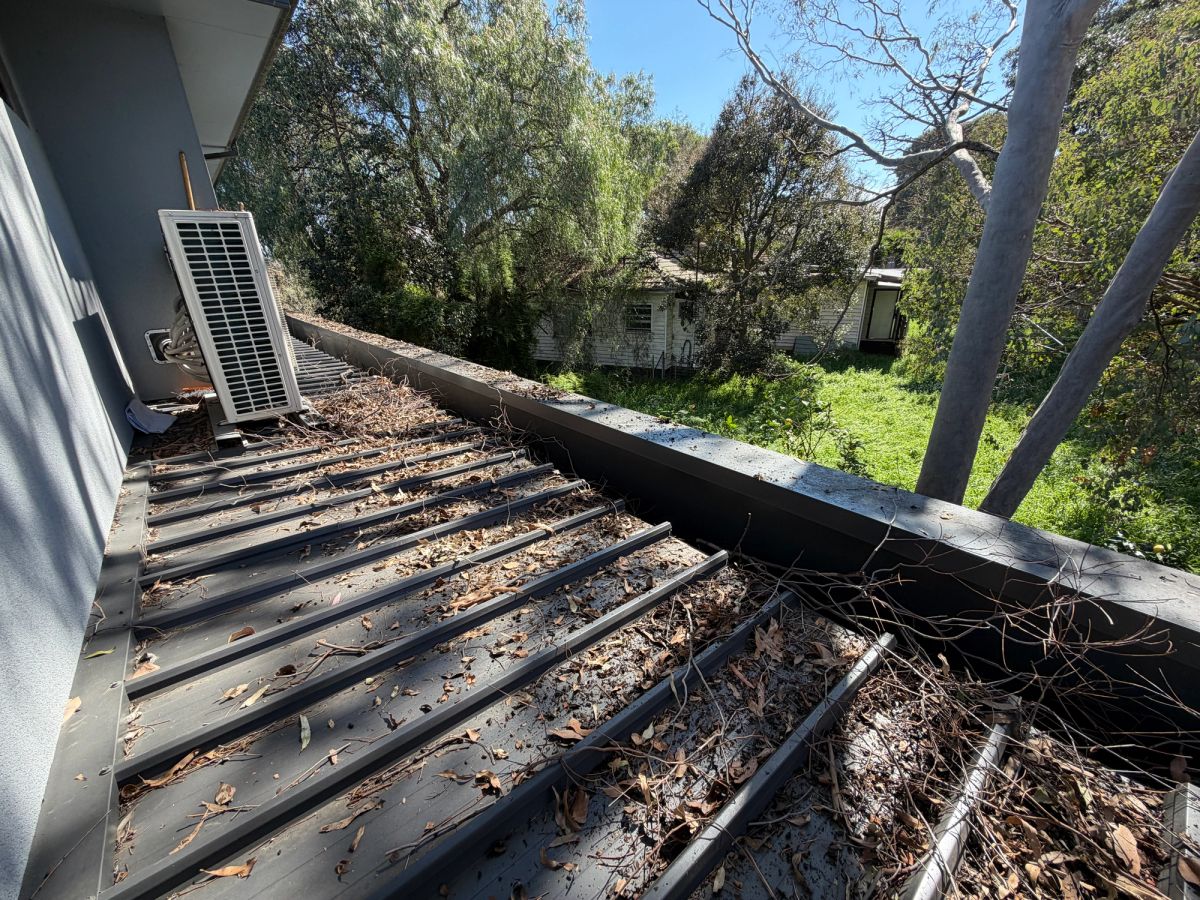
["Gutter clean on a small but awkward roof in Highett, sitting directly under heavy tree cover. Two years of leaves and branches had packed the gutters solid.\n\nThe job was done from the roof rather than the ground: coarse branches out by hand, then vacuum extraction along the gutter line, plus clearing dry leaf litter off the roof. Three hours, one full green bin of debris taken off site."]
Read case study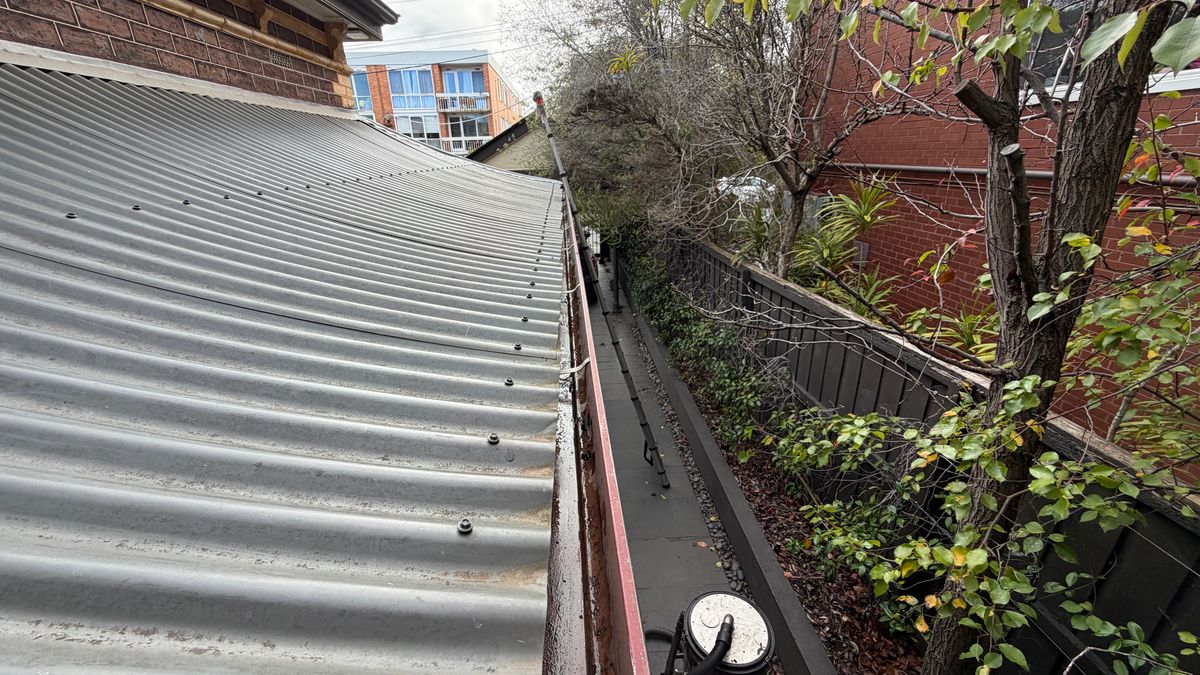
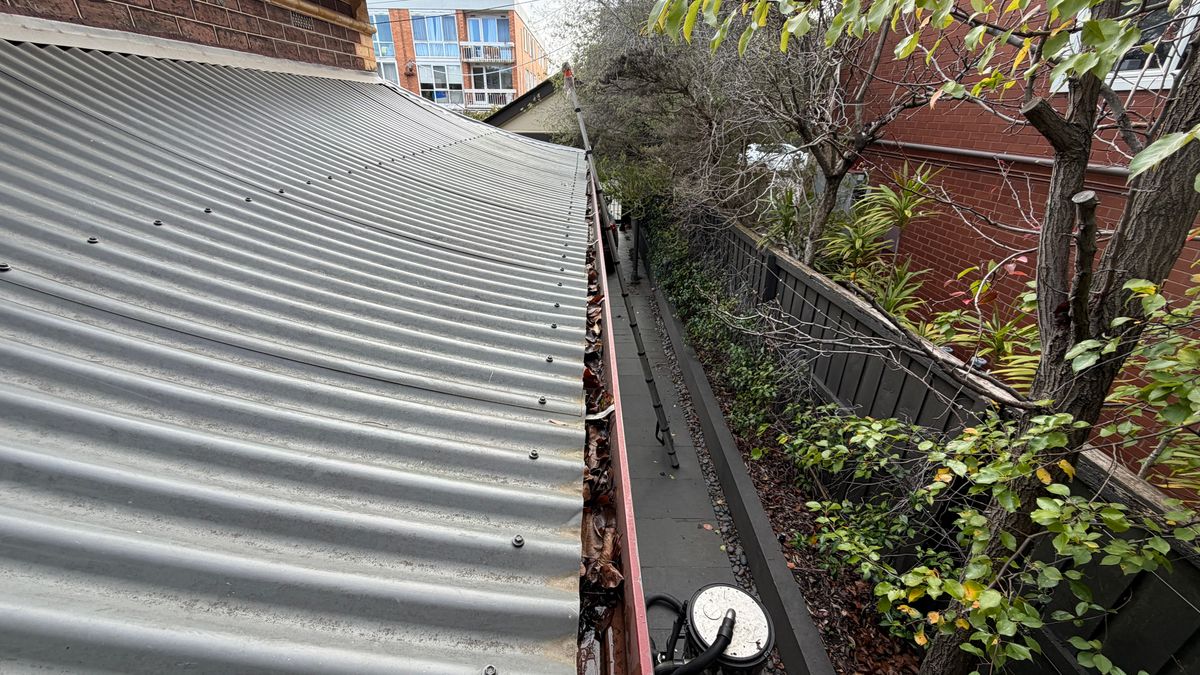
Gutter cleaning on a double-storey house on Ercildoune Street, Caulfield North. The gutters were completely blocked, with grass growing out of them.
Read case study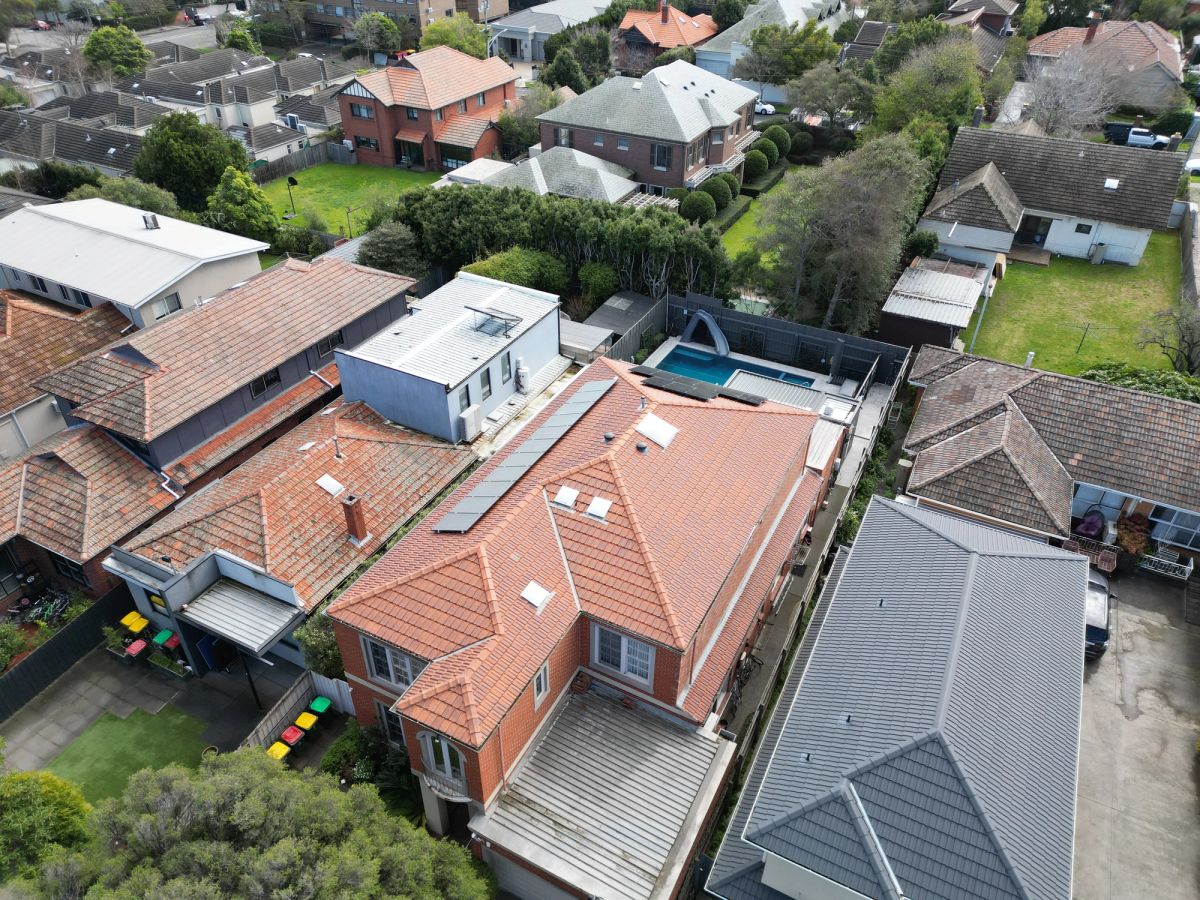
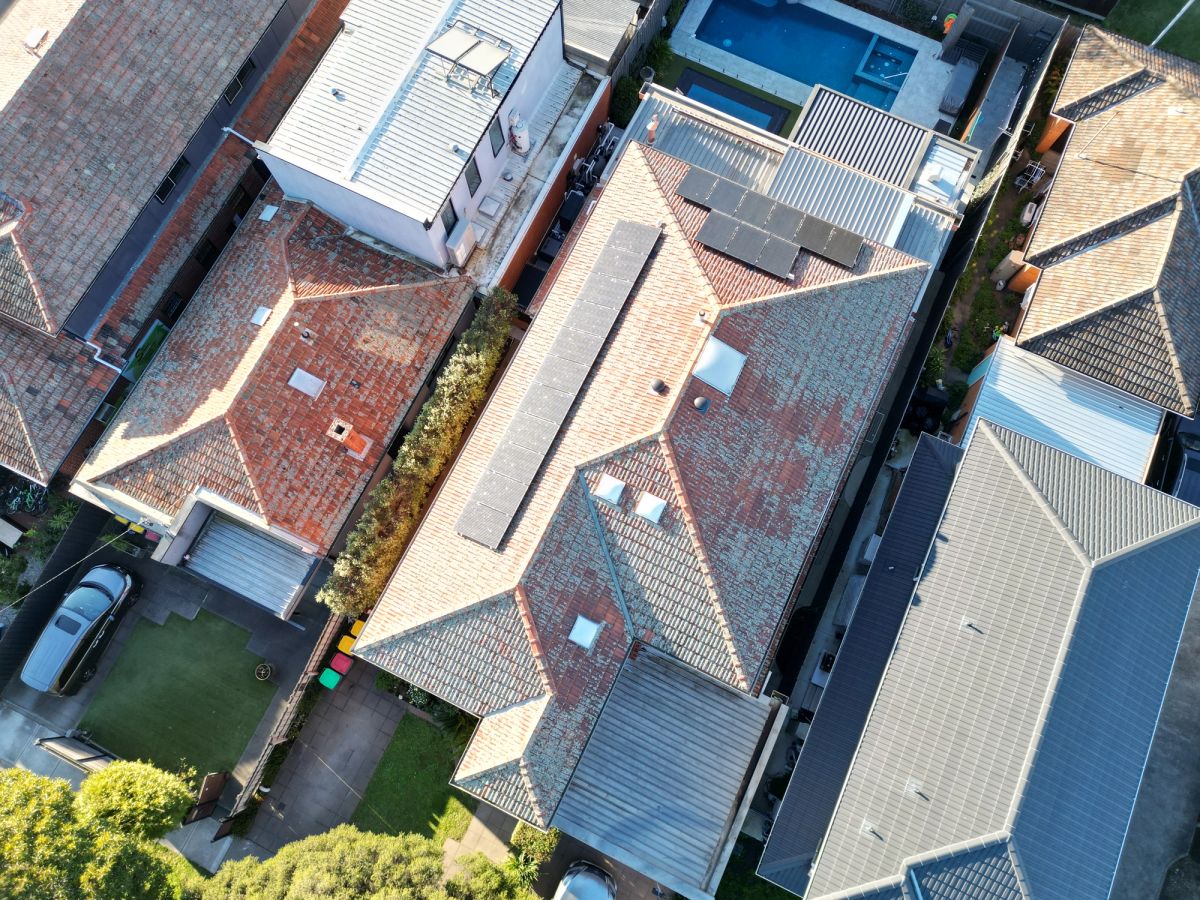
Two hundred square metres of roof on Rockbrook Road, carrying enough moss to change its colour from the street.
Read case study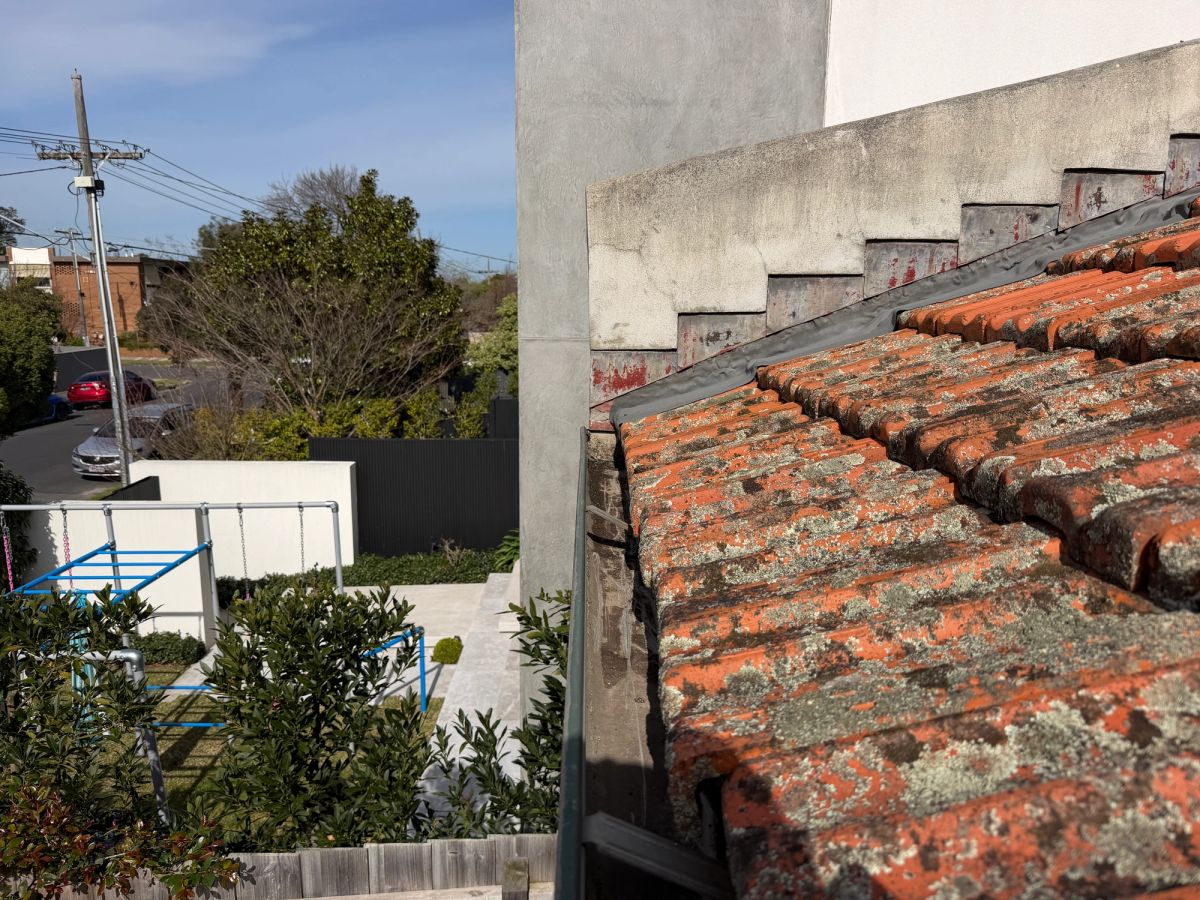
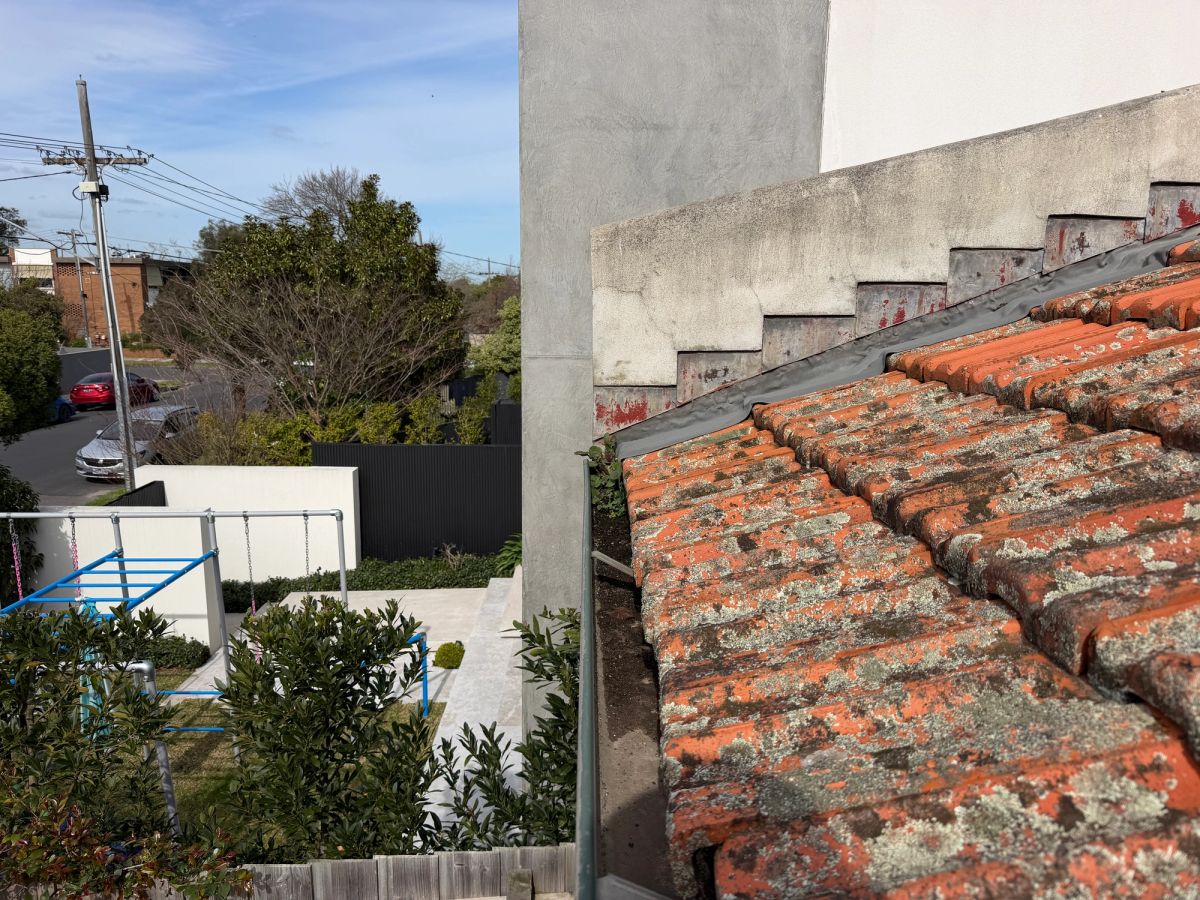
A long single-storey house on Hoddle Street in Elsternwick with around 80 metres of guttering and downpipes blocked with compacted soil. The full run was cleared with SkyVac vacuum equipment from the ground.
Read case study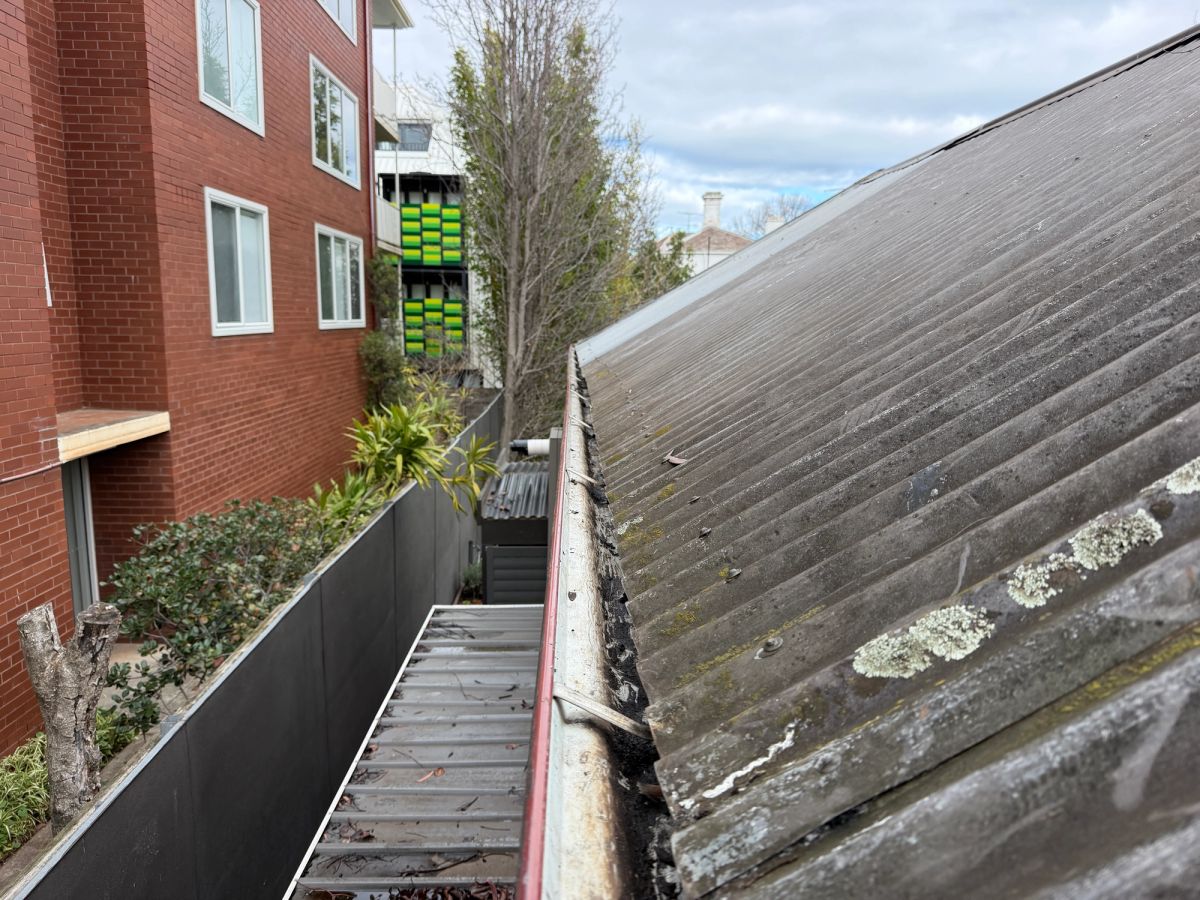
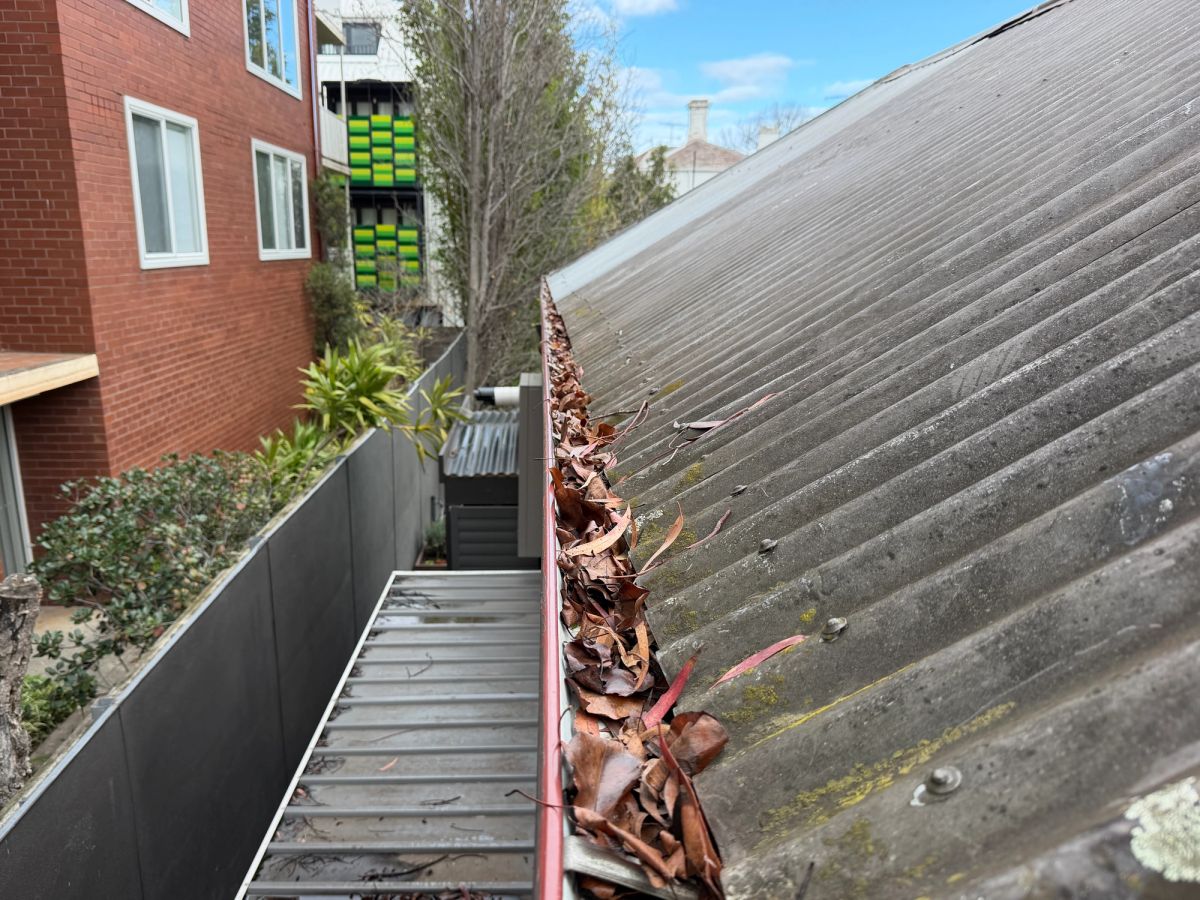
An annual clean for a returning client on Wrexham Road, Windsor, done in the first week of August. The property is ringed by trees, so the gutters fill every year.
Read case study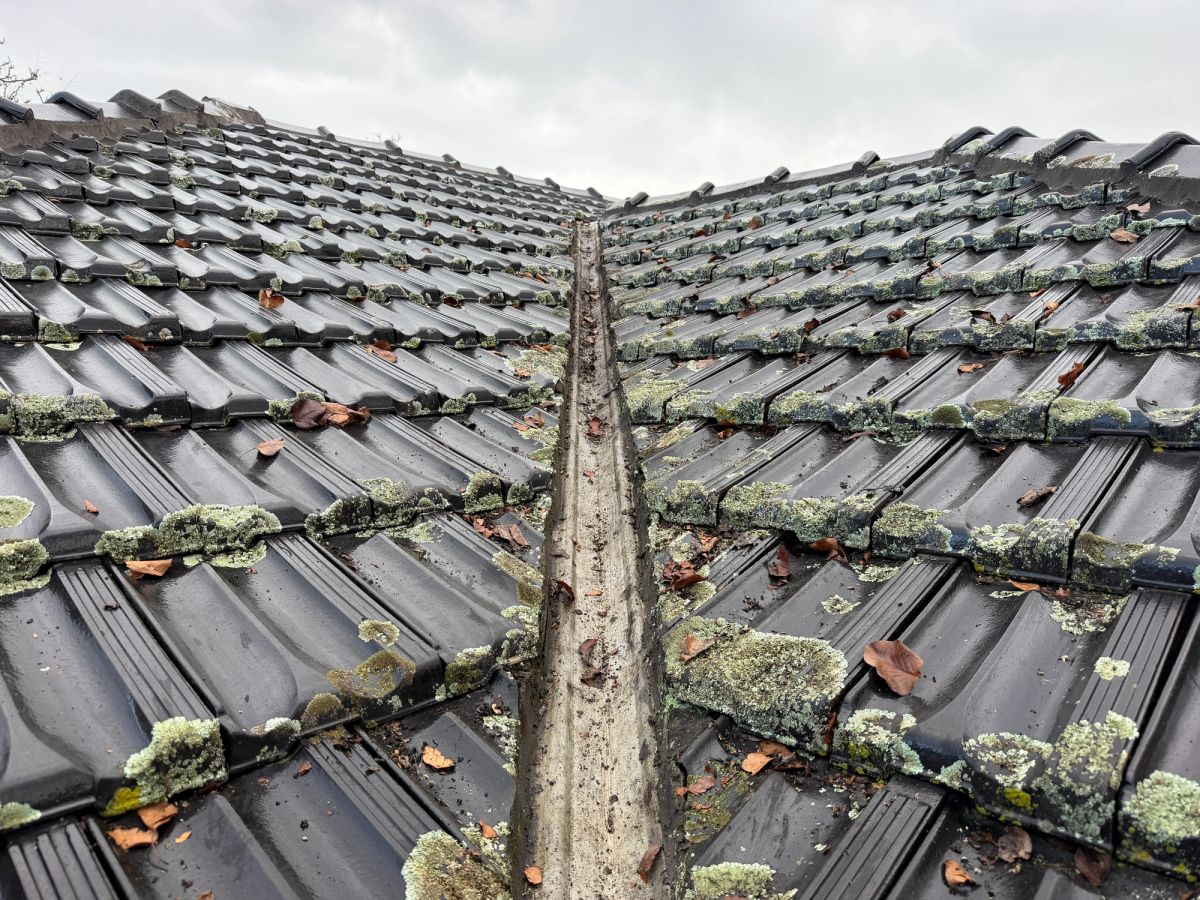
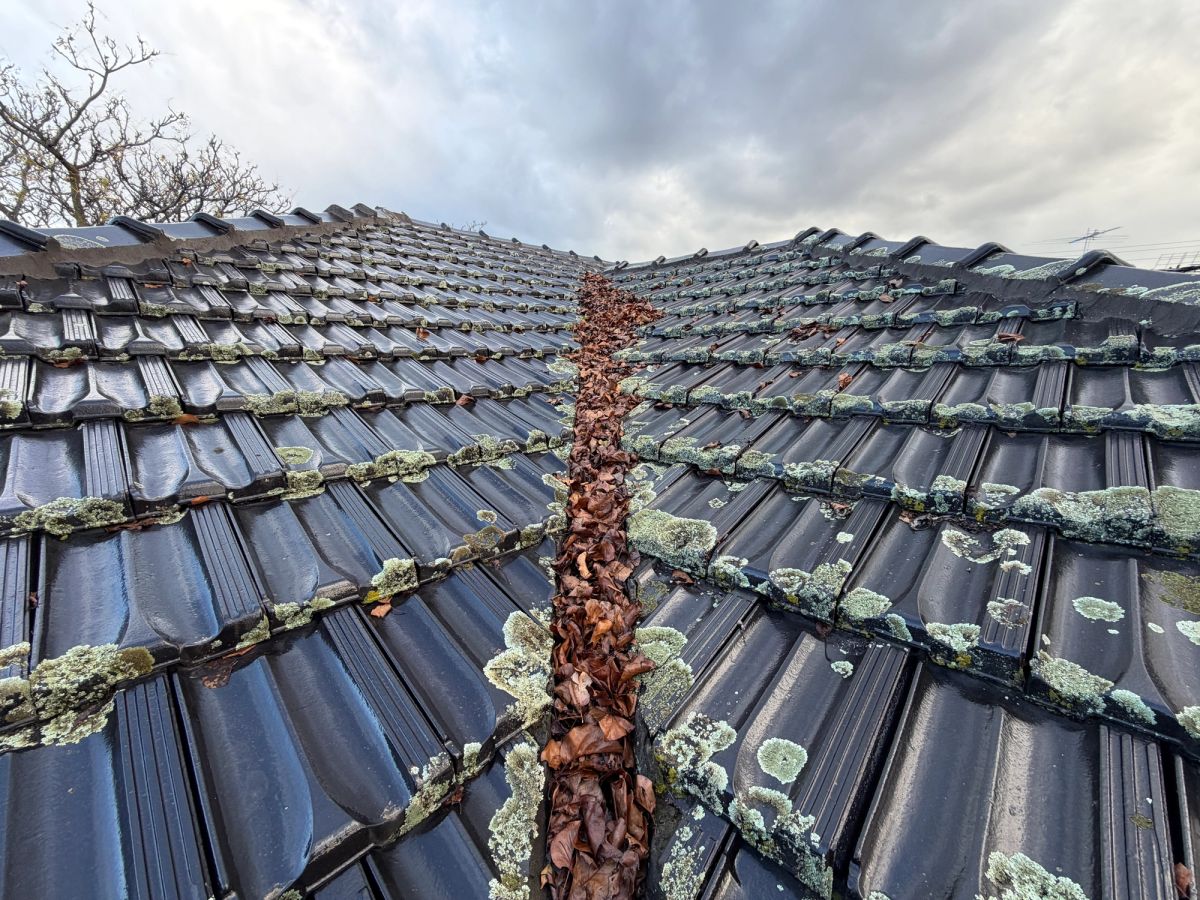
Roof valleys on Narawong Road, Caulfield, packed solid with leaves after several years without a clean. A tree overhangs the roof and everything it drops had collected in the same two channels.
Read case study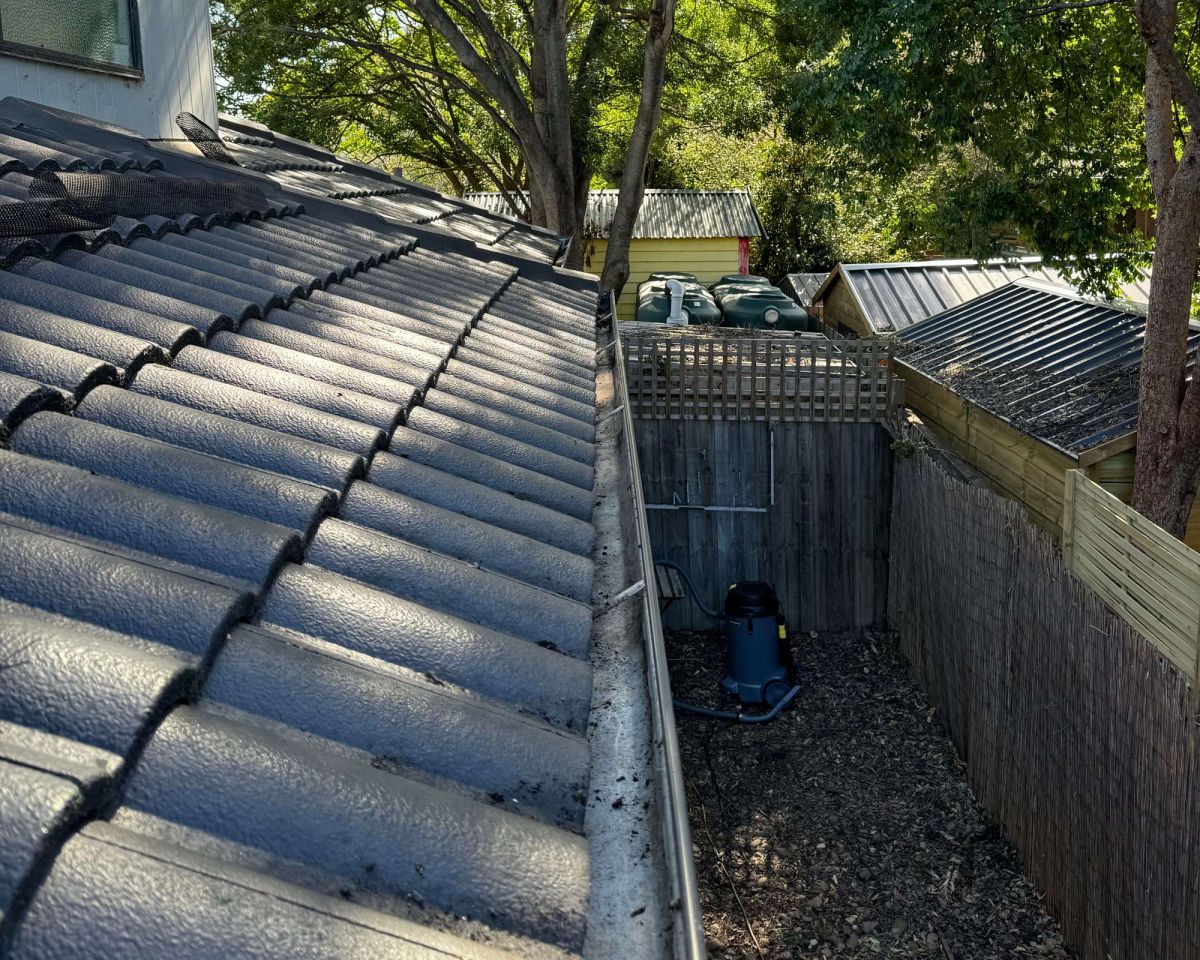
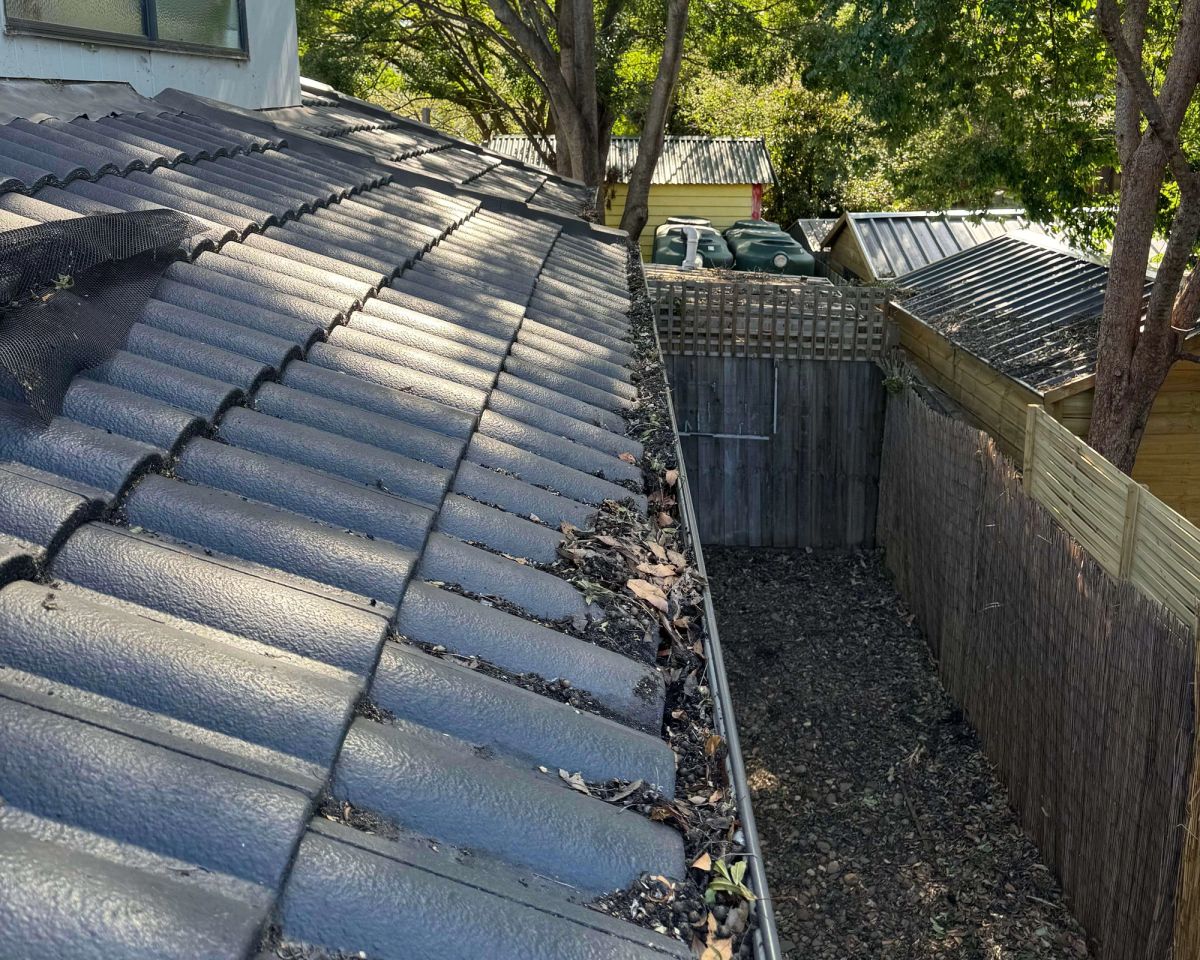
A Canterbury home with a terracotta tile roof, cleared in the middle of a Melbourne winter. Two and three quarter hours on site for a single technician.
Read case study
Google reviews
What roof owners said, from Google
Recent verified feedback from local clients who booked exterior cleaning with WaterCrew.
★★★★★ GoogleJuly 2026"Very happy with the service. They were clean, professional and left everything tidy Plus the job was done beautifully Many thanks!"
MelbourneView on Google ↗

★★★★★ GoogleJune 2026"Highly recommend Eren and his WaterCrew. Have used for gutter cleaning and will in future use for terracotta roof tile cleaning & window cleaning. They do a very thorough and professional job at competitive rates. Also, they are polite, friendly and well spoken."
CanterburyView on Google ↗

★★★★★ GoogleJune 2026"WaterCrew Cleaning recently cleaned the windows at my home in Chadstone and did an excellent job. The team was professional, friendly, and easy to deal with. The windows look crystal clear, and the service was completed on time and to a very high standard. I would highly recommend WaterCrew Cleaning to anyone looking for reliable window cleaning services in Chadstone."
MelbourneView on Google ↗

★★★★★ GoogleJune 2026"New age equipment, timely with very satisfactory results. Highly recommend crew for exterior/interior and flyscreen cleaning. Gutters cleaning available as well Best crew I came across for sometime and reasonably priced. Collin"
HamptonView on Google ↗

Four reasons a roof gets washed
A roof that has gone dark
The usual trigger is a photograph, or a neighbour's roof done. From the street a roof reads as one colour, and once it does not, everyone can see it.
A house going to market
The roof is in every drone shot and every listing photo taken from across the road. It is also the surface a buyer assumes the worst about when it looks neglected.
A roof that is already leaking
Cleaning does not fix a leak, and we will say so. What it does is uncover what is causing it, so the roof plumber arrives knowing where to look.
An owners corporation
Common roof, shared cost and a photo record for the file. Usually scheduled, because on a shared roof nobody notices until it is well past due.
Eight questions before anyone goes up
Do you walk on the roof?+
As little as the job allows, and on terracotta ideally not at all. Where the roof has to be crossed it is crossed on the batten lines, which is where the tiles are supported.
Will pressure break my tiles?+
It can, which is why the pressure is set by the material rather than by habit. On terracotta the risk is the glaze as much as the tile, and once the glaze is gone it does not come back.
How long does a roof take?+
Most single-storey roofs are a day. Pitch matters more than area: a steep roof that needs harness and rope takes longer per square metre than one you can walk.
Does the roof keep improving afterwards?+
Yes, and that is normal. Growth that has been killed rather than blasted off breaks down over the following few weeks and washes away with the rain.
Can you paint or repair the roof too?+
No. Rebedding, repointing, replacing tiles and roof painting are the work of a licensed roof plumber. We clean, we photograph what we find, and we tell you what needs the other trade.
What happens to the gutters?+
They get cleared after the roof rather than before, because everything that comes off a roof lands in them. Doing it in the other order means doing it twice.
Is my roof too old to clean?+
Age is not the disqualifier, condition is. Brittle terracotta and rusted sheet metal change the method and sometimes change the answer, which is why the roof gets looked at before anything is quoted.
Will the growth come back?+
Eventually, because it is alive. What changes is how long: growth removed with chemistry stays away far longer than growth blasted off a surface that was damaged in the process.
Colorbond roof cleaning and what actually fades it
Colorbond roof cleaning is the easiest of the four materials and the one where the damage is slowest to show. The coating is tough, and that is exactly why people treat it as if nothing can hurt it.
Two things fade a coated steel roof. The first is abrasion: a stiff brush, a sanding pad, grit dragged across it under a cloth. The marks are microscopic on the day and they read as dull patches within a year, because a scratched coating holds dirt the way a smooth one does not.
The second is chemistry left to dry on it. Metal roof cleaning goes wrong when a product is applied on a hot day and not rinsed before it flashes off, and the roof records where the run marks were.
Which face fades first is predictable: the northern one, because it takes the most sun. If your roof looks two colours from the street, that is usually why, and it is not something a wash reverses.
Rust at a lap or around a fixing is not a cleaning problem. It gets photographed and left, because sanding it back is the first step of a repair and repairs are somebody else's licence.
Terracotta roof tile cleaning and the glaze
Terracotta roof tile cleaning turns on one fact: the surface of the tile is different from the inside of it. The face was fired with a glaze that sheds water. The body underneath is porous clay that does not.
That is why pressure on terracotta is a one-way decision. Take off the glaze and the tile starts absorbing water, which makes it heavier, slower to dry and better at growing things. The roof then needs cleaning more often than it did, which is the opposite of what was bought.
Age is the second fact. Plenty of terracotta in Melbourne is a century old, and old clay is brittle rather than soft. It does not crumble, it cracks, and a cracked tile leaks in one spot that turns up as a stain on a ceiling three metres away.
So the method is chemistry, patience and a rinse, and the traffic on the roof is kept to the minimum the job allows.
One thing worth saying plainly: a terracotta roof that has been pressure cleaned in the past cannot be put back. What it can be is cleaned properly from here, which slows the cycle down rather than reversing it.
Power wash roof cleaning, and why we mostly do not
Power wash roof cleaning has a genuine place, and it is narrower than the advertising suggests. Sound concrete tile with grime rather than growth, and some sheet roofs where the coating is intact and the fixings are not suspect.
Everywhere else the arithmetic is against it. The faster the method, the more of the surface it takes with the dirt, and the surface is the part that was keeping the water out.
It is also the method that produces the result people photograph. A pressure-cleaned roof looks dramatic on the day, and that is why the before-and-afters that circulate are nearly all pressure. What does not get photographed is the same roof three winters later.
The honest version is that a soft wash costs more in time and less in roof. If two quotes are close and one of them is fast, ask what pressure they intend to use and on what material, and listen for whether the answer changes depending on the material.
For what it is worth, ours run from three hundred and fifty-two dollars including GST on coated steel, four hundred and sixty-two on terracotta and six hundred and thirty-eight on concrete tile. The gap between them is not a margin, it is the time each surface takes, and both the material and the pitch get looked at before a number is given rather than after.
About the expert

Ihor Sydorenko
Founder & Lead Rope Access Technician (IRATA Level 3) — WaterCrew Cleaning
Ihor has worked on ropes since 2013, starting on high-rise facades in Kyiv, where he founded and still runs the rope-access company Альпіністи Київ. He holds IRATA Level 3 — the highest grade in the international rope-access system, covering work supervision, safety planning and rescue.
- ✓ IRATA Level 3 rope access technician
- ✓ Working safely at heights
- ✓ Construction induction
- ✓ First aid