Roof Moss Removal — Rockbrook Road, St Kilda East
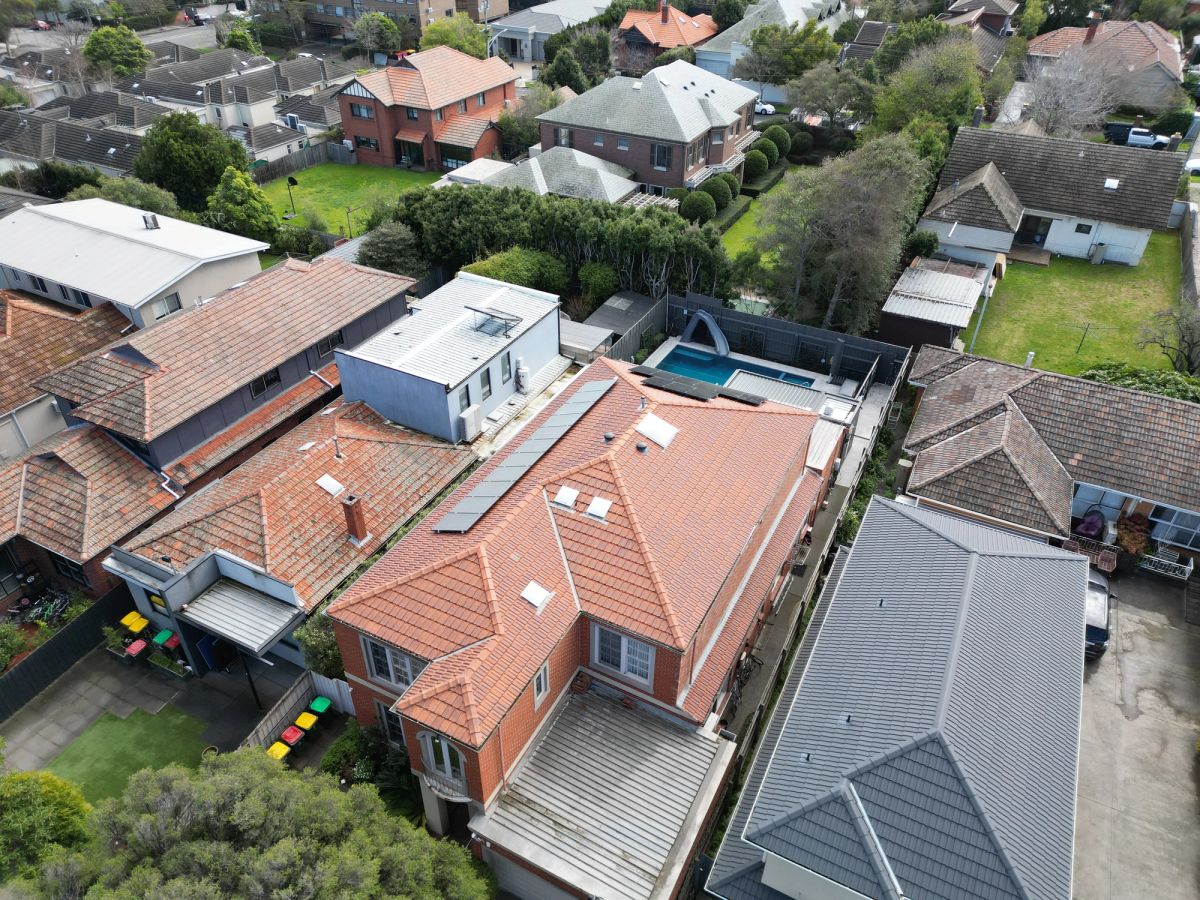
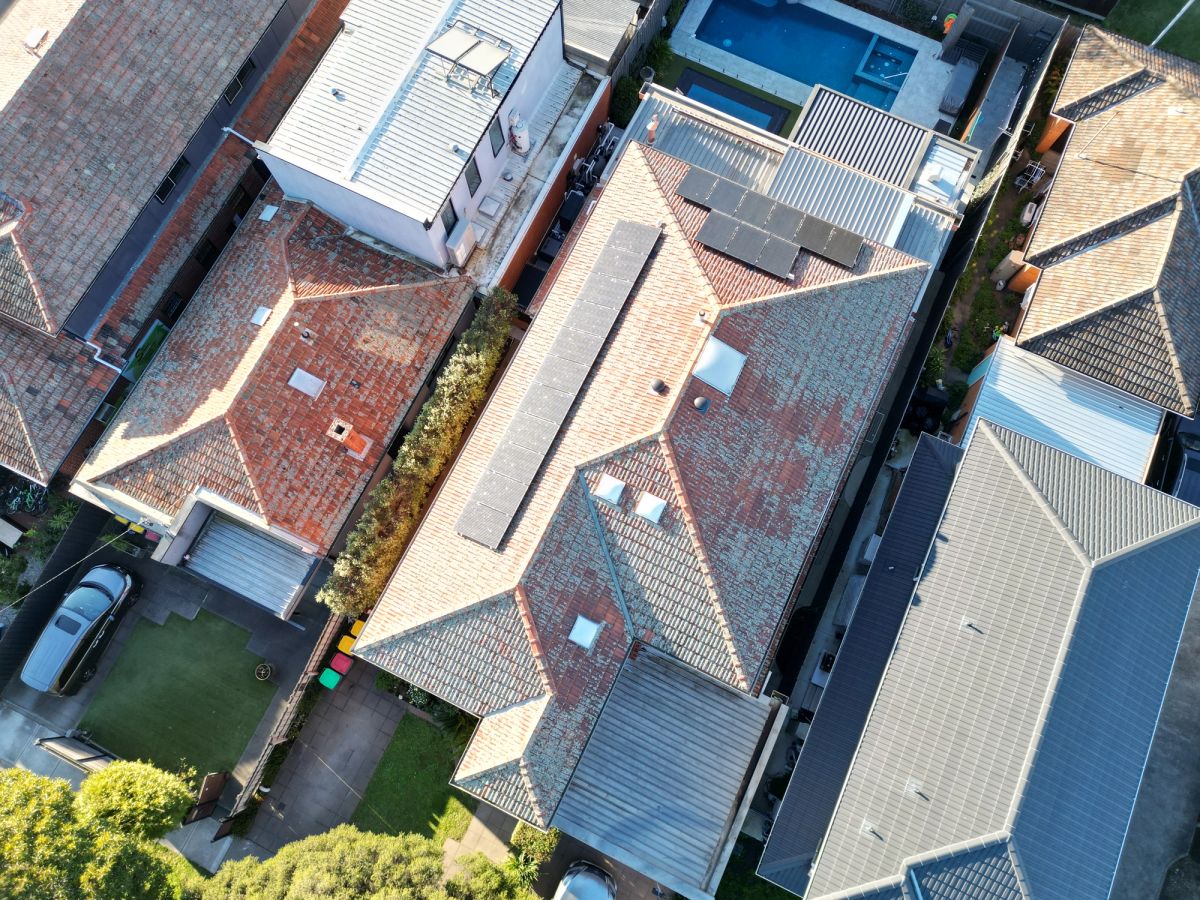
Two hundred square metres of roof on Rockbrook Road, carrying enough moss to change its colour from the street. Two technicians, ten hours on site. Moss cleared, the roof treated across its full area, and the gutters done afterwards rather than before. Photographed before and after.
- Location
- St Kilda East 3183
- Completed
- 7 September 2026
- Duration
- 10 h
- Crew
- 2 techs
The problem
Two hundred square metres does not sound like a full day until you understand what moss is doing up there. It is not sitting on the tiles like dust — it holds water against them, and a roof that stays wet grows more of it, gets heavier every winter and stops shedding water the way it was built to. The volume is the other half. Cleared moss has to go somewhere, and on a roof this size that is a large amount of wet organic matter, all of which lands in the gutters if nobody plans for it.
What we did
Most of what a roof like this carries comes off in the visit. The soft, cushioned growth sitting in the laps and valleys lifts as soon as it is wet, and the film across the tile faces goes with the rinse — which is why this job has a genuine before and after rather than a promise about six weeks' time. What is bonded deeper into the terracotta keeps releasing for weeks afterwards as the roof wets and dries. That part cannot be hurried, and trying to hurry it with pressure takes the glaze off the tile along with the growth. Clearing came first, then treatment across the whole area including the valleys and the ridge line, at low pressure with contact time doing the work. Ten hours for two people is what two hundred square metres takes when the roof is not being blasted. Gutters last, because everything that comes off a roof lands in them.
- Two hundred square metres of roof cleared of moss
- Treatment applied across the full area, valleys and ridge included
- Low pressure throughout, no lance held close to the tiles
- Gutters cleared after the roof rather than before it
- Before and after photographs supplied
Result
- Growth off the tile faces, terracotta colour back across the whole roof
- Valleys running clear rather than holding water and debris
- Gutters clear of everything that came down off the roof
- No cracked or displaced tiles left behind
- Deeper-bonded growth continuing to release over the following weeks
Nearby case studies
More projects in St Kilda East
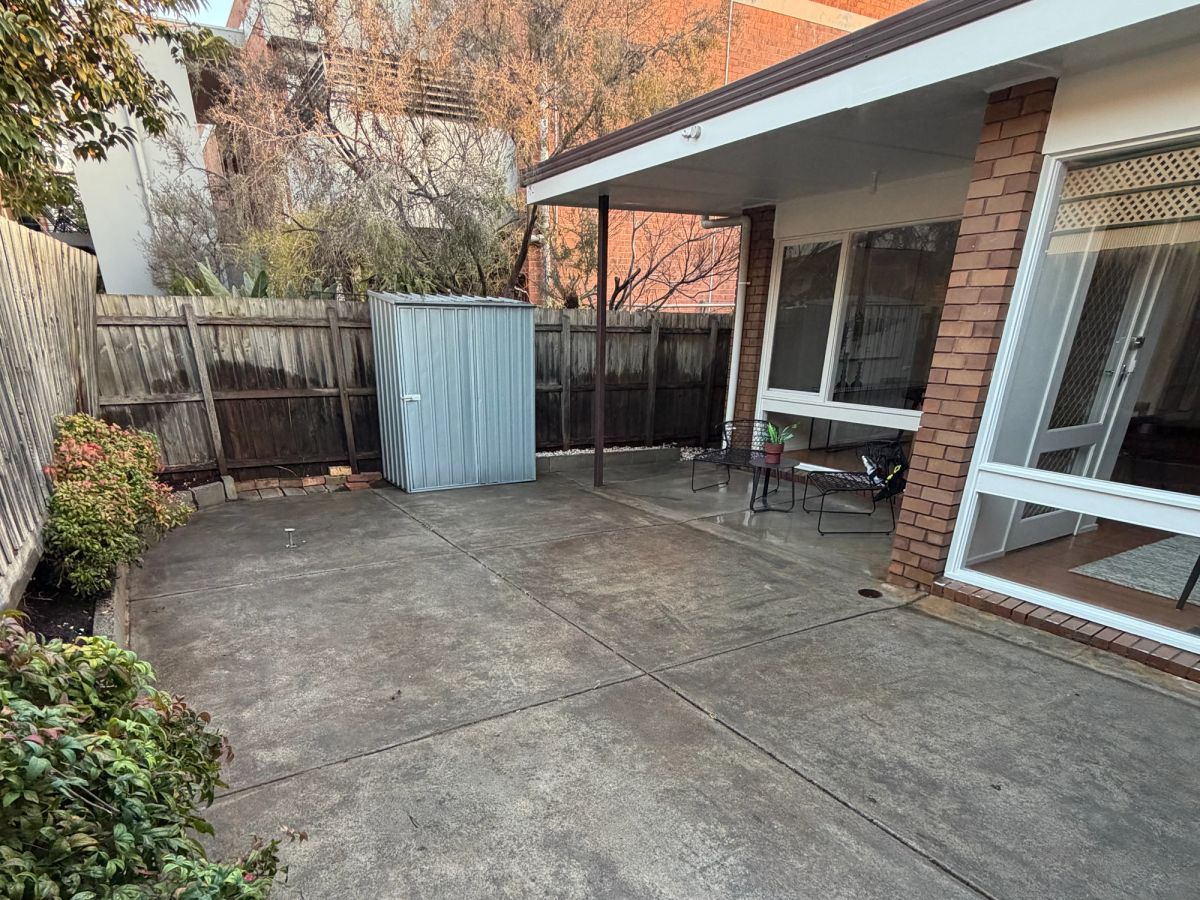
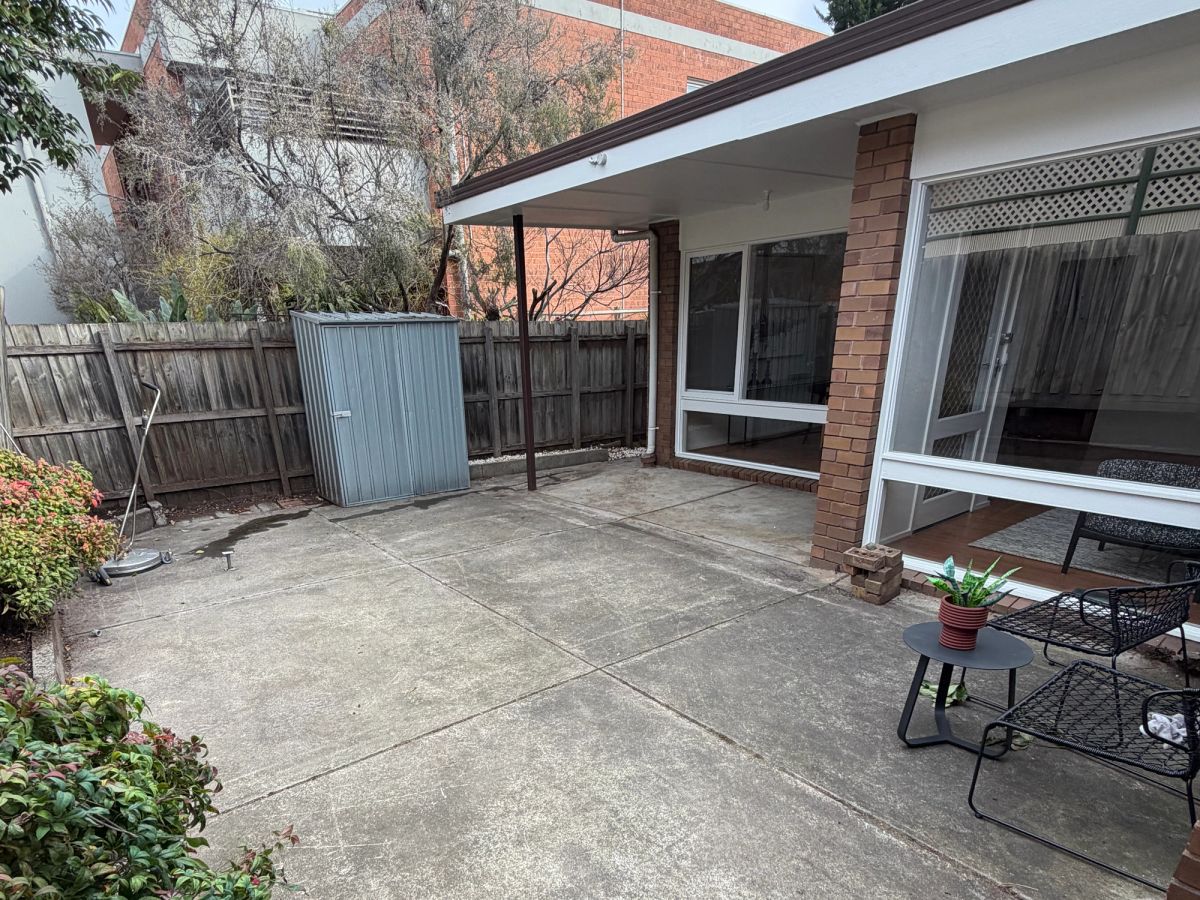
Concrete cleaned on Hotham Street, St Kilda East, in the first week of July. Mid-winter is when concrete looks worst here: it never gets a chance to dry out.
Read case study
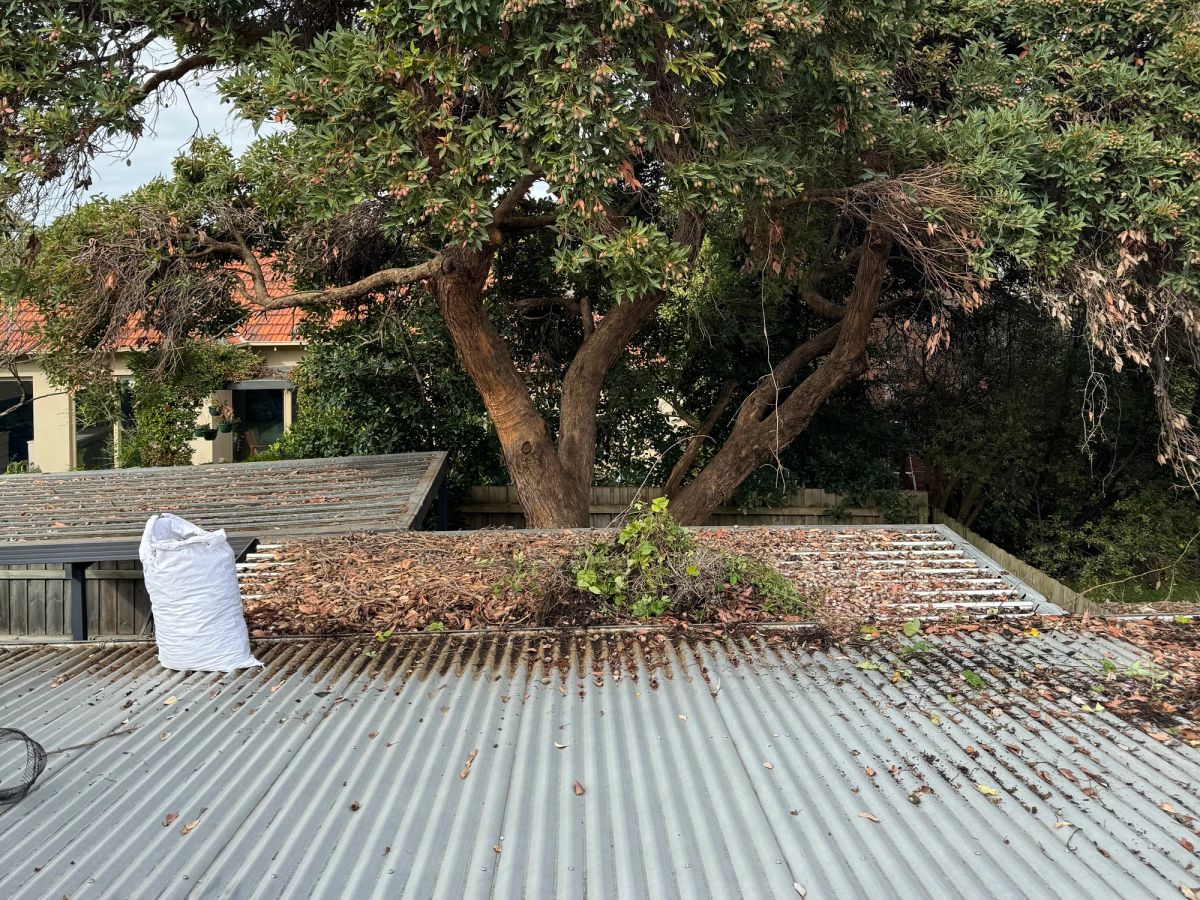
A roof in St Kilda East under large trees, cleared in April 2024. More than ten bags of leaf litter came off it — years of accumulation nobody had taken away.
Read case study