Gutter Cleaning — Sandham Street, Elsternwick
A single-storey house on Sandham Street in Elsternwick with 72 metres of guttering that had not been cleaned in about five years. By then it was not leaf litter sitting loose in the channel. The moss had rooted along the gutter base and came out as a mat — roughly two bags of it off this one run.
- Location
- Elsternwick 3185
- Completed
- 2 October 2025
- Crew
- 1 tech
- Property
- Single-storey house
- Roof
- Concrete tile
- Gutter length
- 72 m
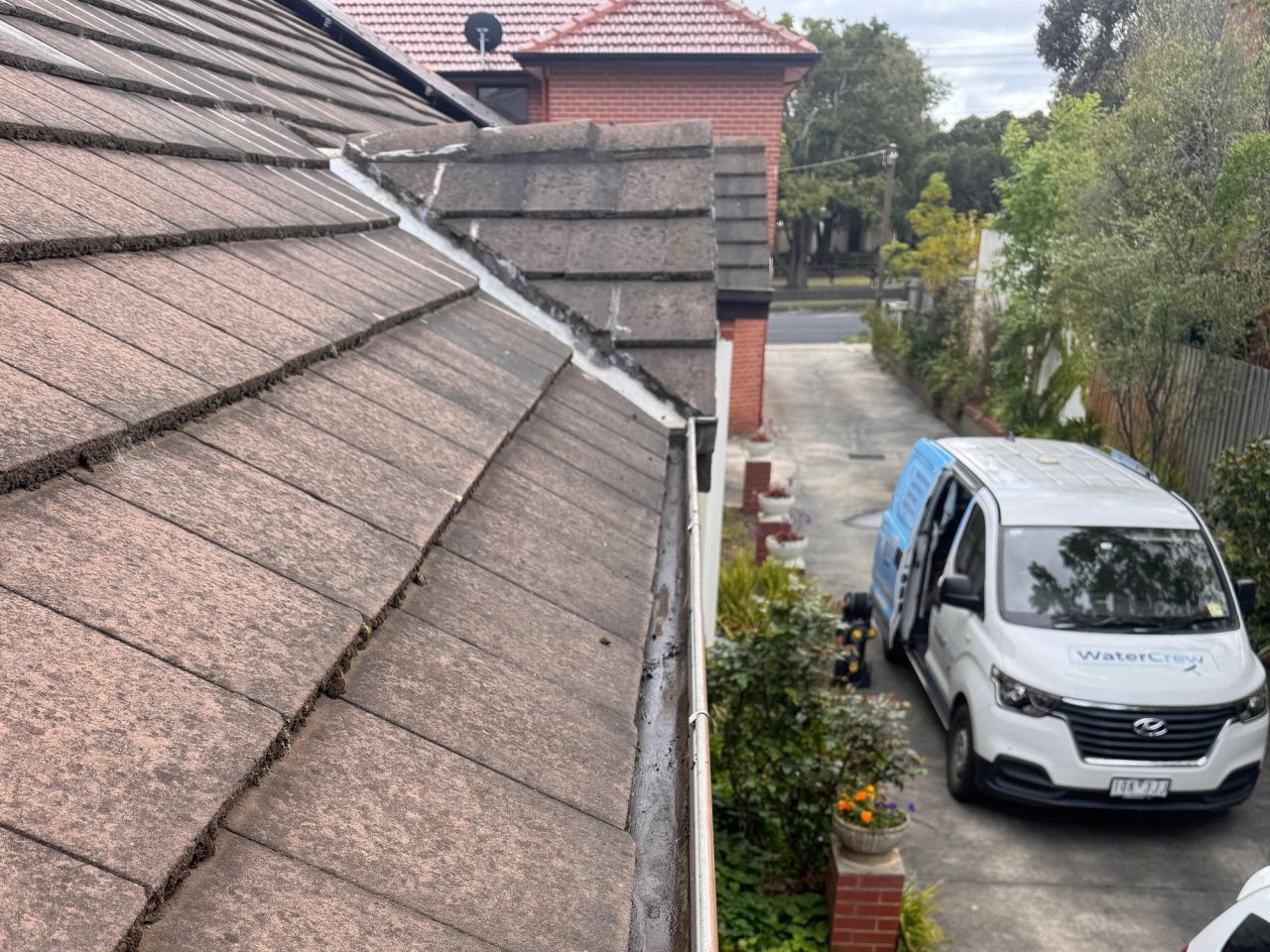
The problem
Guttering left for five years stops collecting debris and starts growing it. Leaf litter breaks down into a layer of soil, moss roots into that layer, and the mat that forms holds water along the whole run instead of letting it move to the outlets. At that point the gutter is not blocked at one spot — it is full end to end, and it stays wet between storms. Concrete tile makes that worse than it looks from the ground. The surface is porous, so moss that starts in the gutter creeps onto the tile edge, and the damp line along the fascia never gets a chance to dry out.
What we did
The full 72 metres was cleared along its length rather than opened at the outlets and left. Moss does not scoop: the mat grips the debris layer underneath it, so it comes out in sections. Two bags came off this roof — that is the weight that had been sitting in the gutters through five years of storms. Concrete tile is walkable where terracotta is not, which changes how the run can be reached. Moss underfoot on tile is slippery, though, and that governs where weight goes.
- Cleared 72 metres of guttering on a single-storey concrete tile roof
- Removed moss rooted along the gutter base, not only the loose debris above it
- Worked the run end to end rather than clearing at the outlets alone
- Cleaned the moss line back off the tile edge above the gutter
- Bagged and took roughly two bags of moss and debris off site
Result
- Full 72 metre run clear along its length
- Roughly two bags of moss removed, down to the gutter base
- Tile edge above the gutter cleared, removing the damp line along the fascia
- Five years of build-up taken off in a single visit
Nearby case studies
More projects in Elsternwick
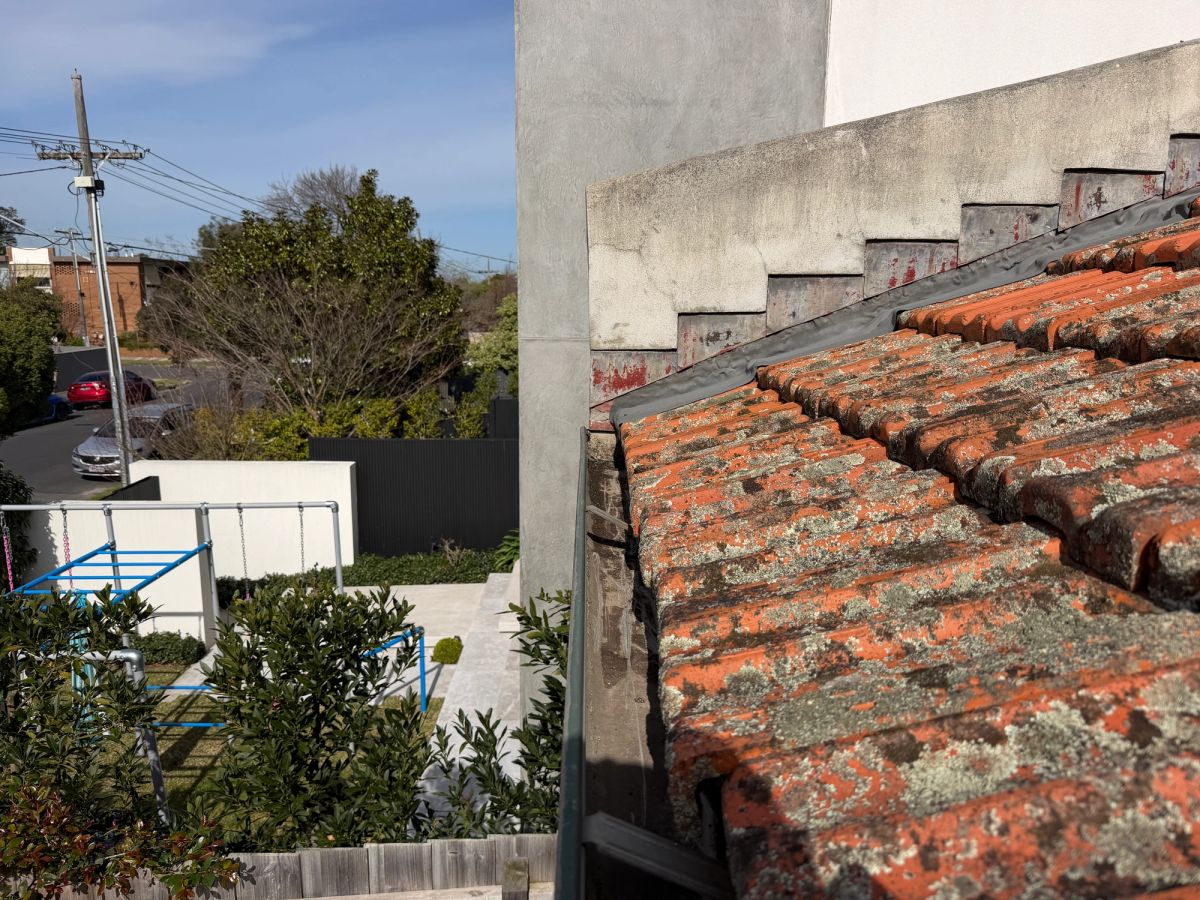
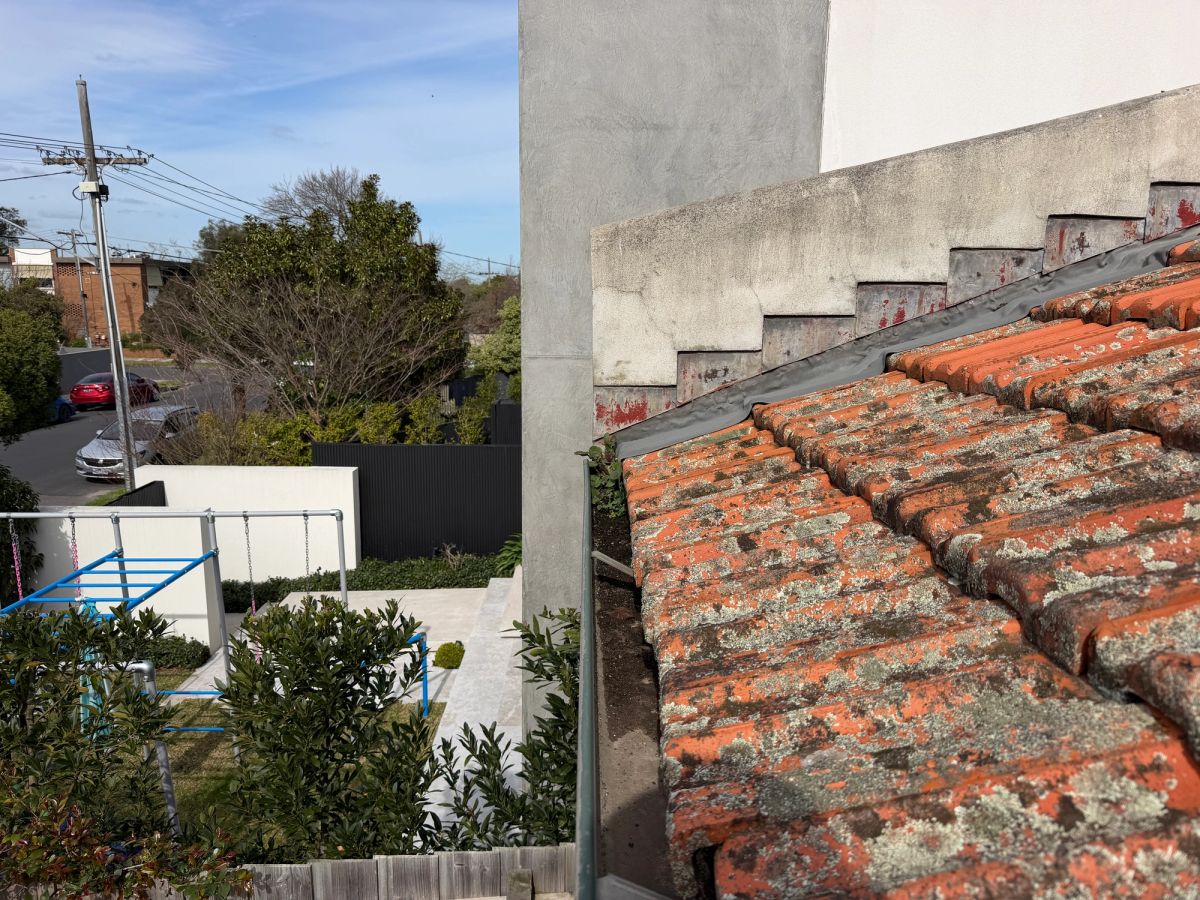
A long single-storey house on Hoddle Street in Elsternwick with around 80 metres of guttering and downpipes blocked with compacted soil. The full run was cleared with SkyVac vacuum equipment from the ground.
Read case study Window cleaning
A full inside-and-outside window clean in Elsternwick, booked in mid-autumn. Five and a quarter hours on site for one technician — the longest single window job on our books this year.
Read case study