Window Cleaning — Royal Crescent, Camberwell
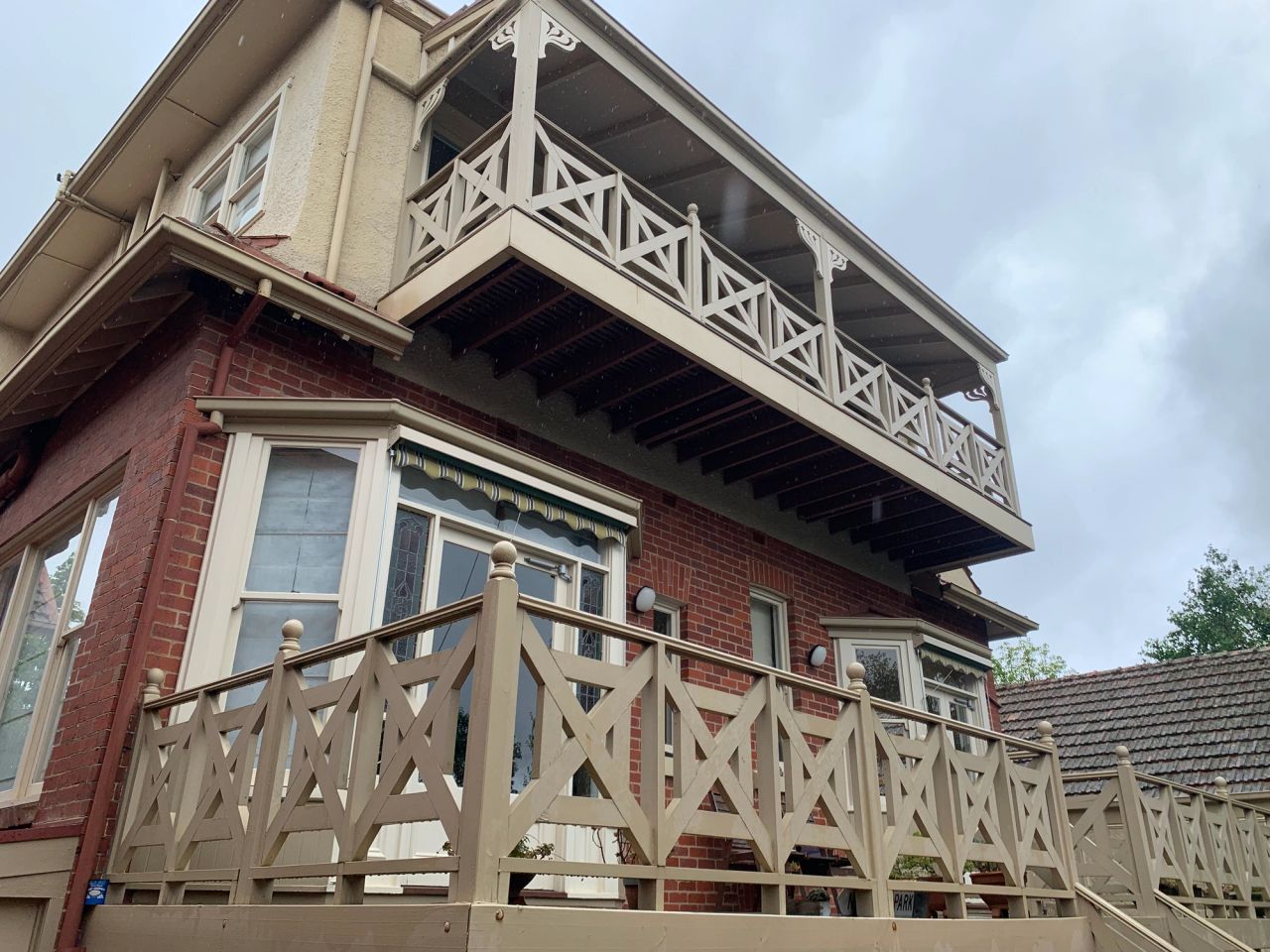
A Federation house on Royal Crescent, Camberwell, with its windows cleaned inside and out. Red brick to waist height and roughcast render above it, bay windows, carved timber brackets, a cross-braced balustrade and leadlight through the upper sashes. Two technicians, six hours. On a house of this age the glass is not all one thing, and the leadlight decides the method for everything near it.
- Location
- Camberwell 3124
- Completed
- 2 December 2023
- Crew
- 2 techs
The problem
Most window jobs have one kind of glass. This house has at least two. The main sashes are ordinary glass and behave like it. The leadlight does not. Leadlight is small panes held in lead cames and bedded in putty, and after a century both have gone soft. The lead moves under pressure, the putty has usually perished somewhere along the run, and panels of that age often sit with a slight bow in them. Anything that presses, scrapes or floods a panel will find whichever of those is the weak point.
What we did
So the leadlight was cleaned by hand, with a damp cloth and a supported panel, and with no blade, no pole and no volume of water. Water is the real risk rather than pressure: flood a leadlight and it runs behind the cames into the frame instead of off the face, and the frame is timber. The plain glass took the ordinary approach, inside and out. What set the order was what sits above what. Roughcast render holds grit and sheds it as soon as it is wet, so nothing was rinsed above a pane that had already been finished. The rest of the time went on position. Bay windows do not present square to anything, and the carved brackets and the cross-braced balustrade sit exactly where a ladder would otherwise want to go. Six hours across two people is mostly that: not time spent at the glass, but time spent working out how to reach each opening without putting a ladder foot through hundred-year-old joinery.
- All glazing cleaned inside and out across the house
- Leadlight panels cleaned by hand, without blade, pole or flooding
- Bay windows worked pane by pane rather than from one position
- Frames, sills and timber joinery cleaned along with the glass
- Order of work set so nothing was rinsed above finished glass
- Ladders footed clear of the carved brackets and the balustrade
Result
- Two technicians, six hours
- Leadlight cleaned by hand, cames and putty left undisturbed
- Glass, frames and sills finished inside and out
Nearby case studies
More projects in Camberwell
 Gutter cleaning
A two-storey house on Morey Street, Camberwell, with gutters full enough to be growing grass out of them. The whole run was cleared from the ground with SkyVac vacuum equipment, without anyone standing on the Colorbond.
Read case study