Concrete Cleaning Melbourne
Concrete that is not the driveway and not the pavers: slabs, path networks, basements and garage floors. Priced on area, not as a named job. From $275.
- $20M public liability insurance
- Police-checked, WorkSafe compliant
- 5.0 from 170 Google reviews
- Not happy with the work? You don't pay
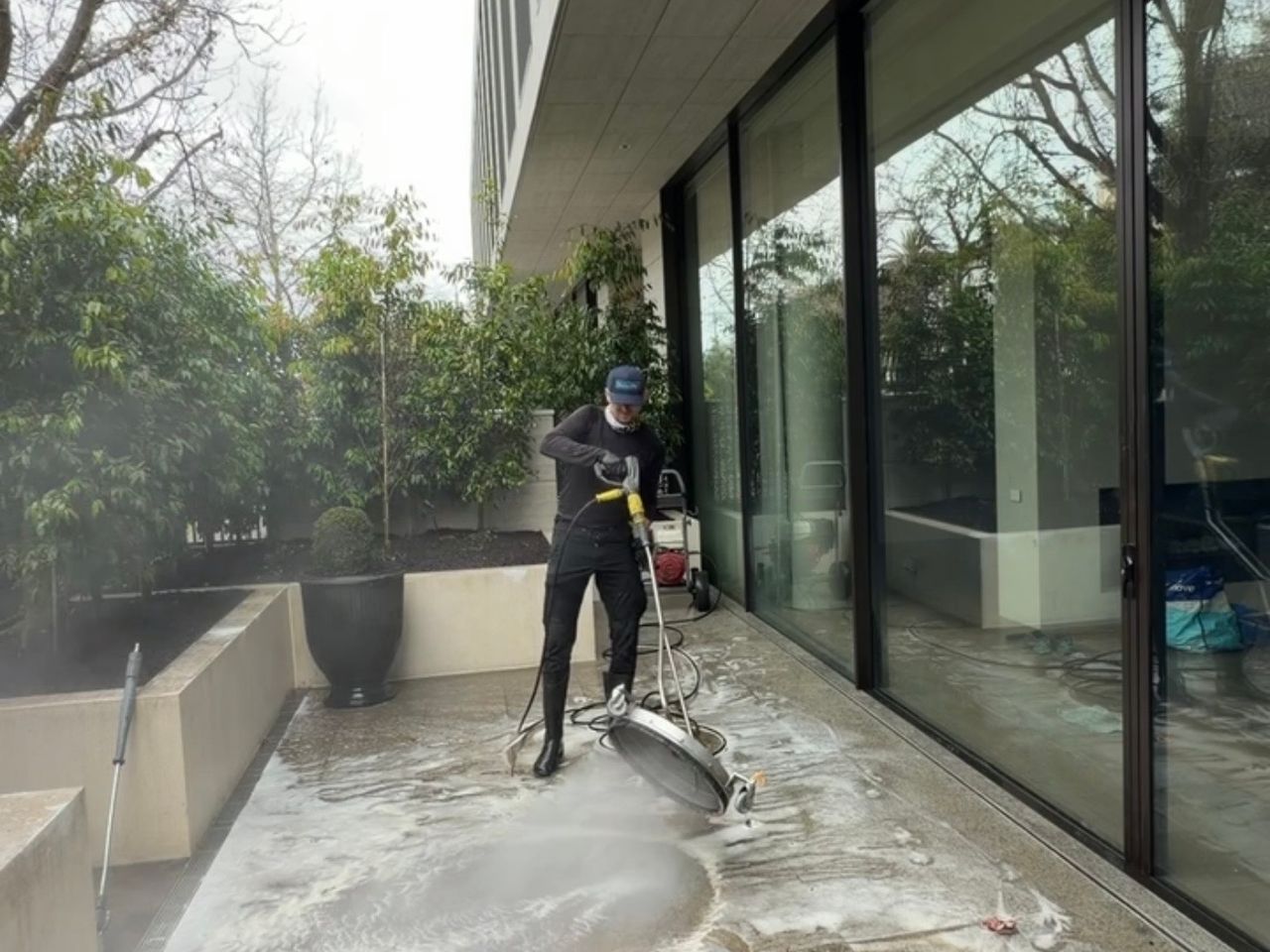
Concrete cleaning starts at $275, and the first thing worth settling is whether this is the page you want. If the concrete in question is your driveway, driveway cleaning is the cheaper and more specific job. If it is laid as pavers, that is paving cleaning.
What is left is everything else made of concrete: the slab behind the house, a path network nobody has measured, a basement floor, a garage, a loading dock. Areas with no standard size, which is why they are priced on area rather than as a named job.
The method is the same whoever is paying. We pressure clean concrete with a rotary head rather than an open wand, and we hold the pressure below the point where it starts taking the surface off. Concrete surface cleaning that leaves stripes has been done with the wrong tool at the wrong distance.
Concrete that never gets a chance to dry
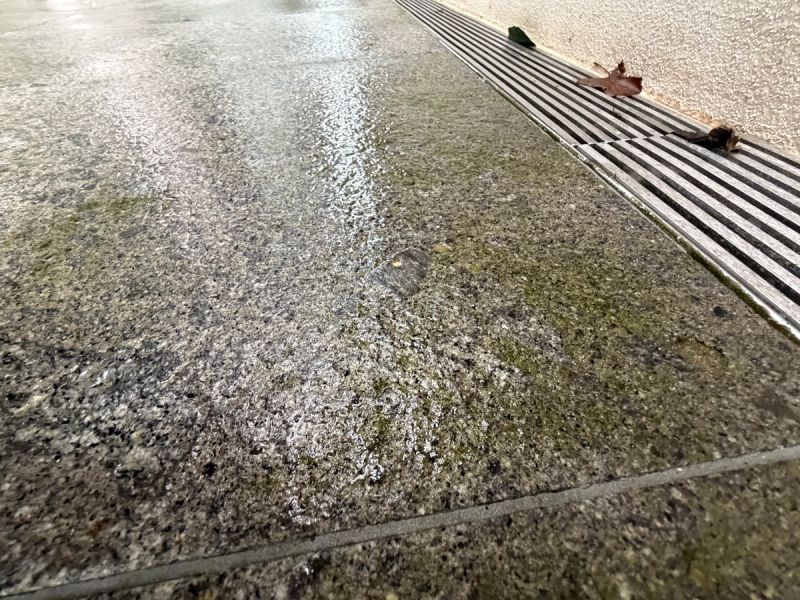
The dark film on old concrete is usually not dirt, and that is why hosing it changes nothing. It is algae and lichen living in the surface, held there by moisture the slab cannot get rid of.
Concrete is porous. Water goes into it and comes back out slowly, and anything shaded, north-facing away from the sun, or sitting under a tree stays damp for most of winter. Growth does not need much more than that.
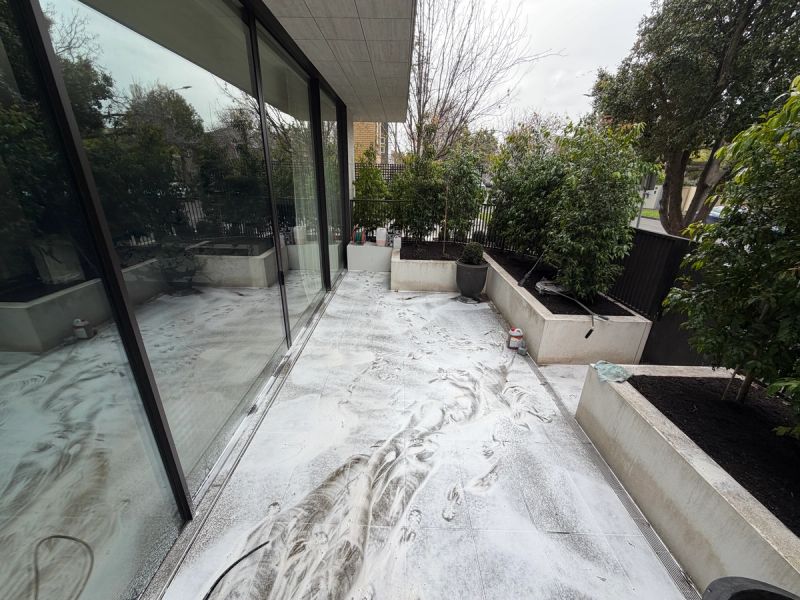
On Hotham Street in St Kilda East we cleaned a slab in the first week of July, and mid-winter is exactly when concrete here looks its worst. It had not had a dry week in months.
Which is also why the timing advice everyone gives is backwards. Concrete cleaned in spring looks good for a season. Concrete cleaned at the end of winter has the whole dry half of the year to stay that way.
Growth in the pores is treated rather than blasted, because blasting takes off the growth and the top of the slab with it. What is left behind after a rinse is the part that grows back first.
Exposed aggregate, and how it gets exposed
Exposed aggregate is a finish somebody paid for: the top layer of cement washed back while it cured, so the stone shows. It is also what a careless wash produces on a slab that never had it.
The difference between the two is a few millimetres and it is not reversible. Once the cement paste is gone from around the stone, the slab is rougher, it holds more dirt, and cleaning concrete like that becomes a more regular job than it used to be.
- On a slab that is meant to be smooth, the pressure stays below the point where paste starts to lift. That limit is lower than most people expect and much lower than a hire machine will happily deliver.
- On a slab that is already exposed aggregate, the job is different again. Exposed aggregate cleaning is mostly about the voids between the stones, which hold dirt the way a sponge does, and that is time rather than force.
- On a slab that has been over-cleaned before, we say so before starting. You cannot put the surface back, and a second aggressive wash takes it further.
The honest summary is that high pressure concrete cleaning is a narrower tool than the phrase suggests. Force is what you reach for on sound concrete with grime on it, and almost nowhere else.
How we pressure clean concrete, edge to edge
Six steps, and two of them are about water going somewhere other than where you would like it.
- 1
The surface is read before the machine comes out
Sound concrete, spalling concrete, exposed aggregate or a slab that has already been cleaned too hard. Each one sets a different ceiling on pressure, and that ceiling is decided first.
- 2
Growth is treated, not rinsed
Where the dark film is algae or lichen it goes in the pores rather than on the surface. It is treated and given time, because rinsing takes the top off and leaves the roots.
- 3
A rotary head, not an open wand
A surface cleaner spins two jets under a shroud at a fixed height, so every square metre gets the same pass. An open wand in a person's hands does not, and the stripes it leaves are permanent on concrete.
- 4
Edges and joints done separately
The shroud cannot reach the last hundred millimetres against a wall or a joint, so those are worked by hand afterwards. Skipping it is the most common reason a finished slab still reads as dirty from a doorway.
- 5
Run-off directed away from planting
Concrete sheds everything it is holding into whatever is downhill. Garden beds, a neighbour's paving, a stormwater pit. Where it goes is agreed before the water starts, not discovered afterwards.
- 6
Photographed before and after
The same frame both times, which on a large slab is the only way to see the change. Wet concrete always looks clean; the honest comparison is dry against dry.
Concrete cleaning prices in Melbourne
Concrete cleaning is priced on area and on where the water can go, rather than on what the slab happens to be called. Most slabs can be quoted from a photograph and a rough measurement you can pace out yourself.
from — one visit, rotary head, edges worked by hand, photos before and after
All prices include GST. Larger areas are quoted on measured area rather than on this minimum, so a big slab costs less per square metre than a small one. Water recovery indoors, power and water brought to site, and out-of-hours access to a car park are quoted as their own lines. We do not seal concrete and we do not repair it.
What moves the price on a slab
Concrete cleaning services are quoted on area and access, and on a slab both of those are usually unknown until somebody measures.
- Area, and how it is shaped. Two hundred square metres in one rectangle is a fraction of the time of the same area as a path network with eleven corners. The shroud does the open ground fast; everything else is edge work.
- What is on it. Traffic film and grime is the quick version. Algae in the pores needs treatment and time. Oil, rust and paint are separate problems with separate answers, and not all of them come out.
- Where the water can go. A slab on a fall towards a pit is straightforward. A basement floor with no fall at all means the water has to be recovered rather than pushed, and that is a different day's work.
- Whether there is power and water on site. On a finished property, yes. On a site between tenants or a building with the services off, we bring both, and that is quoted.
- When it can be done. A car park cleared of cars at six in the morning costs more than a back slab on a Tuesday, and sometimes it is the only way it happens at all.
Nothing is charged by the hour. An hourly rate on a slab puts the cost of an awkward shape onto the person who did not choose it.
Where the water goes is half the job
On a driveway the water runs to the street and nobody thinks about it. On a slab it is the first question, and on a basement floor it is the whole question.
Everything the concrete has been holding leaves with that water: the growth, the film, the traffic dirt, and whatever a previous trade spilled. It has to end up somewhere chosen rather than somewhere convenient.
Garden beds are the usual casualty. A run of water off a treated slab into a bed of established planting is a bad afternoon, and it is avoidable with ten minutes of thinking beforehand.
Indoors and undercover, pushing water is not an option at all. A basement or a garage floor has nowhere for it to go, so it is recovered as it is produced rather than chased towards a door.
This is the part of concrete cleaning that separates a contractor from a hired machine, and it is worth asking about before anyone starts.
Slabs and paths we have cleaned
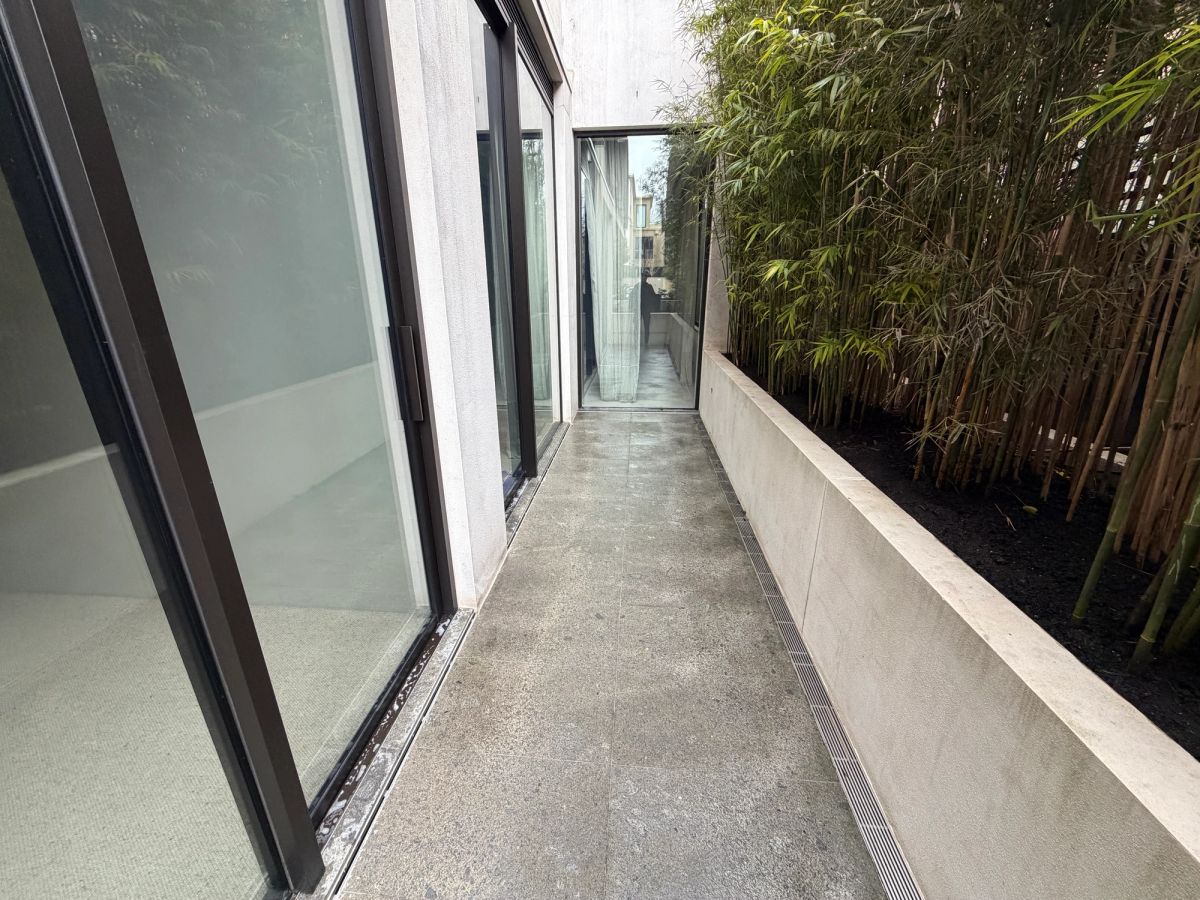
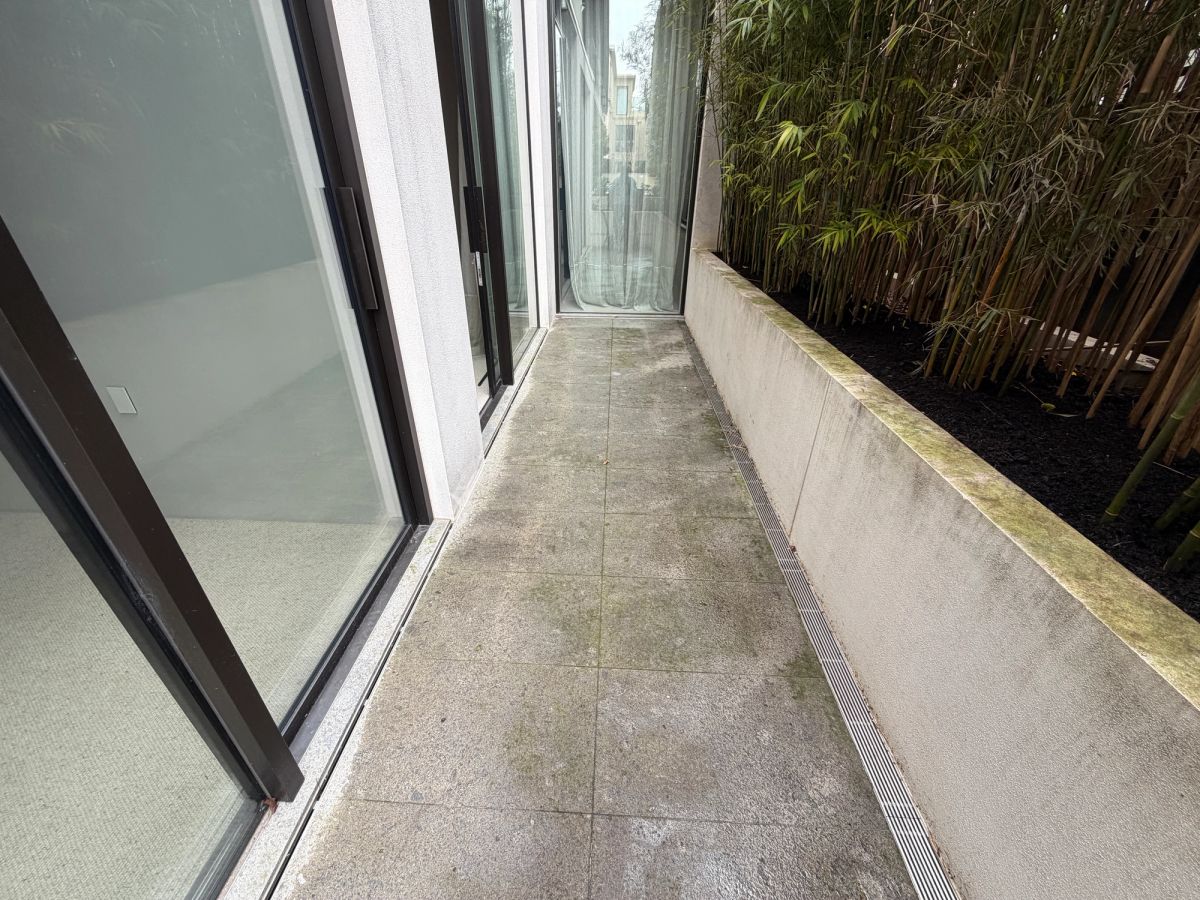
A concrete clean in South Yarra that started with a drainage problem: water was not leaving the site, so the surface could not be cleaned properly until the drain was cleared.
Read case study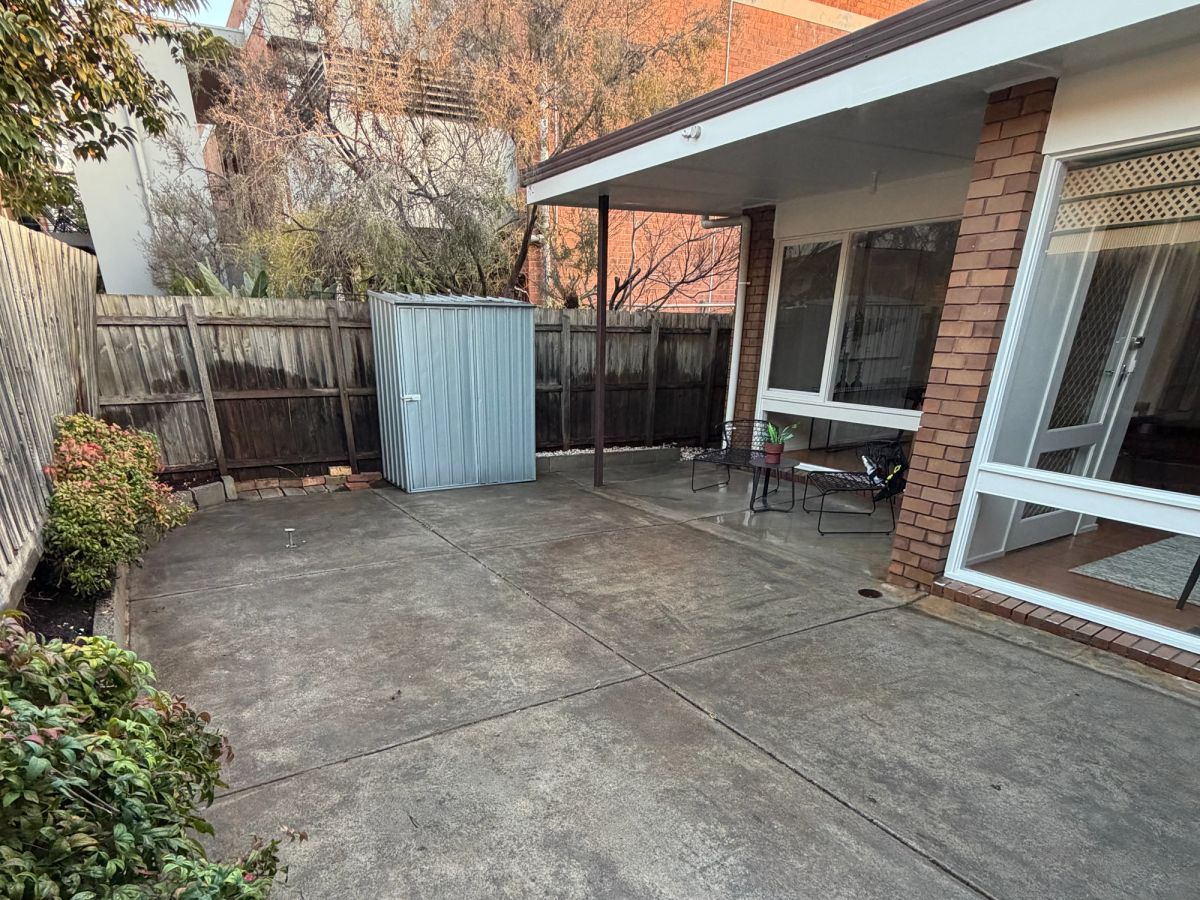
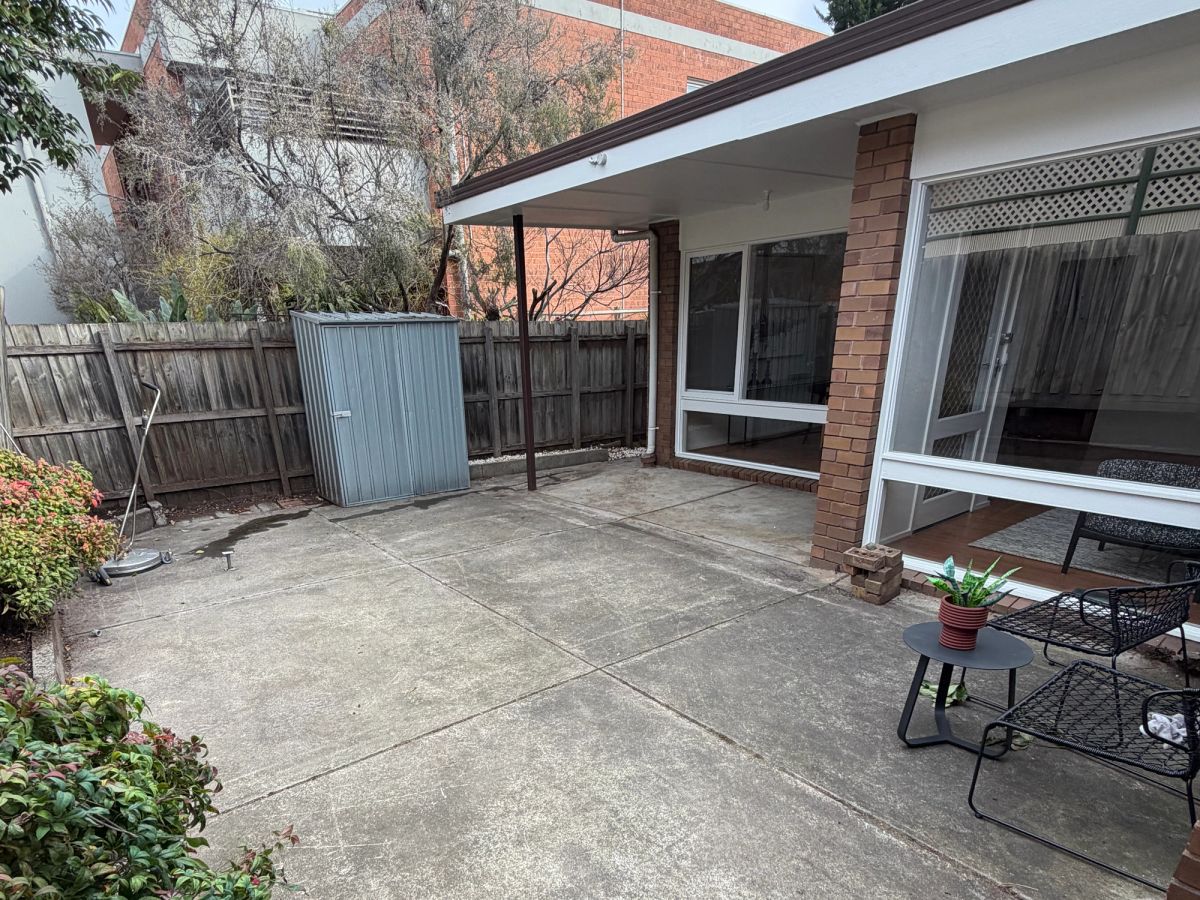
Concrete cleaned on Hotham Street, St Kilda East, in the first week of July. Mid-winter is when concrete looks worst here: it never gets a chance to dry out.
Read case study
Google reviews
Clients on the concrete, from Google
Recent verified feedback from local clients who booked exterior cleaning with WaterCrew.
★★★★★ GoogleJuly 2026"Very happy with the service. They were clean, professional and left everything tidy Plus the job was done beautifully Many thanks!"
MelbourneView on Google ↗

★★★★★ GoogleJune 2026"Highly recommend Eren and his WaterCrew. Have used for gutter cleaning and will in future use for terracotta roof tile cleaning & window cleaning. They do a very thorough and professional job at competitive rates. Also, they are polite, friendly and well spoken."
CanterburyView on Google ↗

★★★★★ GoogleJune 2026"WaterCrew Cleaning recently cleaned the windows at my home in Chadstone and did an excellent job. The team was professional, friendly, and easy to deal with. The windows look crystal clear, and the service was completed on time and to a very high standard. I would highly recommend WaterCrew Cleaning to anyone looking for reliable window cleaning services in Chadstone."
MelbourneView on Google ↗

★★★★★ GoogleJune 2026"New age equipment, timely with very satisfactory results. Highly recommend crew for exterior/interior and flyscreen cleaning. Gutters cleaning available as well Best crew I came across for sometime and reasonably priced. Collin"
HamptonView on Google ↗

Who books commercial concrete cleaning
A slab behind the house
Shaded, north-facing away from the sun, green by August and never quite dry. Usually booked once somebody slips on it.
A warehouse or loading dock
Commercial concrete cleaning at its cheapest: a large open area, traffic film rather than growth, and a shroud that can run for hours.
A basement or car park
No fall, no drain and nowhere to push water, so it is recovered as it is produced. Booked out of hours, around cars that have to move.
A property going to market
The slab is in the photographs whether anyone planned it or not, and it is the surface that reads as neglect fastest in a listing.
Where a wash is not the answer
Four things people say before booking. Two of the answers cost us the job.
“The concrete is cracked and flaking. Will a clean tidy it up?”
No, and it can make it worse. Spalling concrete is already losing its surface, and water at pressure finds the loose parts and takes them. What that slab needs is somebody who assesses concrete, not somebody who cleans it. We will tell you that on the photographs rather than after the machine is running.
“Can you seal it afterwards so it stays clean?”
We do not seal, and it is a separate trade with its own products and warranties. Sealing over a slab that is still damp or still holding growth is how a sealer fails in its first year, so if you are having it sealed, the clean is the preparation and somebody else does the rest.
“It is just the driveway, but it is concrete. Same thing?”
Same material, different job, and the driveway one is cheaper. A driveway is a known shape with a known method and it is priced as a job rather than by area. The driveway page is linked in the first block above, and booking there costs you less for the same standard of work.
“Could I just hire a machine for the weekend?”
For a small sound slab with grime on it, genuinely yes, and plenty of people should. What a hire machine gives you is pressure and no shroud, which is exactly the combination that stripes concrete. If the slab is large, shaded, growing something, or indoors, the hire machine is the expensive option wearing a cheap price.
Reading a concrete cleaning quote
Concrete cleaning services describe themselves in much the same words, so the quotes look alike and the expensive parts stay invisible in all of them. Four questions make them visible.
- Is it priced by area or by the hour? By area, the contractor carries the risk of an awkward shape. By the hour, you do, and a path network with eleven corners is exactly where that bites.
- What tool is it priced on? Concrete surface cleaning with a rotary head and with an open wand are not the same job and do not leave the same slab. If the quote does not say, ask, because the stripes an open wand leaves are permanent.
- Where is the water going? On a slab this is a real line of work, and indoors it is most of the work. A quote that has not asked has not thought about it.
- What is the public liability cover, in dollars? Ours is $20 million and the certificate goes out with the quote if you want it. On a basement or a car park, with cars and other people's property around, that is not a formality.
The cheapest concrete quote is usually priced by the hour on an open wand. It is cheaper on paper and it is the one that leaves marks you will look at for years.
Questions about cleaning concrete
Will cleaning concrete damage it?+
Not at the right pressure with the right head. Damage on concrete is a specific thing: the cement paste lifting from around the stone, which leaves a rougher slab that holds more dirt than it did. It happens above a pressure that is lower than most people expect, which is why the ceiling is decided before the machine starts.
Why does the dark film come back so fast after hosing?+
Because hosing removes what is on the surface and leaves what is in it. The film is usually algae or lichen living in the pores, so a rinse takes the top off and the rest grows back into the space you made for it.
Can you get oil out of concrete?+
Sometimes. Fresh oil usually lifts. Oil that has been soaking into porous concrete for years often fades rather than disappears, and you will hear which of the two you have before booking rather than after.
Do you clean basement and garage floors?+
Yes, and those are the jobs where concrete cleaning changes method most. There is no fall and no drain, so water is recovered as it is produced instead of being pushed anywhere. It is slower per square metre and it is quoted that way.
Do you charge extra for travel?+
Not inside our service area. Concrete cleaning services are priced the same wherever the slab is in Melbourne, and what changes the number is the slab itself: area, shape, what is growing on it and where the water can go.
Do you seal concrete after cleaning?+
No. Sealing is a separate trade with its own products and its own warranty. What we will do is tell you honestly whether the slab looks like a candidate for it, which is not the same as selling it to you.
When is the best time of year to do it?+
The end of winter, which is the opposite of what most people assume. Concrete cleaned in early spring has the dry half of the year ahead of it to stay clean; concrete cleaned in November has the wet half.
How big does the job need to be to be worth booking?+
Below about twenty square metres of sound concrete with ordinary grime, you can pressure clean concrete yourself with a hire machine and a Saturday, and we would rather say so. Where it stops being worth it yourself is shade, growth, an awkward shape, or anywhere the water cannot simply run away.
About the expert

Ihor Sydorenko
Founder & Lead Rope Access Technician (IRATA Level 3) — WaterCrew Cleaning
Ihor has worked on ropes since 2013, starting on high-rise facades in Kyiv, where he founded and still runs the rope-access company Альпіністи Київ. He holds IRATA Level 3 — the highest grade in the international rope-access system, covering work supervision, safety planning and rescue.
- ✓ IRATA Level 3 rope access technician
- ✓ Working safely at heights
- ✓ Construction induction
- ✓ First aid