Driveway Cleaning Melbourne
The black film on a driveway is algae, and algae is what makes it slippery. Concrete, aggregate, bluestone and pavers each take a different pressure.
- $20M public liability insurance
- Police-checked, WorkSafe compliant
- 5.0 from 170 Google reviews
- Not happy with the work? You don't pay
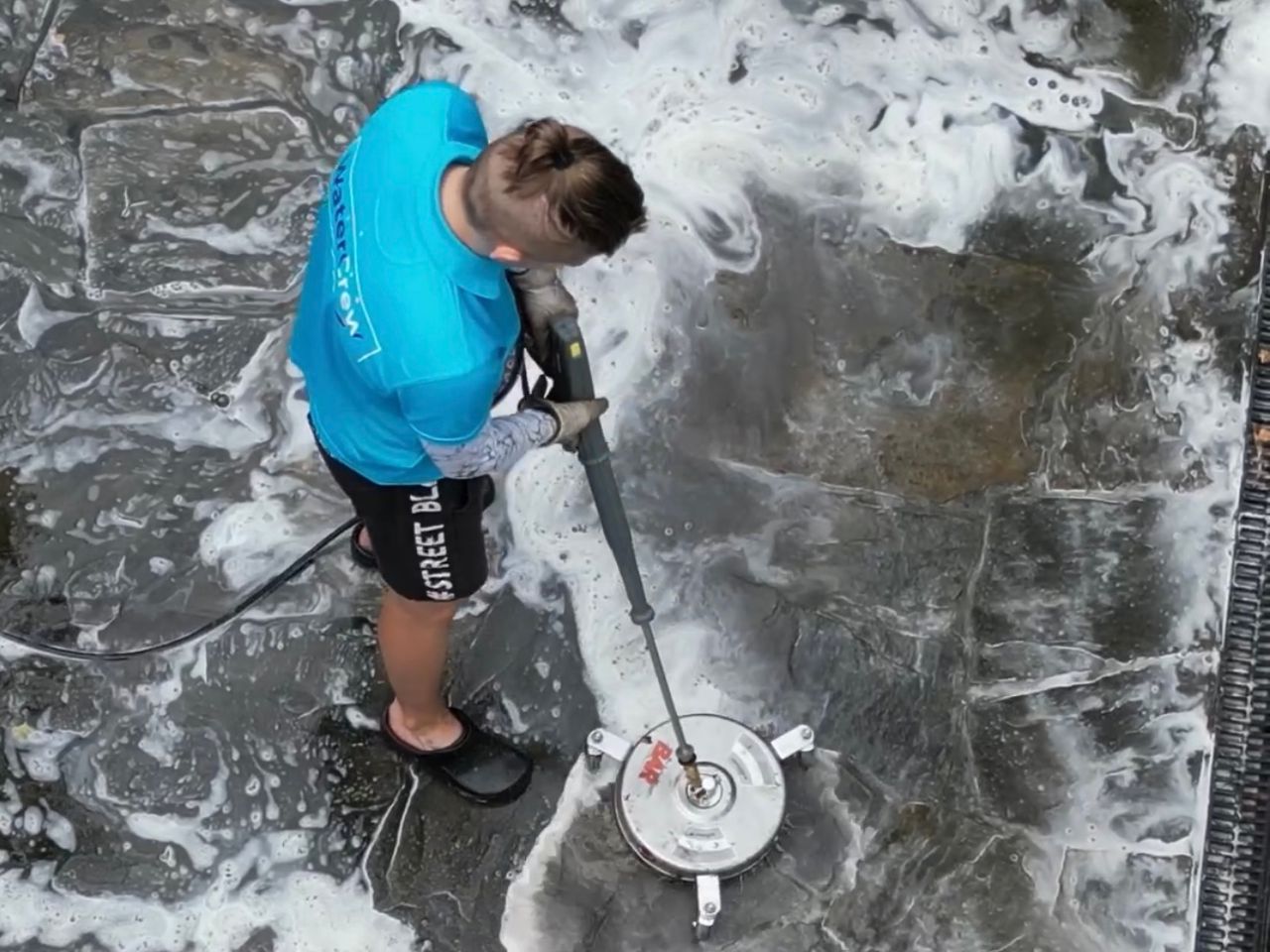
A driveway goes grey so slowly that nobody books until something else happens. Someone slips on it after rain, the house goes on the market, or a neighbour has theirs done and the difference is visible from the street.
Driveway pressure washing is not one method. Concrete, exposed aggregate, stencilled concrete, bluestone and brick pavers all take water differently, and the setting that cleans one of them takes the face off another.
Driveway cleaning starts at $220 including GST. What moves it from there is the surface and the area, not the number of cars that fit on it.
Why driveway pressure washing is a safety job first
The grey-black film on an older driveway is not dirt that got trodden in. It is algae, lichen and moss growing in the pores of the surface, fed by shade and whatever water sits there longest.
That matters because living growth behaves differently to dirt. It holds water, so the surface stays damp after everyone else's has dried, and a damp biological film is what makes concrete slippery underfoot. The fall risk is the reason most people finally call, and it is a better reason than the look.
It also explains why sweeping and hosing achieve nothing lasting. Water runs over the top of it, takes the loose surface layer, and leaves the part that is rooted in the pores to grow back from. Within a season it is where it started.
Driveway pressure washing works because it removes the growth rather than the colour. That is also why a clean done properly stays clean for years and a clean done badly is back next winter.
Shade decides the interval more than anything else. A north-facing slab in the open can go years. The same slab under a tree, or down the side of the house where the sun never reaches, will not.
Five surfaces a concrete driveway cleaner has to know
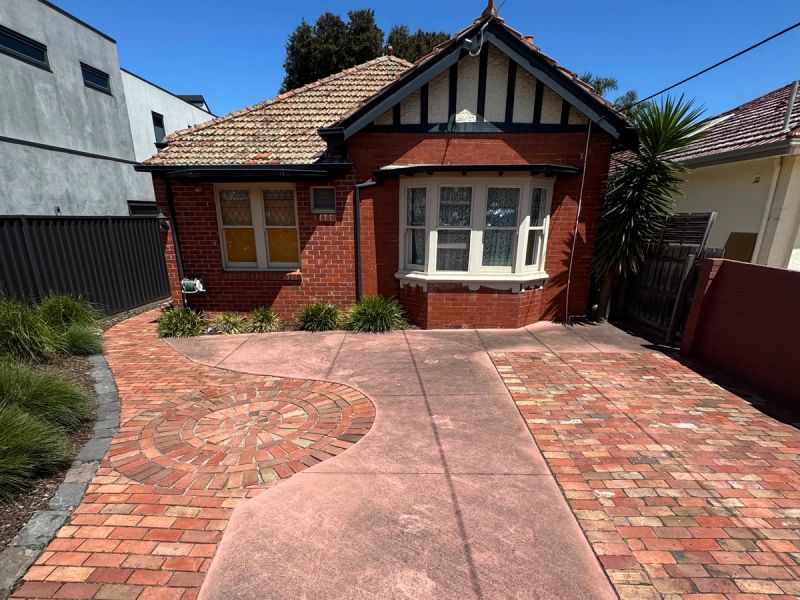
Melbourne driveways come in five common surfaces, and the only thing they share is that the wrong pressure ruins all of them.
Plain concrete. The most forgiving and the most often overdone. It takes real pressure, but held too long in one spot it leaves a lighter patch that never blends back, so the marks people blame on the cleaner are usually the cleaner standing still.
Exposed aggregate. Stones held in a cement matrix. Wash out the matrix and the stones start letting go, and no amount of care afterwards puts them back. This is the surface that punishes a hired machine most often.
Stencilled and coloured concrete. There is a coating on top, and it is the whole point of the finish. Strip it and you have grey concrete with a pattern printed in it, which is not what was paid for.
Bluestone. Common here and softer than it looks. It takes a lower pressure than concrete, and the joints between pavers matter as much as the faces.
Brick and concrete pavers. The problem is the sand in the joints. Blast it out and the pavers lose their lock, start rocking under a car and end up needing to be lifted and relaid.
| What goes wrong | What causes it | What it costs | How to prevent it |
|---|---|---|---|
| Stripes across the slab | A wand held by hand, with passes that do not overlap evenly | Permanent. The marks are in the surface, not on itNo published figureTrade experience, no published figure | A surface cleaner that holds distance and speed for you |
| Aggregate letting go of its stones | Cement matrix washed out from between the stones | Permanent. Resurfacing, not cleaningNo published figureTrade experience, no published figure | Lower pressure, wider fan, and never hold it in one place |
| Stencil pattern washed off | Pressure on the coating that carries the colour and the pattern | Recoating the whole driveway to get the finish backNo published figureTrade experience, no published figure | Treat stencilled concrete as a coated surface, not as concrete |
| Pavers rocking under a car | Joint sand blasted out and never topped up | Lifting and relaying the affected areaNo published figureTrade experience, no published figure | Clear the joints without emptying them, then re-sand |
| Bleached patches around a stain | The wrong chemical for the surface, or the right one left too long | Permanent. A second mark, larger than the firstNo published figureTrade experience, no published figure | Match the product to the stain and the surface, and rinse on time |
| A complaint about the stormwater | Wash water and what it carries running straight to the street drain | A conversation with the council you did not need to haveNo published figureTrade experience, no published figure | Control where the water goes before the machine starts |
Sources
No published dollar figure exists for any of these on a Melbourne driveway, so none is quoted. Every row is trade experience and says so in the row.
Driveway cleaning services stop before the sealer
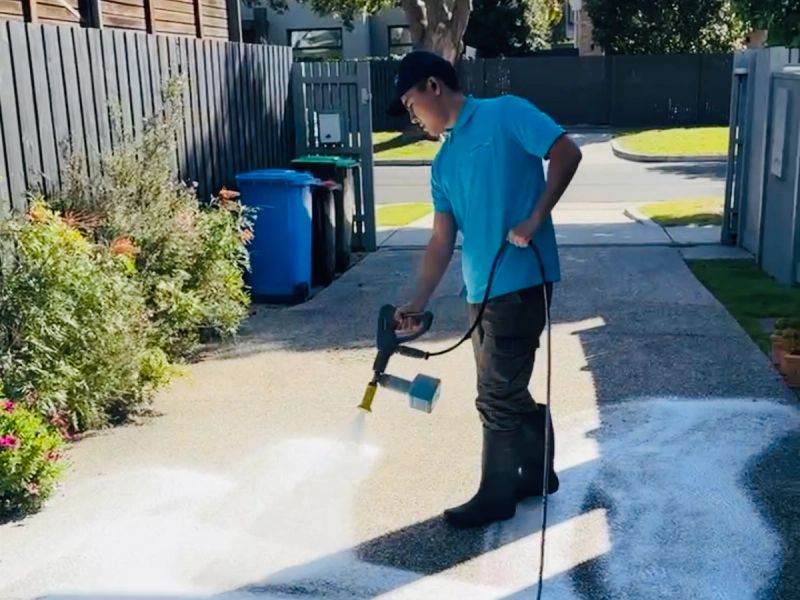
Driveway cleaning services here cover the slab, the crossover down to the kerb, the path to the front door and the edges where the concrete meets the garden. The edges are where growth starts, so a clean that stops at the visible middle comes back from its own border.
Joints get cleared, not stripped. On pavers that means lifting the growth out without emptying the sand, and topping the joints back up where the wash has taken some.
We do not seal driveways. Sealing is a separate trade with separate products and a separate warranty, and doing it badly traps moisture under a coating that then lifts in sheets. If you want the driveway sealed, get it cleaned, let it dry properly and bring in someone who does that for a living.
Also not included:
- Repairing cracks, lifting slabs or relaying pavers
- Removing paint, adhesive or concrete splatter from a build, unless quoted as post-build work
- Anything that needs a licence we do not hold
If the wash uncovers a crack that was hidden under growth, you get a photograph and a plain description. It was there before we arrived, and you would rather know.
Driveway pressure washing prices in Melbourne
A driveway is priced by what is on it before it is priced by how big it is. A grey slab is one job. A slab with oil in it is another, and rust is a third, because each needs a different product and a different amount of time before the machine is any use at all.
from — the slab, its edges and the crossover
from — the oil has to be lifted before a wash means anything
from — rust is chemistry matched to the stain and the surface
All prices include GST and cover the slab, its edges and the crossover. Area is measured on site rather than estimated from the kerb, and the surface still moves the figure: aggregate, stencil, bluestone and pavers take longer than plain concrete.
Pressure wash driveway cost, and what moves it
Four things move the number:
- The area, measured rather than estimated from the kerb
- The surface, because aggregate and stencilled concrete are slower than plain
- What is on it — film rinses, lichen is worked off, and oil or rust is a separate job before the wash starts
- Whether there is a tap and a place to put the machine
People search for a pressure wash driveway cost and get a spread that looks random. It is not random: the low end is plain concrete in the open with a hose point at the door, and the high end is stencilled concrete under a tree with the tap around the back.
The honest answer to cost to pressure wash driveway is that it is quoted by area and surface together. Neither one on its own tells you anything, which is why a pressure wash driveway price given before anyone has asked what the surface is comes with a correction attached.
Send a photo taken from the street and one from the garage door, and say roughly how many cars fit on it. That is enough for a figure rather than a range.
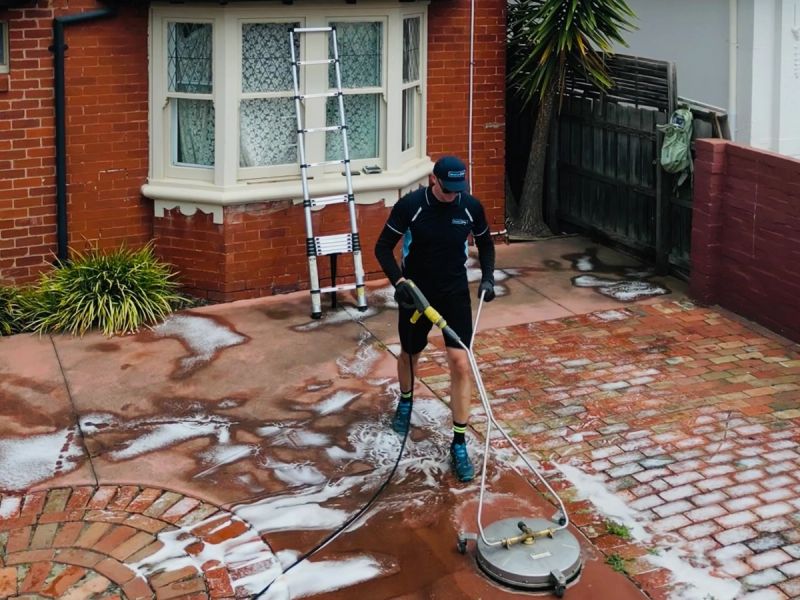
Driveway cleaning, one pass at a time
The surface gets a look first, and the machine gets set to it rather than to the job before. That sounds obvious and it is the step that gets skipped, because one setting for the whole day is faster.
Growth comes off in overlapping passes at a constant distance and a constant speed. Change either mid-run and the surface records it: those long lighter stripes on a neighbour's driveway are not dirt left behind, they are the passes that did not overlap.
Edges, the crossover and the path are done with the slab, not after it. Water carries what it lifts downhill, so anything left above the finished area ends up back on it.
The last step is the rinse and the walk. A driveway that looks even while wet can dry patchy, so the check happens once it is dry rather than while it is still shining.
Nothing goes into the stormwater that should not. On a driveway the water runs to the street, which is the part of this job that most concerns a council and the part most contractors do not mention.
Concrete, bluestone and pavers we have done
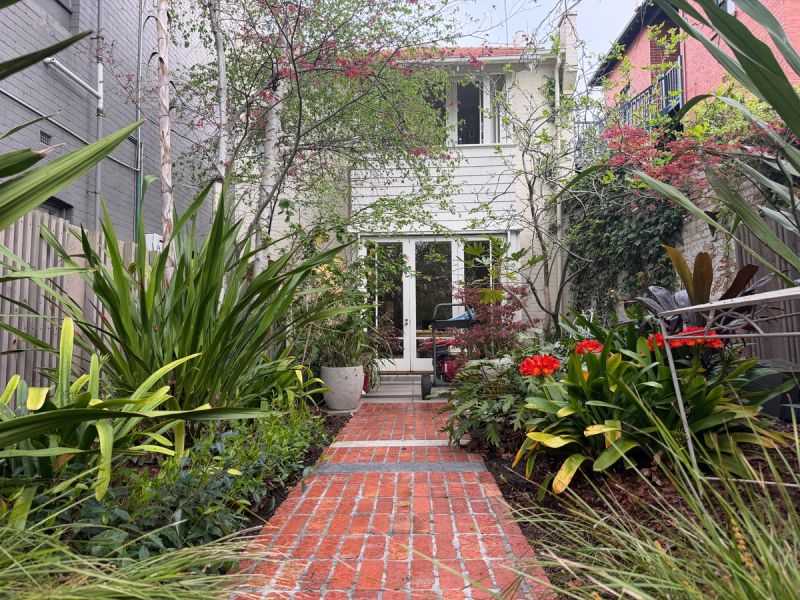 Pressure cleaning
Full-day clean of the pathways across the grounds of a multi-unit complex on Acland Street, St Kilda, carried out alongside window cleaning and gutter clearing on the same visit.
Read case study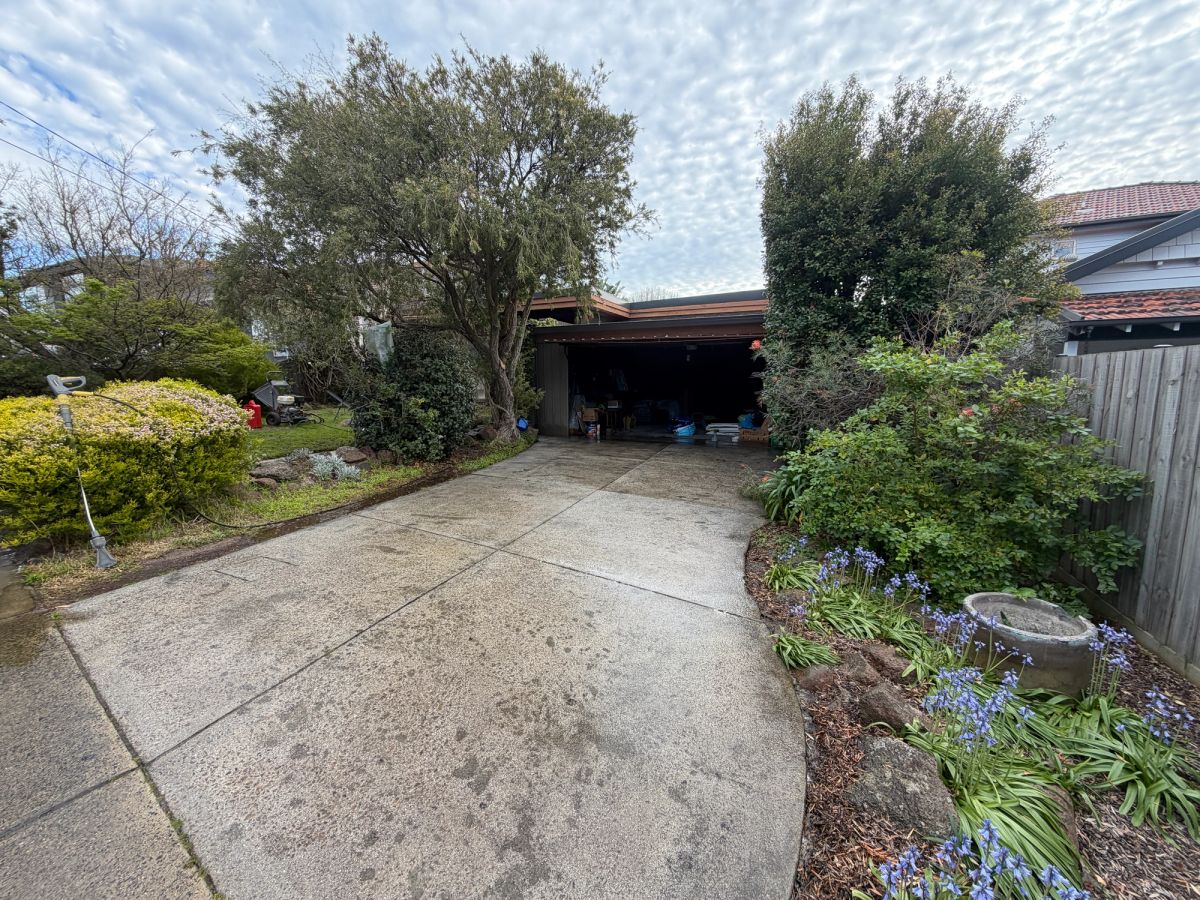
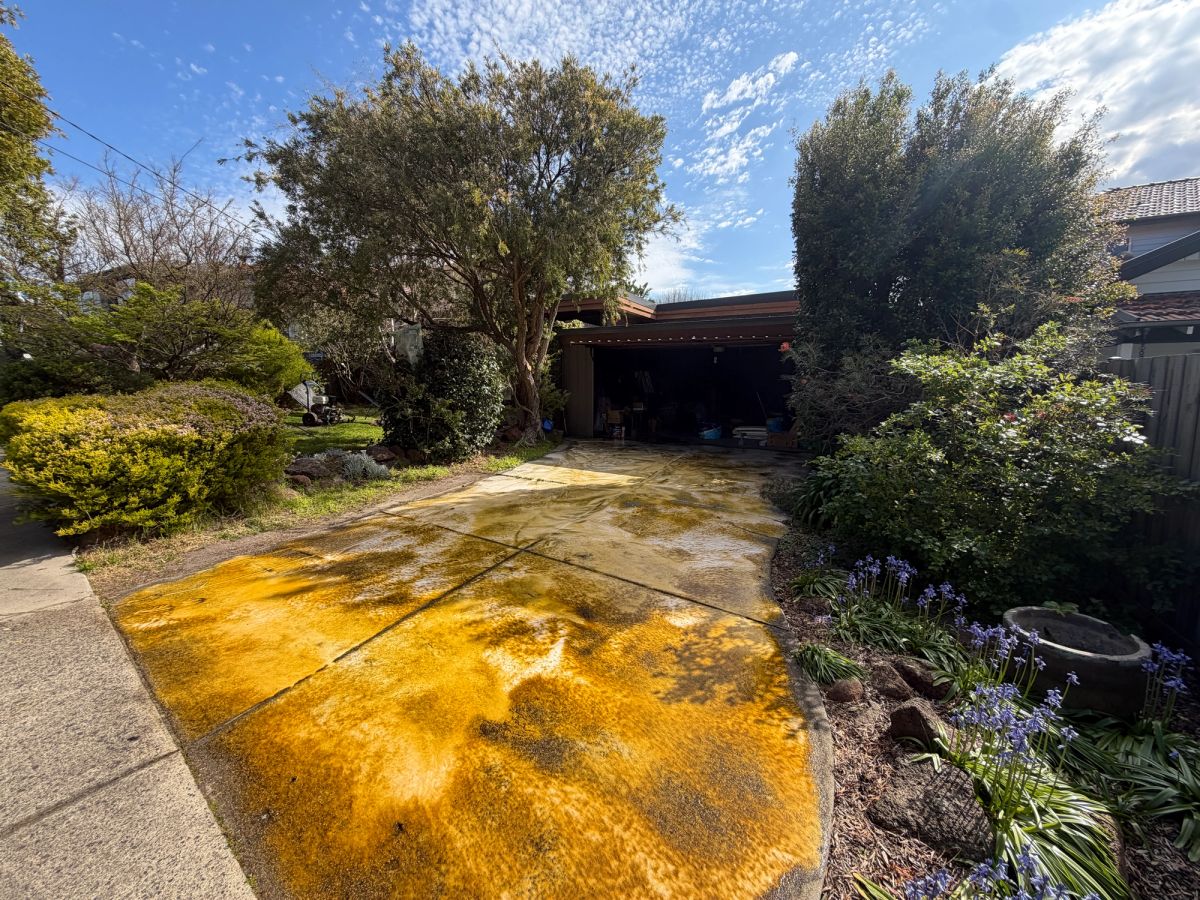
Concrete driveway cleaning on Amelia Street, McKinnon. The slab had ingrained dirt and established moss growth, treated with a cleaning solution and cleaned with a surface cleaner.\n\nThe chemical treatment broke down the growth before pressure cleaning, and the surface cleaner attachment gave an even finish across the whole driveway.
Read case study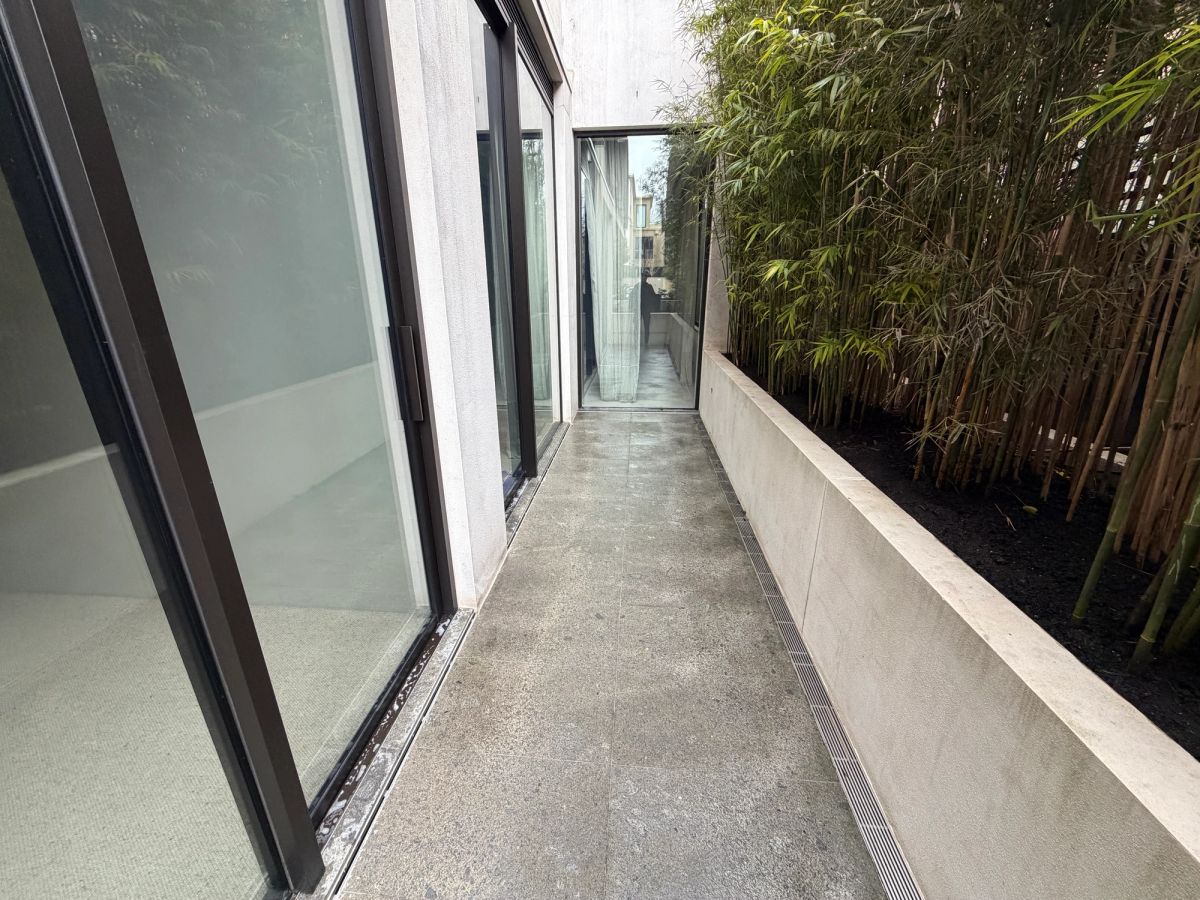
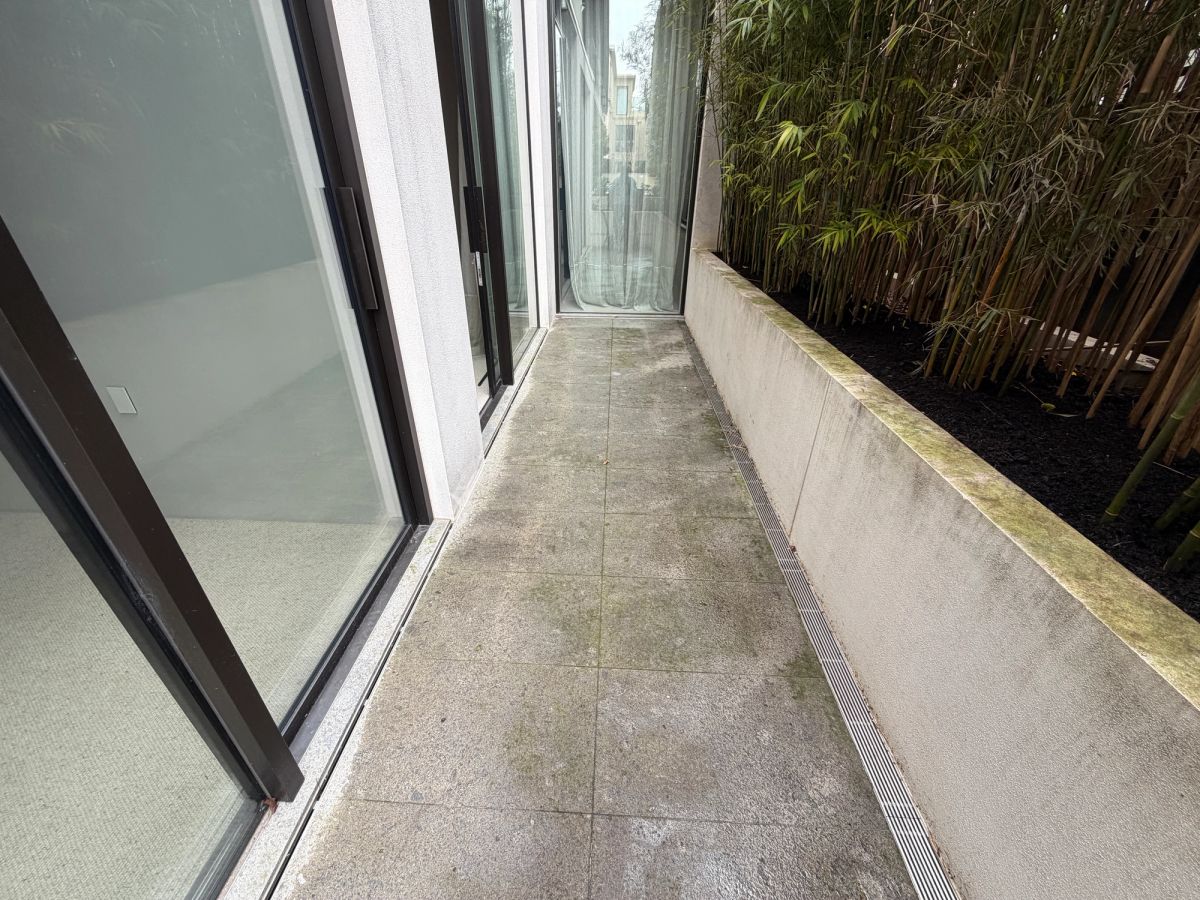
A concrete clean in South Yarra that started with a drainage problem: water was not leaving the site, so the surface could not be cleaned properly until the drain was cleared.
Read case study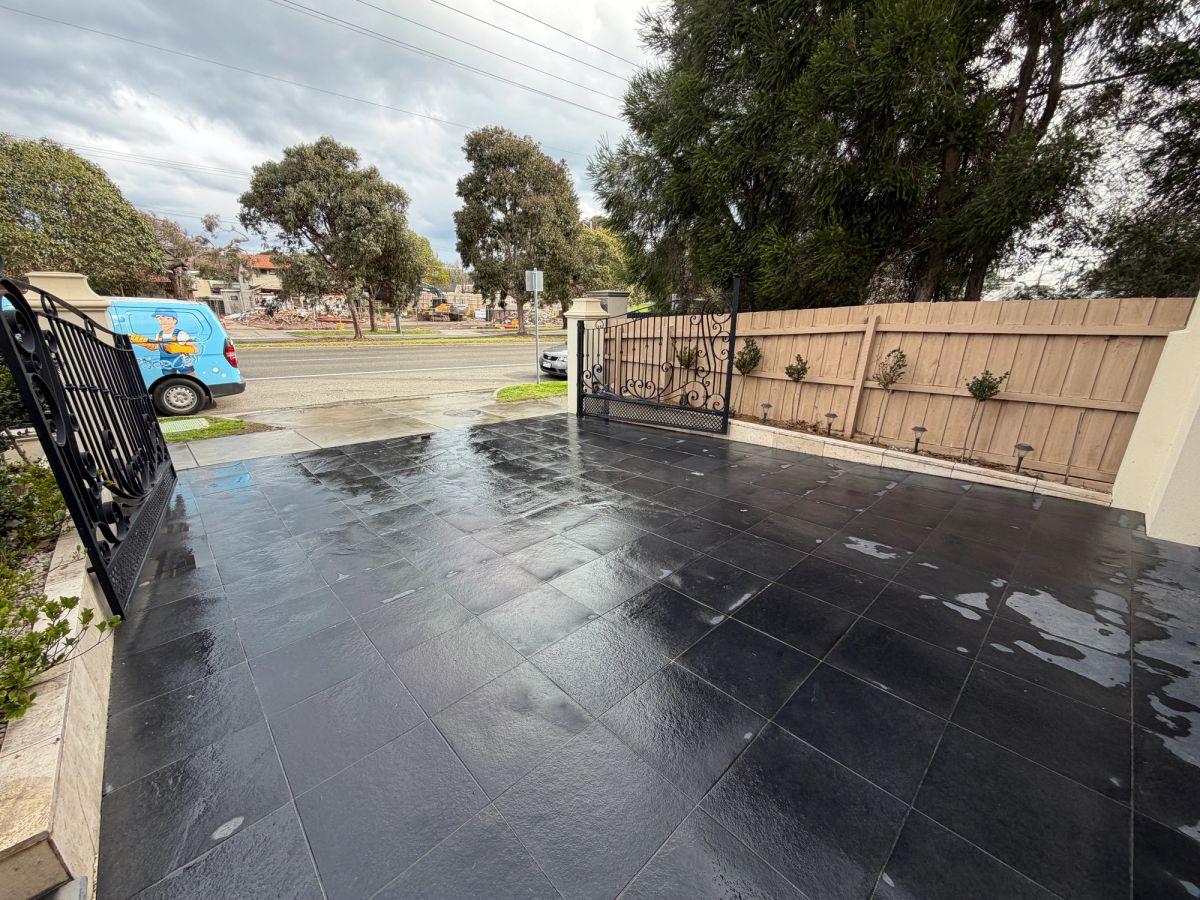
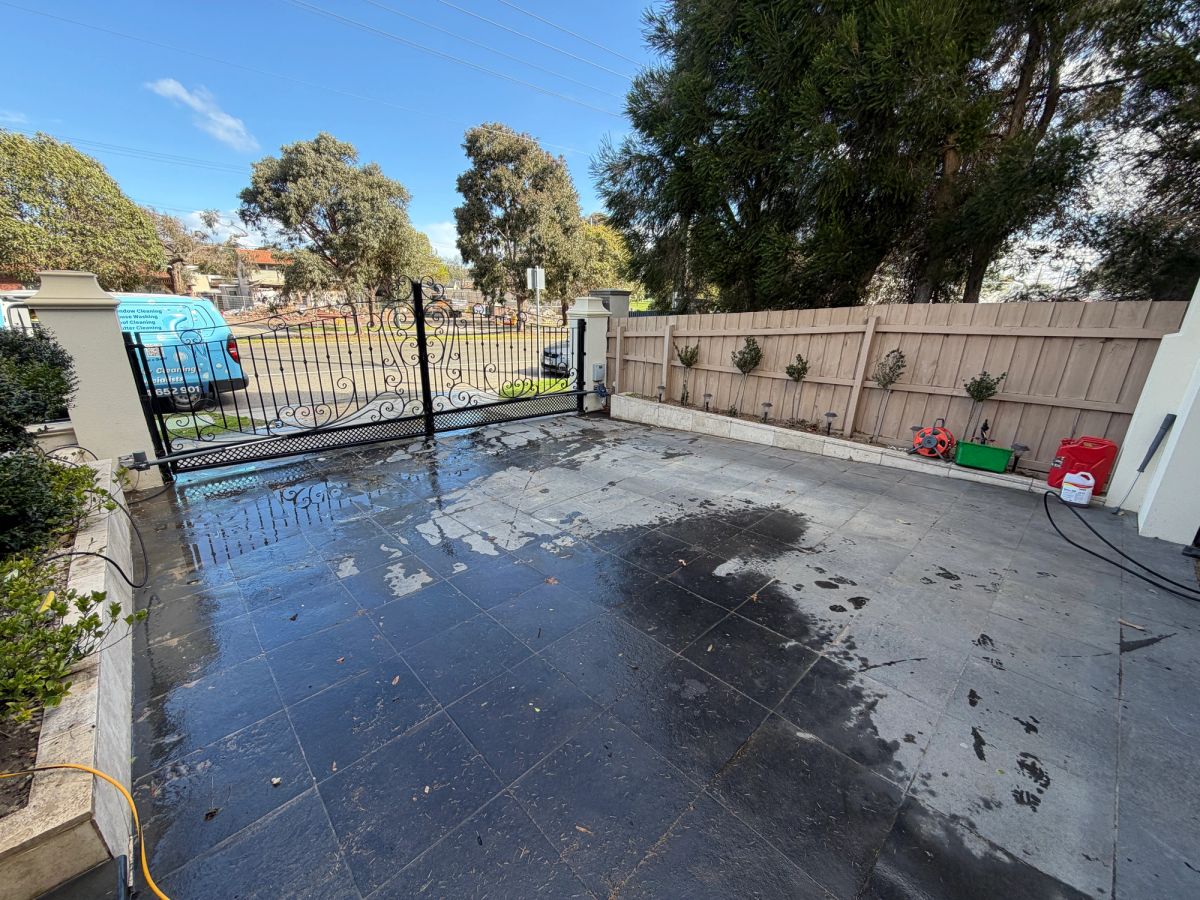
The driveway and paving at the same South Road house, done on the same day as the facade but recorded on its own because it is a different job on a different surface.
Read case study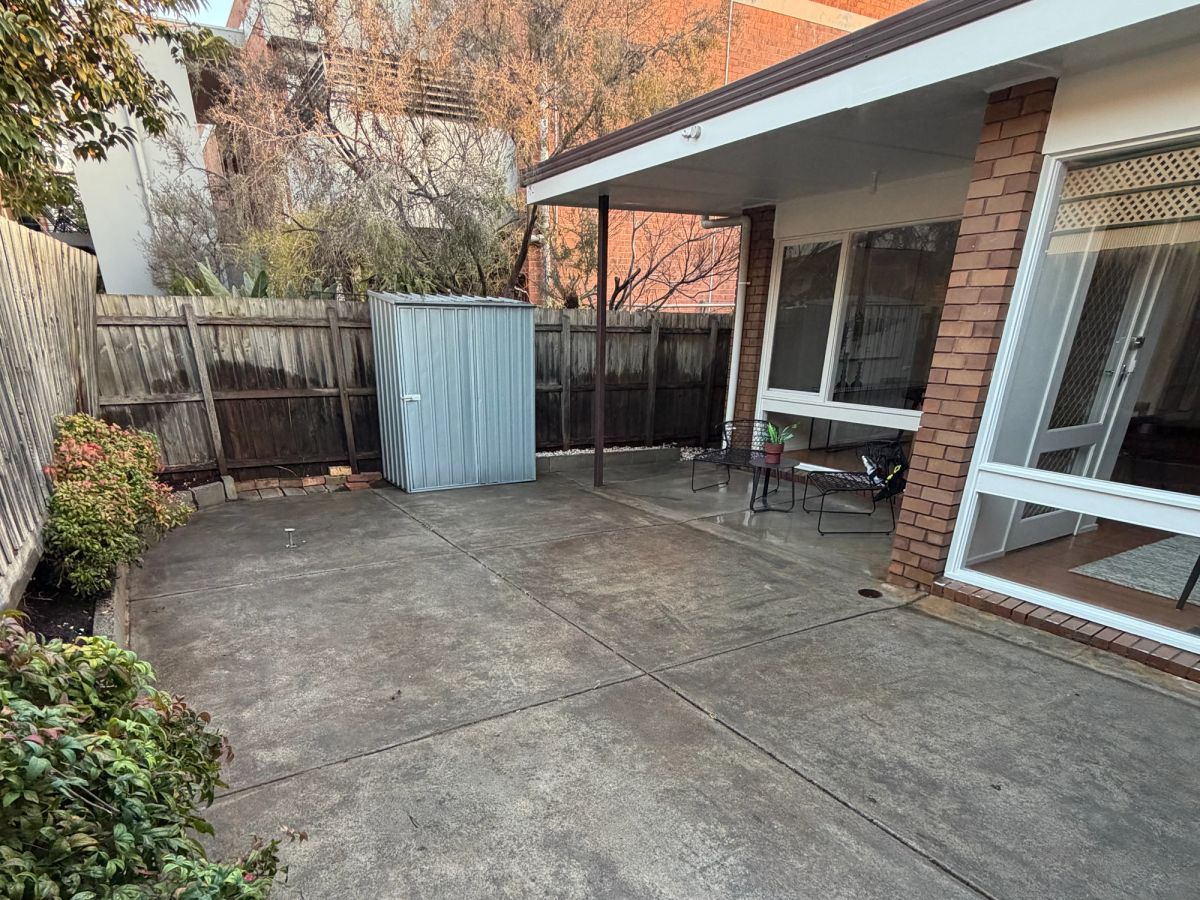
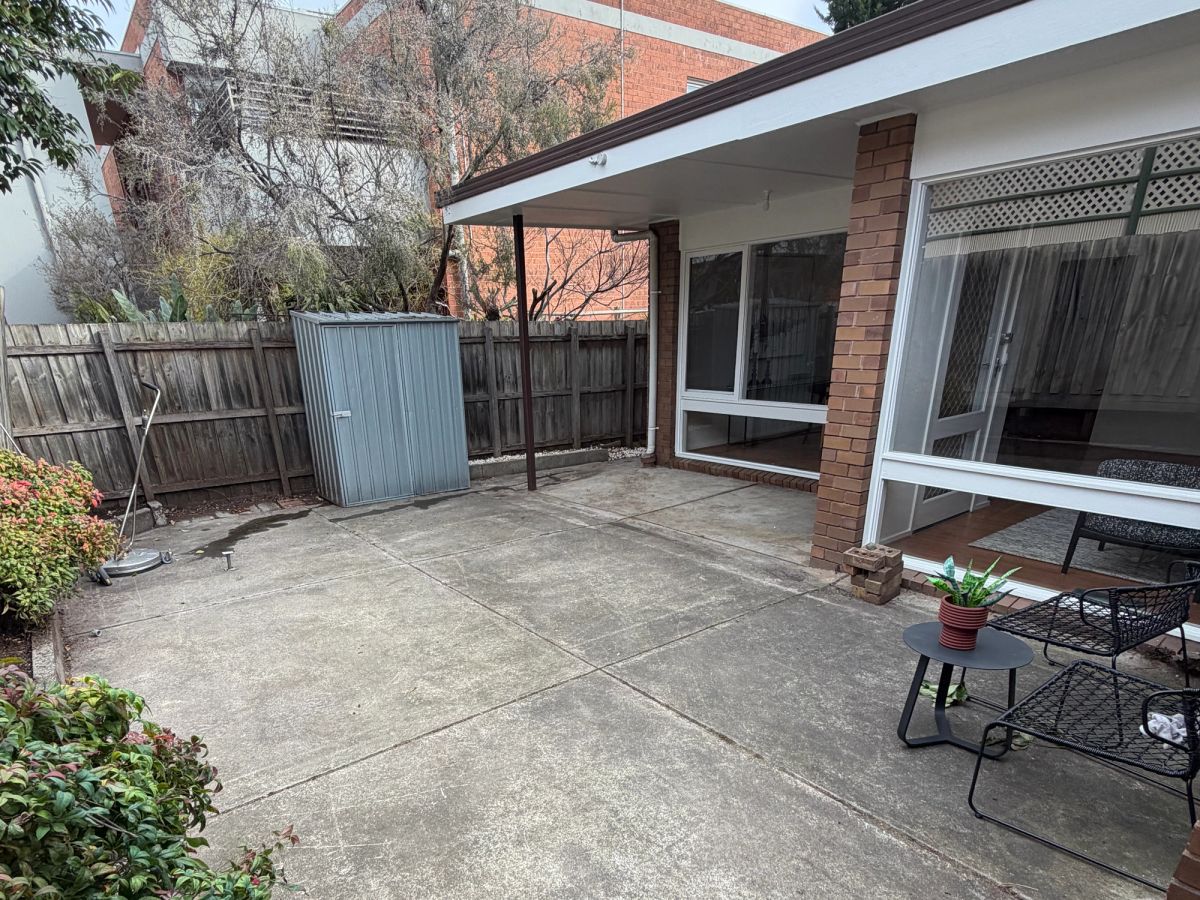
Concrete cleaned on Hotham Street, St Kilda East, in the first week of July. Mid-winter is when concrete looks worst here: it never gets a chance to dry out.
Read case study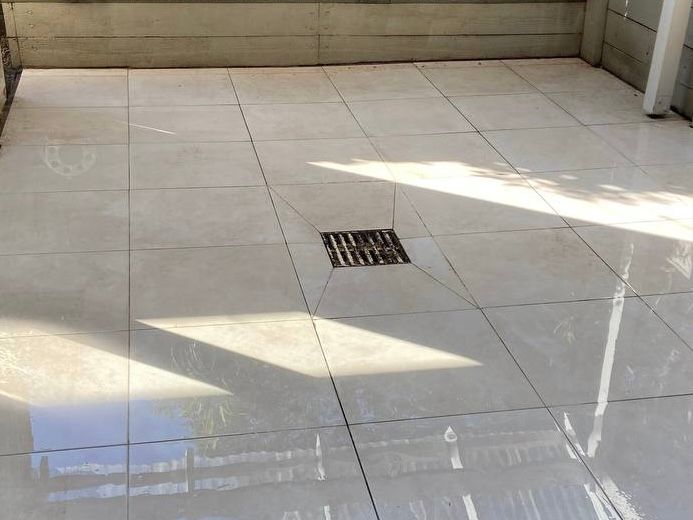
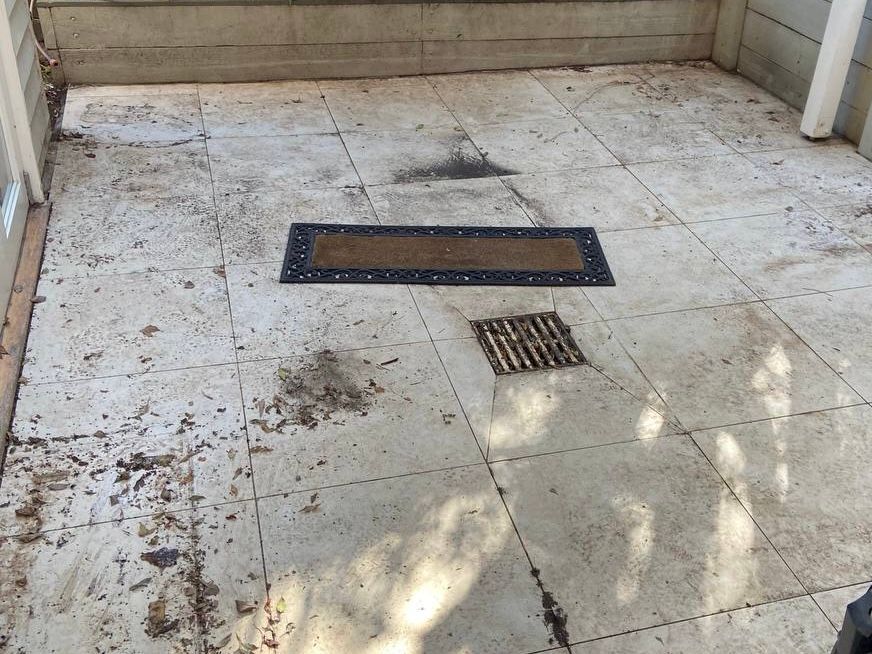
A tiled backyard on Victoria Avenue, Ripponlea, on a gloss finish rather than a matte one. Two and a half hours, one technician.
Read case study
Google reviews
What the neighbours said, from Google
Recent verified feedback from local clients who booked exterior cleaning with WaterCrew.
★★★★★ GoogleJuly 2026"Very happy with the service. They were clean, professional and left everything tidy Plus the job was done beautifully Many thanks!"
MelbourneView on Google ↗

★★★★★ GoogleJune 2026"Highly recommend Eren and his WaterCrew. Have used for gutter cleaning and will in future use for terracotta roof tile cleaning & window cleaning. They do a very thorough and professional job at competitive rates. Also, they are polite, friendly and well spoken."
CanterburyView on Google ↗

★★★★★ GoogleJune 2026"WaterCrew Cleaning recently cleaned the windows at my home in Chadstone and did an excellent job. The team was professional, friendly, and easy to deal with. The windows look crystal clear, and the service was completed on time and to a very high standard. I would highly recommend WaterCrew Cleaning to anyone looking for reliable window cleaning services in Chadstone."
MelbourneView on Google ↗

★★★★★ GoogleJune 2026"New age equipment, timely with very satisfactory results. Highly recommend crew for exterior/interior and flyscreen cleaning. Gutters cleaning available as well Best crew I came across for sometime and reasonably priced. Collin"
HamptonView on Google ↗

Four reasons a driveway gets booked
A driveway that got slippery
Usually after someone nearly went over on it in the wet. This is the safety job rather than the cosmetic one, and it is the most common reason the call gets made.
A house going to market
The driveway is the first thing in the photograph and the first thing underfoot at an inspection. It is also the cheapest surface on the property to make look maintained.
A rental between tenants
A condition report to satisfy and a short window to do it in. Driveways and paths are the parts most often argued about because they are the parts nobody cleaned for years.
A carpark or a forecourt
Bigger area, harder wear and a duty of care about the surface underfoot. Usually scheduled rather than booked once, because the wear does not stop.
Eight questions before the machine arrives
Do I need to be home?+
No. The work is outside and the water comes from your tap. If the tap is behind a locked gate we will need that sorted, and we will ask when you book rather than turn up and find out.
How long does a driveway take?+
A single driveway in reasonable condition is a couple of hours. A double, or anything with twenty years of growth in it, is most of a day. Surface matters more than size.
Will it damage the concrete?+
Not at the pressure and distance we use. Damage comes from holding a wand in one spot or from using concrete settings on aggregate or stencil, which is why the machine gets set to the surface first.
Can you get oil stains out?+
Fresh oil, usually. Old oil has soaked into the pores, and honest expectation is a strong improvement rather than a disappearance. Anyone promising a clean slate on a twenty-year-old stain is selling something.
Do you seal the driveway afterwards?+
No. Sealing is a different trade with different products and its own warranty, and it needs a properly dry surface. We clean it and leave it ready for whoever does that work.
What happens to the water?+
It goes where the driveway sends it, which is usually the street, so where it runs is controlled before the machine starts. It is the part of this job a council cares about.
Will the weeds come back?+
The growth comes back eventually because it is alive. What changes is the interval: removed properly it stays away for years, and taken off the top it is back the next wet season.
Do you clean the paths and crossover too?+
Yes, and they are part of it rather than an extra. Edges are where growth starts, so cleaning the middle and leaving the border just gives it somewhere to grow back from.
Oil, rust and the stains that never fully go
- Pressure lifts most of what is on a slab. Stains are the exception, and it is worth being straight about which ones.
- Fresh oil sits near the surface and comes up with a degreaser and dwell time. Old oil has soaked into the pores, and pressure alone drives it deeper rather than out. Expect a real improvement and not a disappearance, and be suspicious of anyone promising otherwise on a twenty-year-old slab.
- That is also why oil is priced as its own job rather than as an extra on the wash. The degreaser goes on, it sits, and it comes off, and none of that is the machine running. Paying for a standard clean on a slab with oil in it buys you a cleaner driveway with the same stains on it.
- Rust from a wheelie bin, a trailer jockey wheel or reinforcement too close to the surface is a chemical problem rather than a pressure one. It needs the right product for the stain and the surface, and the wrong one bleaches the concrete around it into a second, larger mark. It is the dearest of the three for that reason: the risk of making it worse sits with whoever is holding the bottle.
- Tyre marks are the easy surprise. They look permanent and they usually are not, because they sit on top rather than in.
- Tannin from leaves and from bark mulch left sitting is the same story as oil. Recent goes, ancient fades.
Hiring a machine for the weekend
- Plenty of driveways get cleaned by their owners and come out fine. It is worth knowing what decides which way it goes.
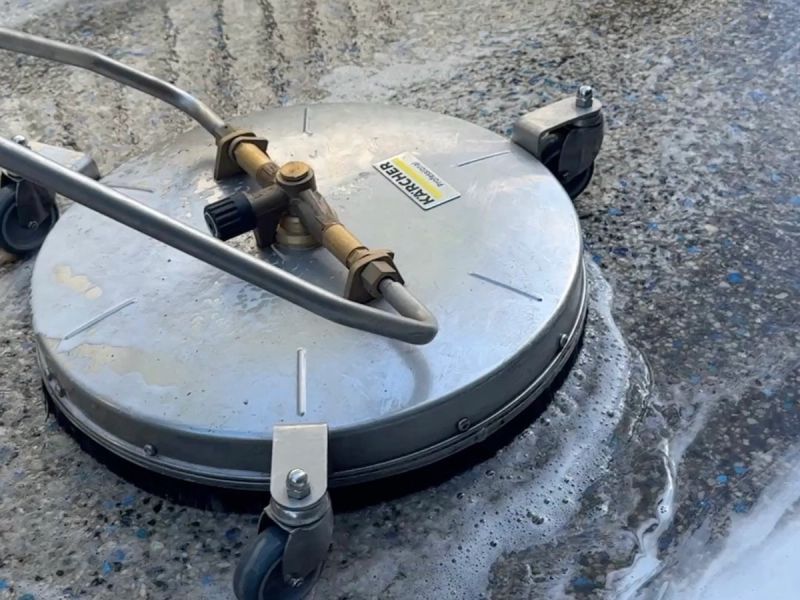
- A hire machine and a trade machine differ less in pressure than in what they put through the nozzle. A surface cleaner, the round attachment that runs flat on the slab, is what produces an even result, because it holds the distance and the angle for you. A wand held by hand does neither, and that is where the stripes come from.
- Doing it with a wand is also slow. A double driveway is most of a day, done badly is most of a weekend, and the machine goes back on Sunday whether you finished or not.
The real risk is not effort, it is the surfaces that do not forgive. Exposed aggregate and stencilled concrete are the two where a Saturday afternoon becomes a resurfacing quote, and neither of them announces the damage until the surface dries.
If it is plain concrete in the open and you have a free weekend, have a go. If it is aggregate, stencil, bluestone or pavers, the arithmetic changes.
What a pressure wash driveway price should include
- Driveway pressure washing is quoted by area and by surface. A price given without both is a number chosen rather than worked out, and it is the number that changes on the day.
- Be careful with a figure well under the others. The fast version is one setting, a wand, no edges and no crossover, and it looks finished until it dries. The stripes appear afterwards and they do not wash out.
- Be equally careful with anyone who quotes cleaning and sealing as one line. They are different jobs on different days, and the seal goes on a surface that has to be properly dry first.
- Ours are set out above: from two hundred and twenty dollars for a standard clean, from four hundred and eighty where there is oil to lift, from six hundred and forty where there is rust. All including GST, all with the slab, the edges and the crossover in them.
- The numbers are published for the same reason the method is. Two quotes cannot be compared when only one of them says what surface it is priced for.
About the expert

Ihor Sydorenko
Founder & Lead Rope Access Technician (IRATA Level 3) — WaterCrew Cleaning
Ihor has worked on ropes since 2013, starting on high-rise facades in Kyiv, where he founded and still runs the rope-access company Альпіністи Київ. He holds IRATA Level 3 — the highest grade in the international rope-access system, covering work supervision, safety planning and rescue.
- ✓ IRATA Level 3 rope access technician
- ✓ Working safely at heights
- ✓ Construction induction
- ✓ First aid