Driveway Cleaning — South Road, Brighton East
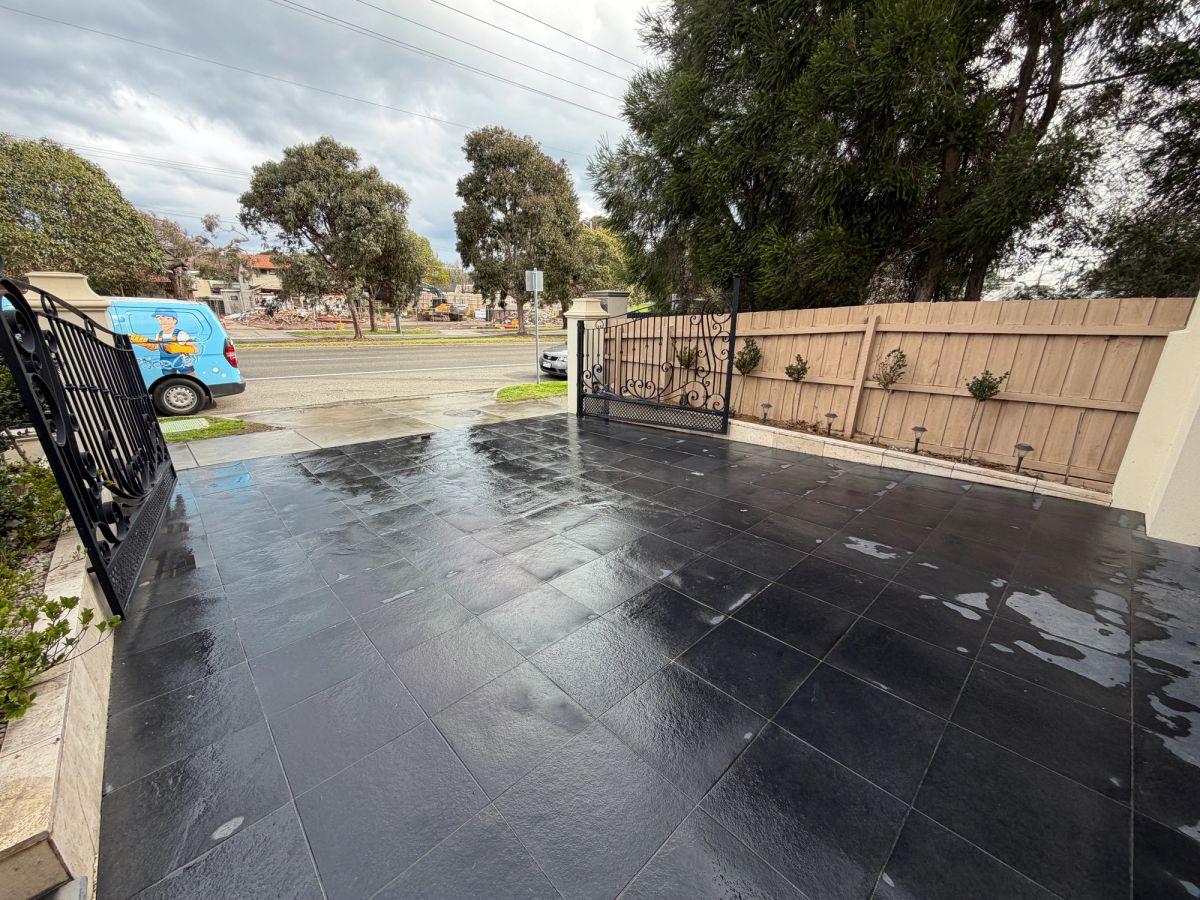
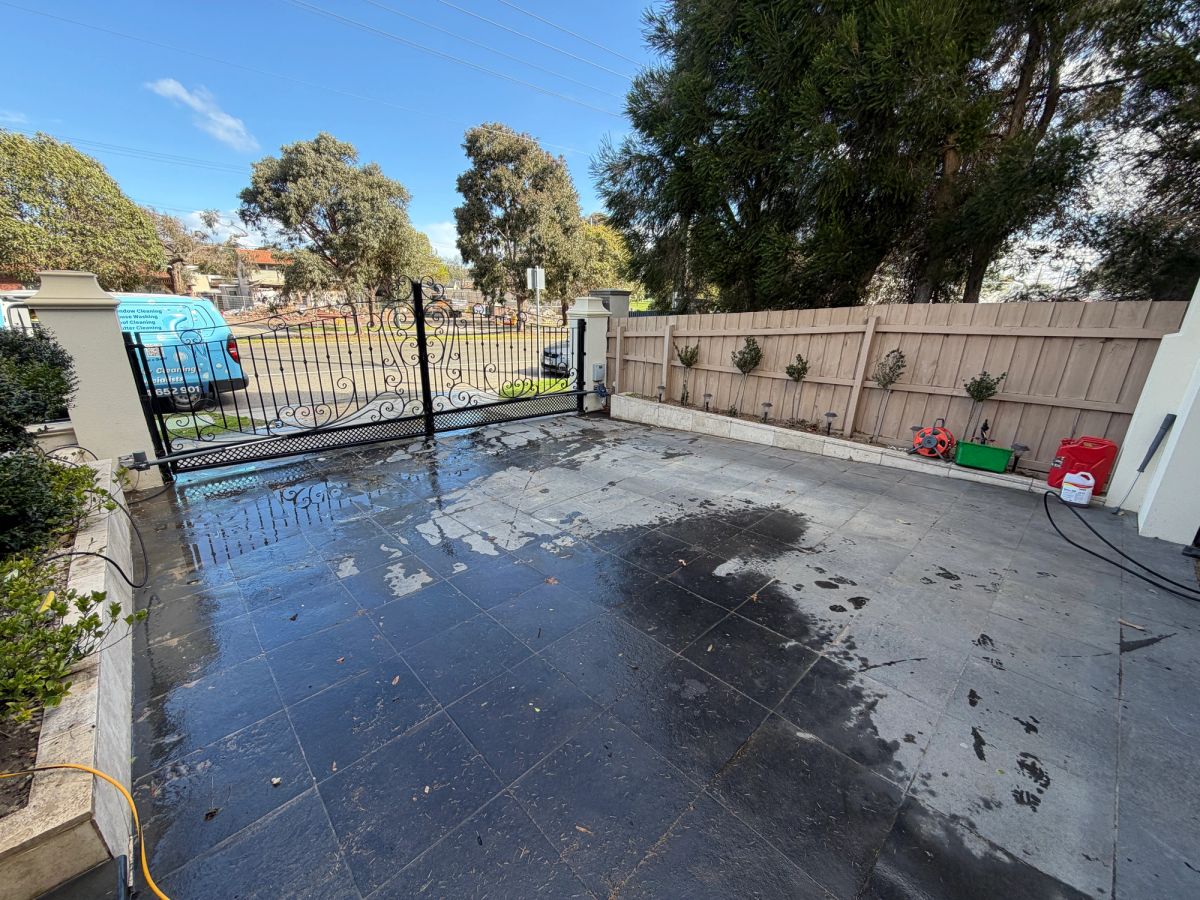
The driveway and paving at the same South Road house, done on the same day as the facade but recorded on its own because it is a different job on a different surface. Large-format tile rather than poured concrete — the dense, low-porosity kind that reads as porcelain or bluestone. Two hours, one technician, professional cleaning chemistry rather than force.
- Location
- Brighton East 3187
- Completed
- 5 September 2026
- Duration
- 2 h
- Crew
- 1 tech
- Property
- Double-storey house
The problem
A tiled driveway is not a concrete one and it does not respond like a concrete one. Dense tile has almost nowhere for dirt to sink into, so what builds up sits on the surface and in the joints between units rather than in the slab itself. That sounds easier and is not. Because there is no porosity to hold it, the film spreads evenly across the whole area and the driveway darkens as a sheet rather than in patches. The joints, meanwhile, hold everything that the tile face does not.
What we did
Chemistry, not pressure. A professional cleaning solution was applied across the area and given time to lift the film off the face of the tile, then rinsed. On dense tile a lance does not have much to bite on, so the temptation is to hold it closer and harder — which is how joints get blown out and how a bluestone face picks up a mark that stays. The joints were treated as part of the job rather than as whatever happened to be left over. Two hours is what an area like this takes when the solution is given the time it needs instead of being chased with a machine.
- Driveway and paved area cleaned end to end
- Professional cleaning chemistry applied and given contact time
- Joints between units cleaned rather than skipped
- Rinsed at controlled pressure, no lance held close to the tile face
- Before and after photographs supplied
Result
- Even colour returned across the whole area rather than clean patches
- Joints clear, so the tile pattern reads properly again
- No blown joints, etching or lance marks on the tile face
- Finished in two hours, on the same visit as the house
Nearby case studies
More projects in Brighton East
 Window cleaning
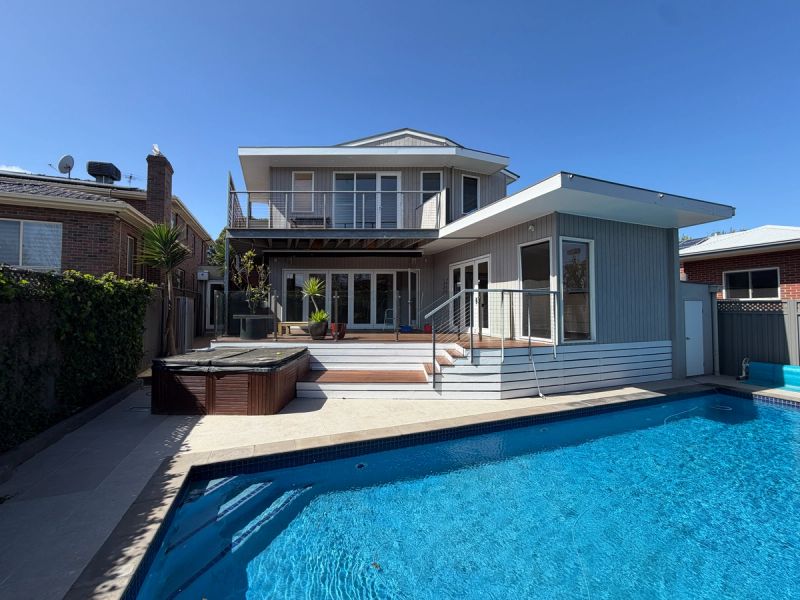
A pre-sale window clean in Brighton East, with all glass done inside and out in a single five-hour visit.
Read case study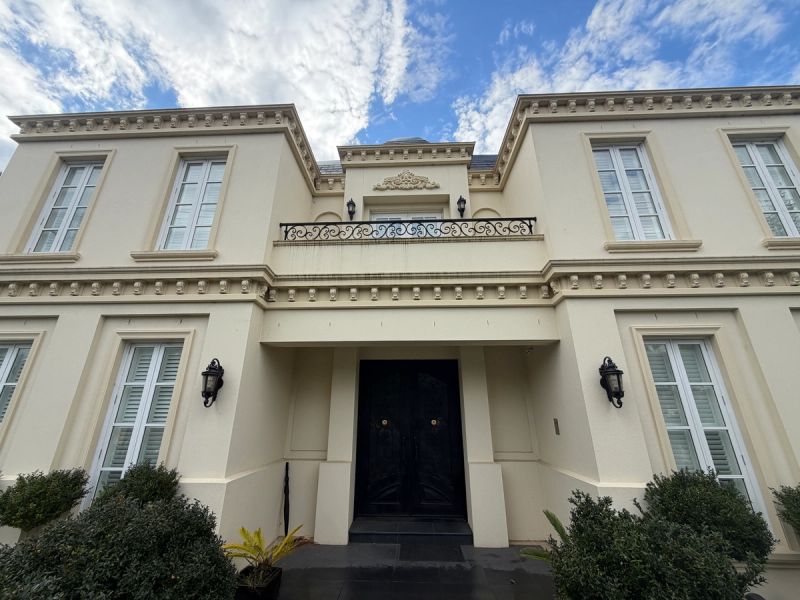 Building washing
A double-storey house on South Road, on the southern boundary of Brighton East, with around 800 square metres of beige render across its walls. The owner called about the facade rather than the roof: the house faces a main road, and the render had gone grey in a way that hosing it down had stopped fixing.
Read case study