House Wash and Windows — South Road, Brighton East
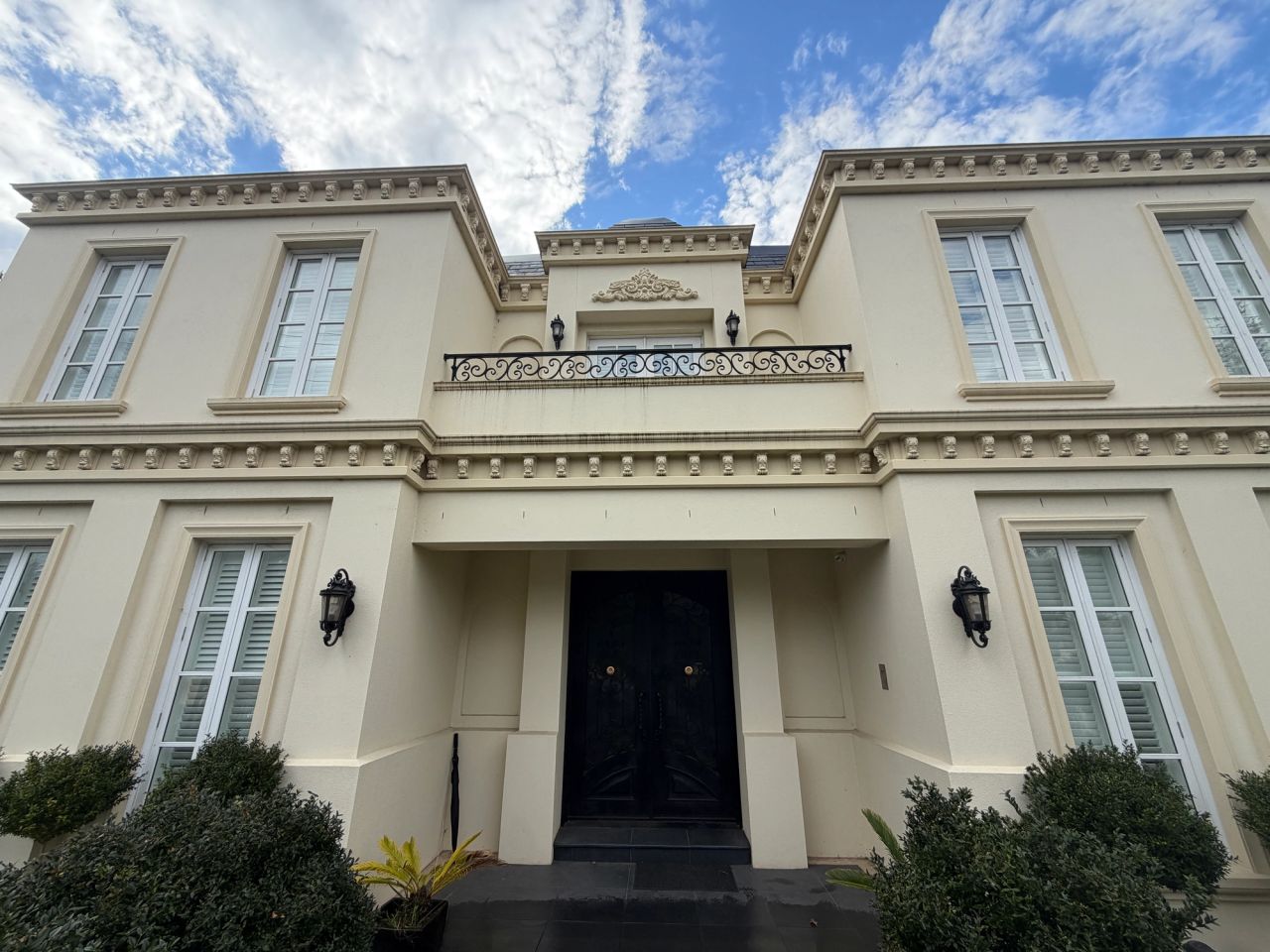
A double-storey house on South Road, on the southern boundary of Brighton East, with around 800 square metres of beige render across its walls. The owner called about the facade rather than the roof: the house faces a main road, and the render had gone grey in a way that hosing it down had stopped fixing. One technician, six hours on the house itself. Facade soft washed, exterior glass done after the walls. The paving and driveway were cleaned the same day and are recorded separately.
- Location
- Brighton East 3187
- Completed
- 5 September 2026
- Duration
- 6 h
- Crew
- 1 tech
- Property
- Double-storey house
The problem
A house on a main road does not get dirty the way a house four streets in does. Traffic leaves an even film of brake dust, tyre particulate and exhaust soot across whatever faces the road, and unlike leaf staining it does not arrive in patches and does not rinse off in rain. Light-coloured render is the worst surface to have it on. The film lands evenly, so there is no clean patch left to compare against, and beige simply shifts a shade towards grey. Owners stop noticing until the front and the back of the same house are photographed side by side.
What we did
Render decides the method before anything else does. Acrylic render is a thin coloured coat over a soft base, and a pressure lance held close cuts a hard-edged line straight through it that never blends back. So the facade was soft washed: a cleaning solution applied at low pressure, given time to work, then rinsed. Road film sits on the surface rather than in it, which is why contact time removes it and force only risks the coat. Order mattered on a wall this size. Solution goes on from the bottom up so nothing runs down dry render and dries as a streak, and comes off from the top down. Walls first, glass second, because the windows take the run-off from above them. The paving and driveway were left until last, once everything that was going to wash down off the house had already come down.
- Around 800 square metres of beige render soft washed, both storeys
- Low pressure and contact time throughout, no lance on the render
- Exterior glass cleaned after the walls rather than before
- Frames and sills done with the glass
- Road-facing side treated as the priority elevation
Result
- Road film off the render, front and back of the house matching again
- Beige back to beige rather than a shade of grey
- No lance marks, banding or streaking left across the coat
- Glass clear, with no run-off marks from the wall wash above
Nearby case studies
More projects in Brighton East
 Window cleaning
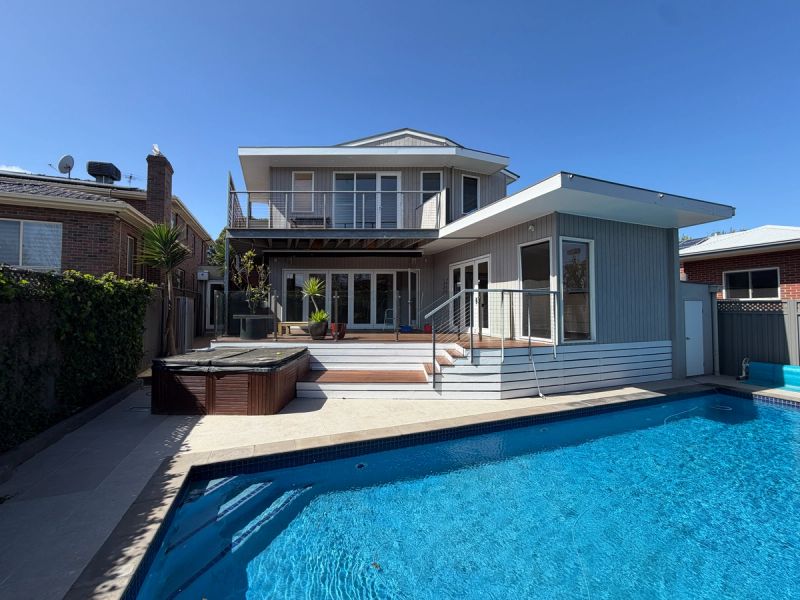
A pre-sale window clean in Brighton East, with all glass done inside and out in a single five-hour visit.
Read case study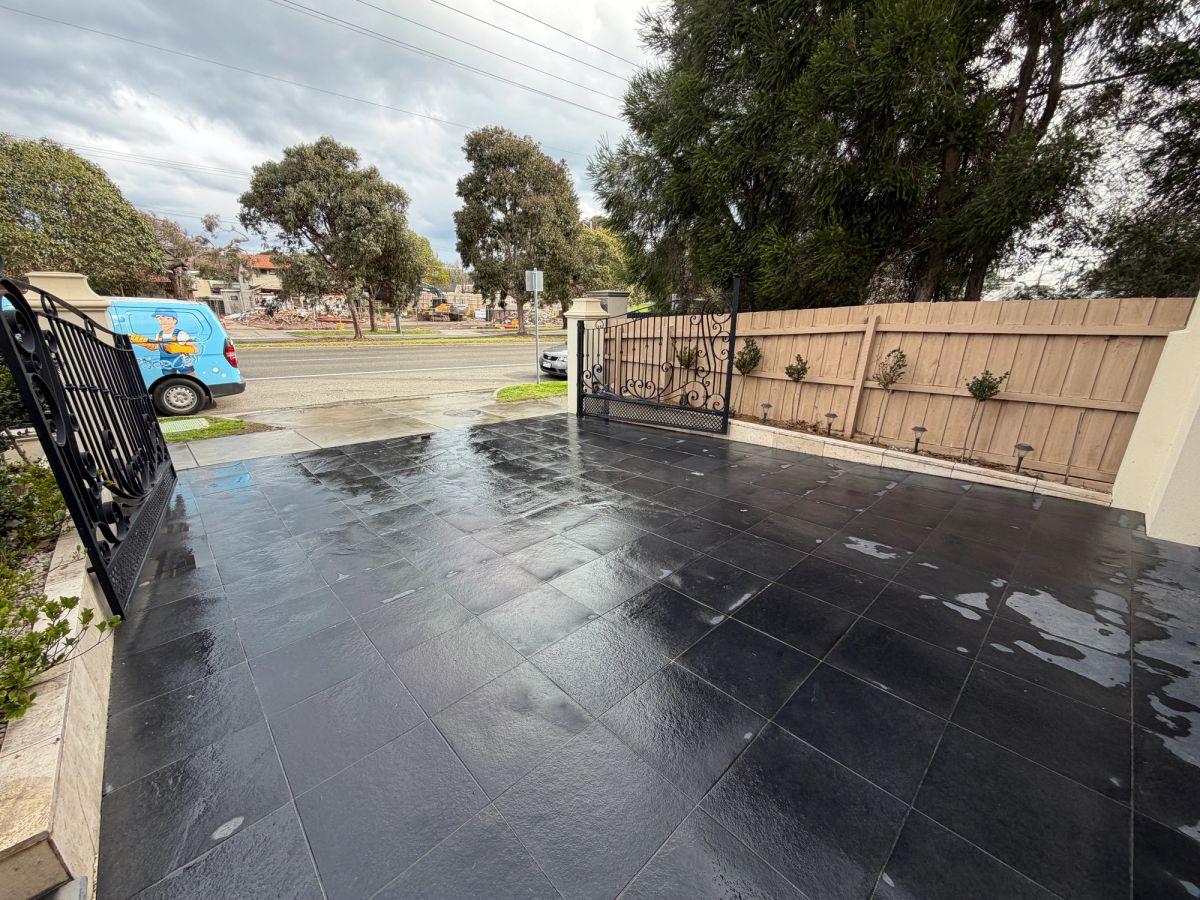
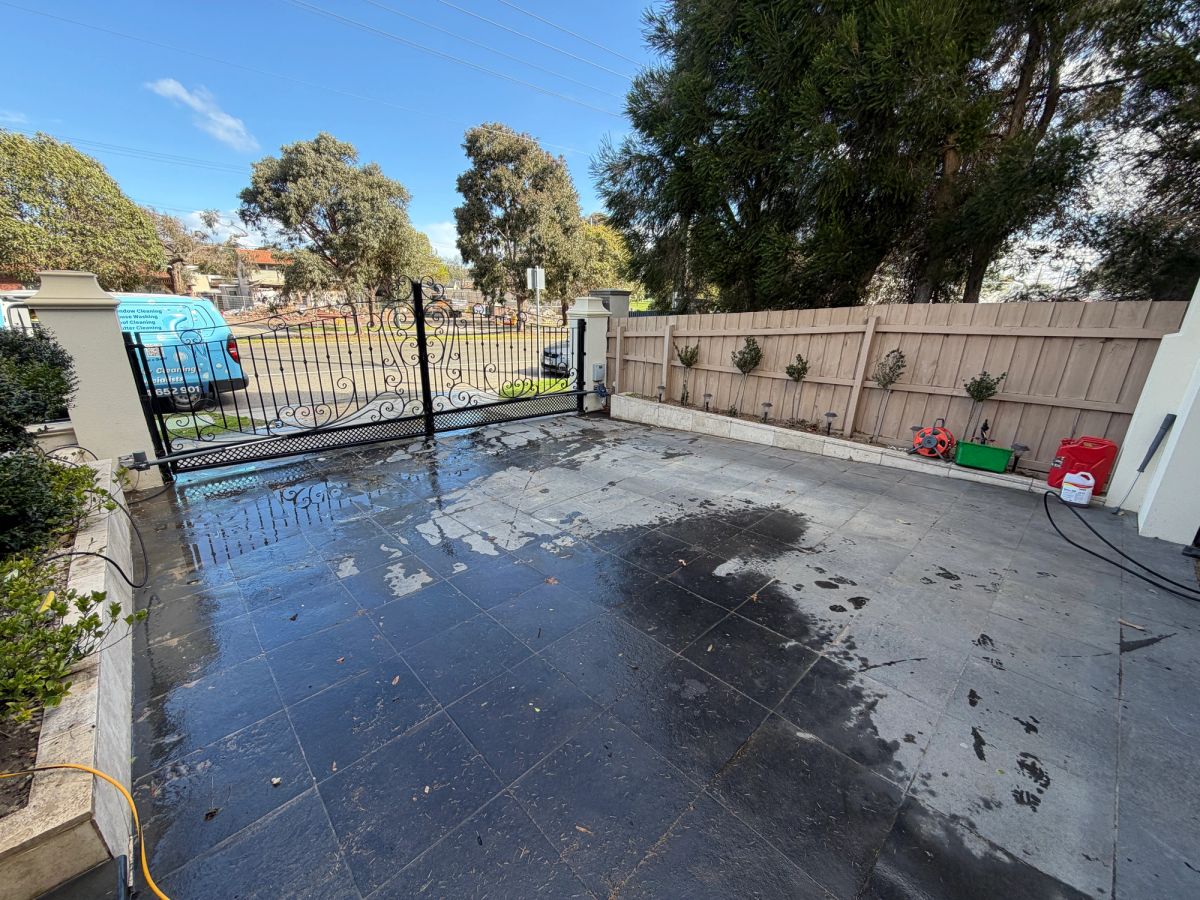
The driveway and paving at the same South Road house, done on the same day as the facade but recorded on its own because it is a different job on a different surface.
Read case study