Post-Construction Window Cleaning Melbourne
Frames cleared of construction dust, glass washed both faces, and render, paint, film and adhesive taken off without scratching new glazing. From $830 including GST.
- $20M public liability insurance
- Police-checked, WorkSafe compliant
- 5.0 from 170 Google reviews
- Not happy with the work? You don't pay
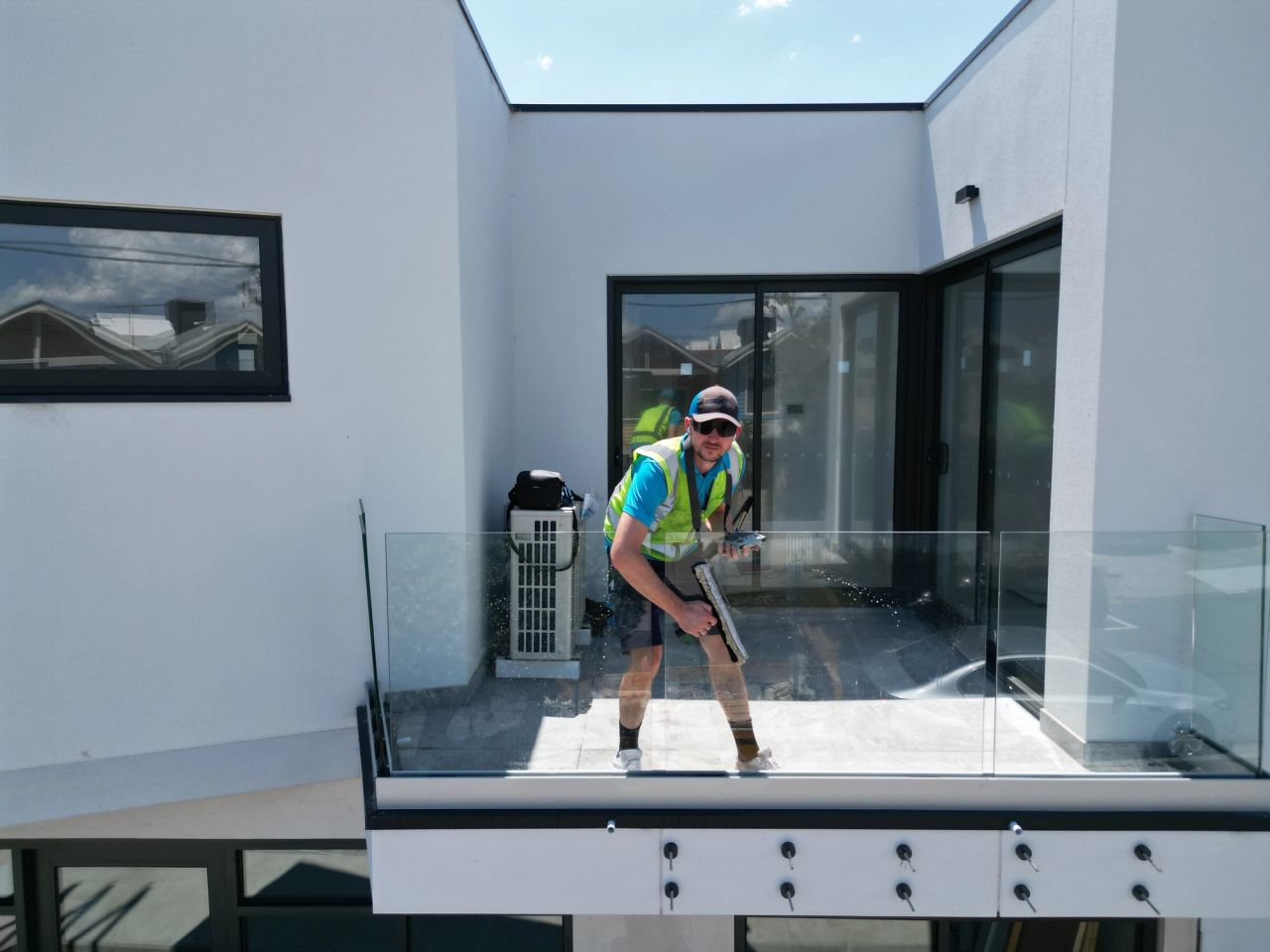
Builders' mess is not dirt. Plaster, adhesive and label residue bond to new glass, and none of it comes off with an ordinary window pass.
That matters more on a new build than anywhere else, because new glass is the easiest glass to ruin. The coating on some panes will not survive the wrong blade angle, and a mineral deposit left long enough etches in and the pane has to be replaced.
Post-construction window cleaning is a different job from a window clean, and it is priced that way. A single-storey house starts at $830 including GST and a two-storey at $1,165. What moves it from there is the amount of glazing, how long the residue has been sitting and whether the sliding channels are still full of grit.
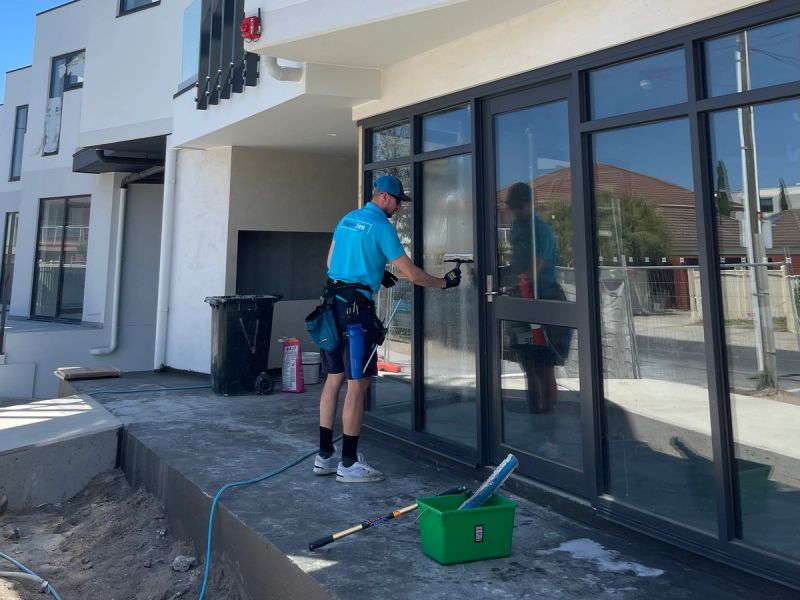
Four things a build leaves on the glass
A new build leaves four problems on the glass at once, and each one wants a different thing done to it.
- Adhesive, from protective film and factory labels. It hardens in the sun the longer it sits, so a pane cleaned at handover is easier than the same pane three weeks later.
- Fine construction dust, which is abrasive rather than loose. Wiped dry it does not come off the glass, it goes across the glass, and that is where most new-build scratching comes from.
- Grit packed into the sliding channels, where nobody looks until a door stops running properly. Left there it grinds the rollers, and that is a repair rather than a clean.
Plaster and render splashes are the fourth, and the one most likely to be left behind. They sit proud of the glass, so they survive a wipe and are still there in daylight when the client walks through.
All of it is on the same pane at once, which is why the order of work decides the result more than the product does.

Mineral streaks are a deadline, not a stain
Glass looks smooth and is not. The surface is porous enough for mineral deposits to key into it, which is why hard water marks survive a normal clean and look worse once the pane dries.
- On a site still mid-build this happens fast. Water runs down the outside of the panes and dries there, and on full-height sliding glass the streaks run from the head of the frame to the floor.
- Then the clock matters. Left long enough the deposit etches in, and at that point the mark is permanent and the pane has to be replaced. This is the one part of a builders' clean that stops being cosmetic.
- A blade is never the answer here. The deposit is harder than it looks and new glass scratches under it, so the marks are dissolved instead, then neutralised and rinsed so nothing is left to attack the frames.
- Every pane is checked dry rather than wet, because mineral shadow only shows once the water has gone. Signed off wet, it comes back as a complaint.
| What goes wrong | What causes it | What it costs | How to prevent it |
|---|---|---|---|
| New glass scratched across the pane | Abrasive construction dust wiped dry instead of floated off | Permanent. The scratch is in the glass, so the pane is replacedNo published figureTrade experience, no published figure | Residue softened and lifted, never scraped or wiped dry |
| Coating stripped off a treated pane | A blade taken to glass that carries a surface coating | Permanent, and it shows as a dull patch in daylightNo published figureTrade experience, no published figure | Treat new glazing as coated until proven otherwise |
| Mineral deposit etched in | Streaks left on the glass for weeks after the build | Permanent. Replacement is the only fixNo published figureTrade experience, no published figure | Dissolve the deposit before it sets, not after |
| Frames corroded along the bottom rail | An acidic treatment rinsed off the glass but left on the frame | Refinishing or replacing the frame, not the glassNo published figureTrade experience, no published figure | Neutralise and rinse the frames, not only the panes |
| Sliding doors stiff or jumping the track | Channels cleaned on the surface with the grit still under it | Roller replacement on a door that was newNo published figureTrade experience, no published figure | Channels cleared and flushed, last, after the glass |
Sources
Every row is trade experience from our own new-build jobs and says so in the row. Where a figure would be a guess, none is given.
Why the order of work decides the result
- Dust comes off the frames first, dry and by hand. It is abrasive, and any of it still sitting in a frame will find its way onto the glass during the wash and score it.
- Adhesive, labels, render and paint come next, because everything else has to be worked around them. A pane with residue still on it cannot be cleaned properly, and residue dragged across clean glass undoes the pass before it.
- Then the glass itself, inside and out. Nothing is scraped dry: residue is softened and lifted, because the dust on a new build is abrasive and the coating on some panes will not survive a blade.
- Frames are finished after the glass rather than before. Cleaned first, they are dirty again the moment the panes above them are washed, which is the most common reason a builders' clean looks half-done.
- Sliding channels are last, and they are flushed rather than wiped. Wiping moves the grit along the channel; flushing takes it out, which is the difference between a door that runs and a door that needs rollers.
Post-construction window cleaning prices in Melbourne
Houses are priced as a whole job, because the number of panes on a house is knowable from a photo. Apartment and multi-unit buildings are priced per pane instead, since the same window repeats across every level and the rate is what scales.
from — frames, glass, and all builders' residue off both faces
from — the same scope, with the upper glazing reached safely
from, per pane — priced across the whole building
All prices include GST. The smallest job is a single-storey house at $830; the per-pane rate applies to whole buildings, not to a handful of windows.
What the price includes, and what moves it
The quoted price is the whole job on the glazing, not the glass alone. It covers the frames cleaned down from construction dust, the glass washed on both faces, and the removal of what the trades left on it: render and mortar, paint, protective film, labels and adhesive.
Four things move the figure from there.
- How much glazing there is. Two houses of the same footprint can differ by half again once one of them has full-height sliding doors across the back.
- How long the residue has been on. Fresh adhesive lifts; adhesive that has baked through a Melbourne summer takes several times as long on the same pane.
- Whether there is mineral staining as well. That is a separate treatment rather than a harder wipe, and it is the one item with a deadline on it.
- The state of the sliding channels. Channels packed solid take longer to flush than channels the builders kept covered.
Send photographs of the glazing and we quote from them. Nothing is decided on the phone, because the two things that set the price — how much glass and how long it has been sitting — are both visible in a photo and neither is answerable in a sentence.
Frames and sliding channels are half the job
On a finished house the glass is what gets looked at. On a new build the frames and the channels are where the complaints come from, because that is where the trades leave the most and where an ordinary clean stops.
Construction dust settles into every frame rebate and sits there. It is not loose dirt: it is fine, sharp and heavy in the corners, and it is the reason a frame wiped with a wet cloth comes up grey rather than clean.
Sliding channels are worse, because they are a trap by design. Grit falls in, nothing takes it out, and the first sign anything is wrong is a door that has gone heavy or started jumping. By then the rollers have been running on it for weeks.
There is also a chemistry problem people miss. Where mineral staining has been treated, the product has to come off the frames as thoroughly as off the glass. Left in a bottom rail it keeps working on the finish long after the crew has gone.
So frames and channels are part of the quoted price rather than an extra. A builders' clean that stops at the glass is not finished, it is half-charged.
New builds, before and after the clean
 Post-construction
Full-height sliding glass on Yarra Street, Abbotsford, still mid-build. Water had been running down the outside of the panes and drying there, leaving white mineral streaks from the head of the frame to the floor.
Read case study
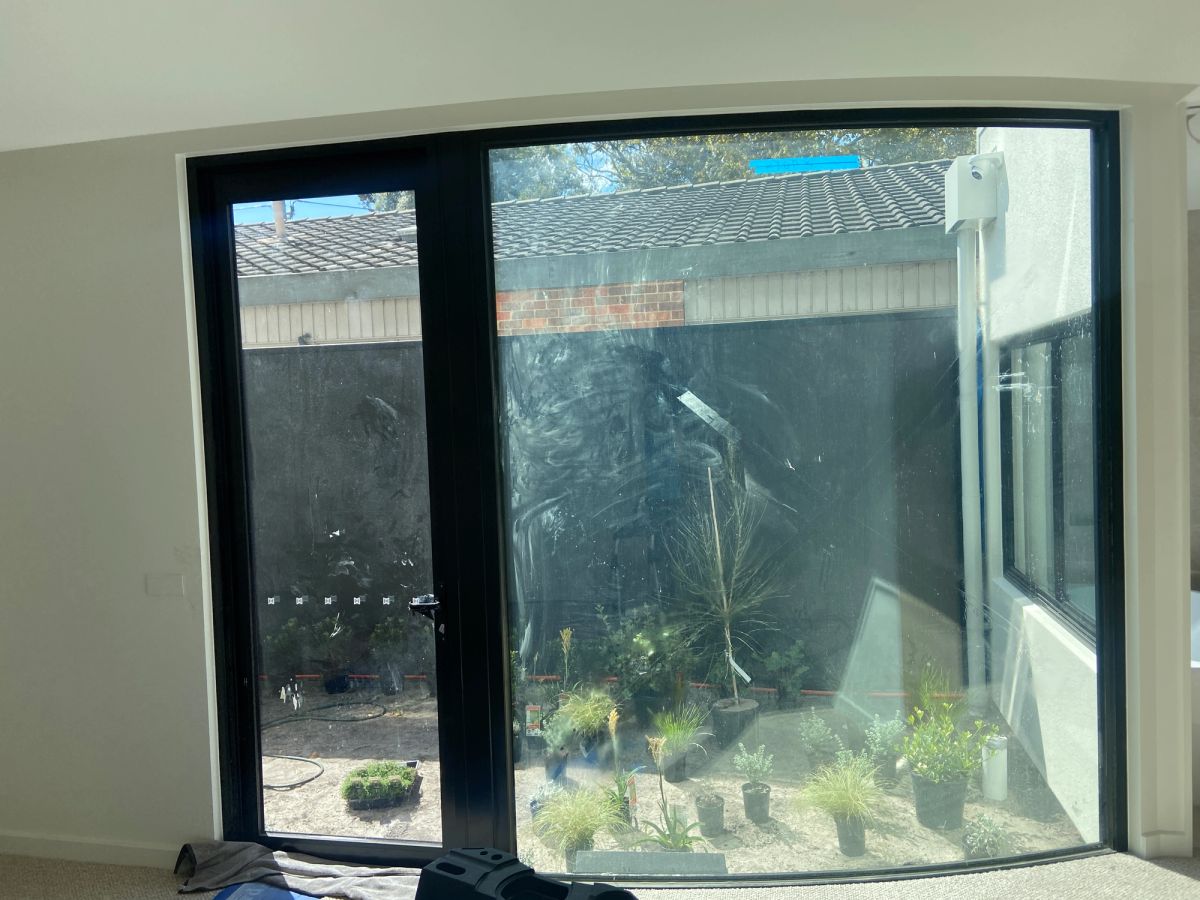
A builders' clean on two new townhouses on Dalgetty Road, Beaumaris. Adhesive residue across the glass and paint on the frames, on glazing nobody had touched since it was installed.
Read case study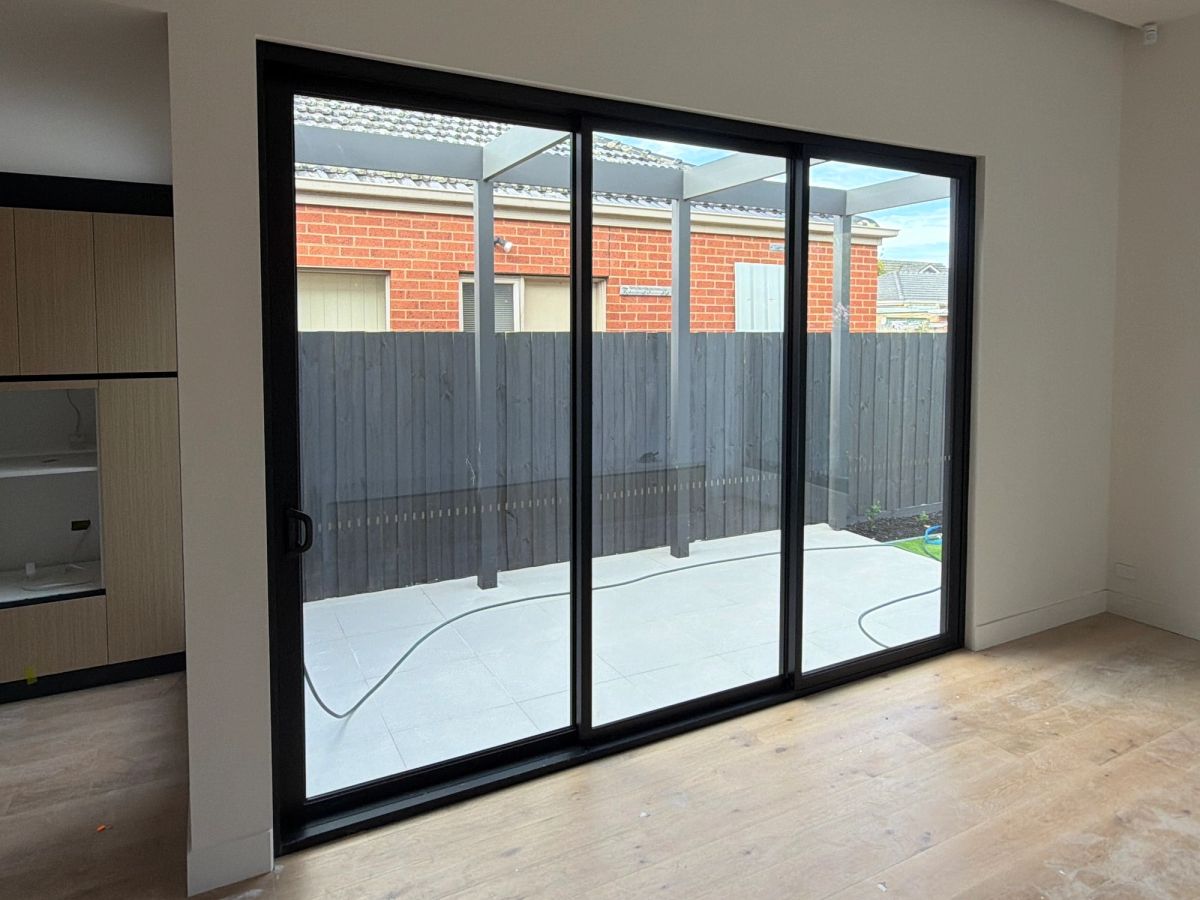
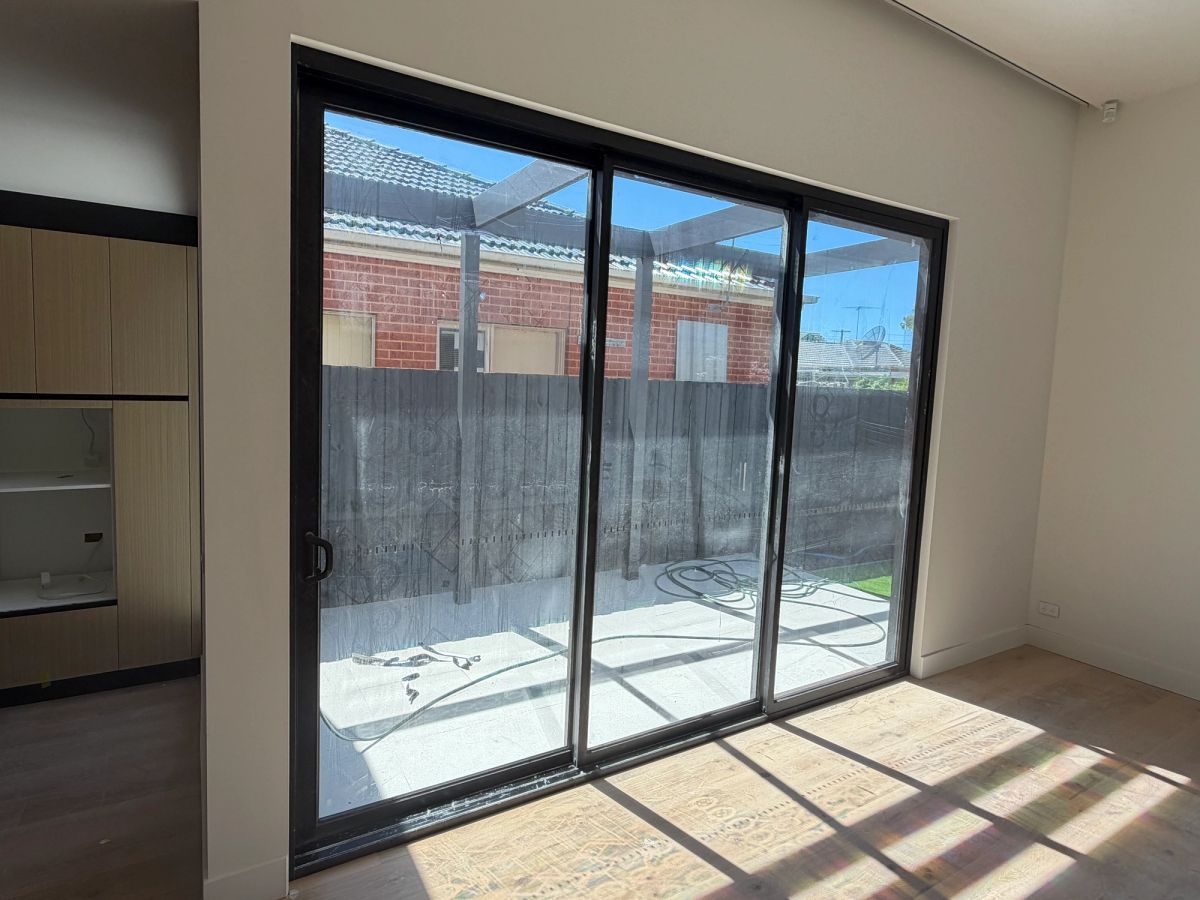
A post-construction window clean on Kaniva Court, Bentleigh East. Glass, frames and sliding channels taken back to finished condition after the builders left.
Read case study
Google reviews
What clients said, from Google
Recent verified feedback from local clients who booked exterior cleaning with WaterCrew.
★★★★★ GoogleJuly 2026"Very happy with the service. They were clean, professional and left everything tidy Plus the job was done beautifully Many thanks!"
MelbourneView on Google ↗

★★★★★ GoogleJune 2026"Highly recommend Eren and his WaterCrew. Have used for gutter cleaning and will in future use for terracotta roof tile cleaning & window cleaning. They do a very thorough and professional job at competitive rates. Also, they are polite, friendly and well spoken."
CanterburyView on Google ↗

★★★★★ GoogleJune 2026"WaterCrew Cleaning recently cleaned the windows at my home in Chadstone and did an excellent job. The team was professional, friendly, and easy to deal with. The windows look crystal clear, and the service was completed on time and to a very high standard. I would highly recommend WaterCrew Cleaning to anyone looking for reliable window cleaning services in Chadstone."
MelbourneView on Google ↗

★★★★★ GoogleJune 2026"New age equipment, timely with very satisfactory results. Highly recommend crew for exterior/interior and flyscreen cleaning. Gutters cleaning available as well Best crew I came across for sometime and reasonably priced. Collin"
HamptonView on Google ↗

Four reasons a builders' clean gets booked
Handover is scheduled
The clean has to be done and signed off before the client walks through. Adhesive is also easiest at this point, before it hardens in the sun.
Streaks appeared mid-build
Water has been running down the outside of the panes and drying there. This one is a deadline: left long enough the deposit etches in.
A builder clearing a site
Several trades have been through and the glass is the last thing standing between the site and practical completion.
A new apartment building
Repeated glazing across many units, and access that has to be booked around other trades still working on site.
Six questions about builders' cleans
Will the glass get scratched?+
Not if nothing is scraped dry. Construction dust is abrasive, so the frames are cleared of it before the wash and residue is softened and lifted rather than wiped or bladed off. That is the single biggest cause of scratching on a new build.
Can you remove hard water marks from new glass?+
Yes, while they are still a deposit. They are dissolved, then neutralised and rinsed off the glass and the frames. Once the deposit has etched into the glass it is permanent and the pane has to be replaced, so timing matters.
How soon after the build should it be done?+
As soon as the trades are finished. Adhesive hardens in the sun and mineral deposits etch in over weeks, so the job is both cheaper and safer the earlier it happens.
Does the price include the frames and tracks?+
Yes. Frames are cleared of construction dust before the glass and finished after it, and the sliding channels are flushed last. A builders' clean that stops at the glass is not finished.
Can you work while other trades are still on site?+
Yes, though the glass is best left until last. Anything cleaned before the final trades finish collects their dust, and the work gets paid for twice. Mineral staining is the exception, because it is setting the whole time.
How do I get an exact price?+
Send photographs of the glazing, or tell us the number of panes, the number of storeys and whether any of it is full-height sliding glass. We quote from that rather than guessing on the phone.
Why the second storey changes the job
A single-storey house starts at $830 and a two-storey at $1,165, and the gap is not a surcharge for height. It is what the work on the upper glazing actually takes.
A builders' clean is detail work. Adhesive has to be softened and lifted pane by pane, render splashes have to be found and taken off individually, and mineral treatment has to be applied, held and then neutralised before it dries. None of that is work you can do at arm's length from the ground.
So the second storey adds setting up, moving and re-setting up for every section of glass, and it does that on a site that is often still cluttered with other trades' materials. The glass per pane takes the same time; everything around reaching it does not.
Two-storey new builds are also where the most glass is. Void windows, stairwell glazing and upper-level sliding doors onto a balcony are all standard now, and all of them are the panes nobody can inspect until the scaffolding comes down.
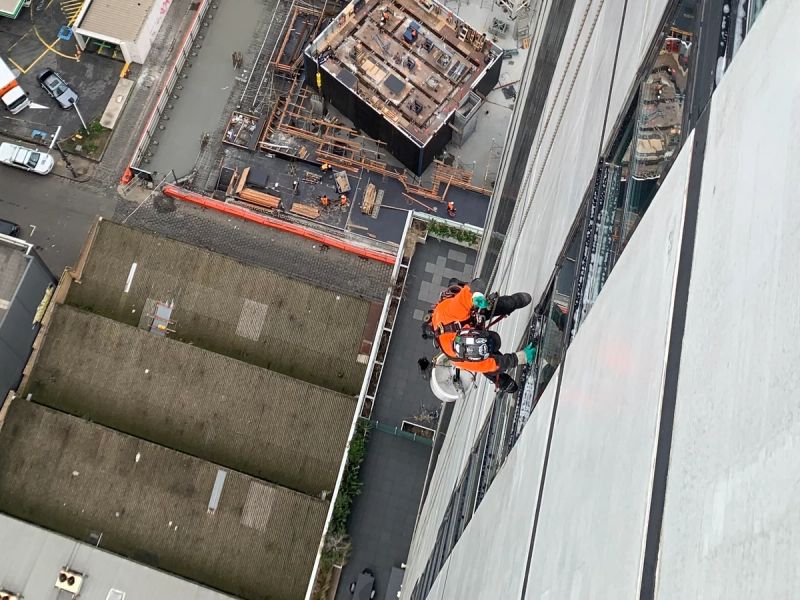
The reach comes from ladders, stepladders and mobile platforms, not from rope access. On a builders' clean the crew has to be square to the pane with both hands free — softening adhesive, finding render splashes, holding a treatment and neutralising it before it dries — and a platform gives that where a rope does not. Towers where poles and platforms will not reach are a different service, quoted as high rise window cleaning.
Booking the clean around handover
The clean belongs at the end of the trade sequence, not in the middle of it. Glass cleaned before the last trades finish collects their dust, and the work gets paid for twice.
The exception is mineral staining. If water has already been drying on the panes for weeks, that part is worth doing before handover week rather than waiting for it, because the deposit is setting the whole time and the end of that process is a replaced pane.
In practice that means two visits on a slow build and one on a quick one, and it is worth saying which you are looking at when you ask for a price.
Before and after photographs come with every job. On a new build that is usually what the builder needs for the handover file as much as the client needs it for peace of mind.
Reading a builders' clean quote
Post-construction quotes are hard to compare because the cheap ones and the thorough ones describe themselves the same way. Four things separate them, and all four are answerable before anyone turns up.
- Does it include the frames and the sliding channels, or only the glass? A glass-only price on a new build is roughly half a job, and the half it leaves is the half that generates the complaint.
- Does it cover removing render, paint and adhesive, or is that extra on the day? That is the actual work on a builders' clean, so a quote that treats it as a variation is not really a quote.
- What happens if there is mineral staining? It needs a treatment rather than more effort, and it should be identified and priced before the crew is standing in front of it.
- Who carries the risk if a pane is scratched? New glazing is the most expensive glass on the property to replace, and that answer should exist in writing before the work starts rather than after.
Our own answers are on this page: frames and channels are in the price, residue removal is the job rather than an extra, mineral staining is quoted once we have seen it, and we carry $20 million in public liability on the glass we work on.
About the expert

Ihor Sydorenko
Founder & Lead Rope Access Technician (IRATA Level 3) — WaterCrew Cleaning
Ihor has worked on ropes since 2013, starting on high-rise facades in Kyiv, where he founded and still runs the rope-access company Альпіністи Київ. He holds IRATA Level 3 — the highest grade in the international rope-access system, covering work supervision, safety planning and rescue.
- ✓ IRATA Level 3 rope access technician
- ✓ Working safely at heights
- ✓ Construction induction
- ✓ First aid