House Washing — Curzon Street, Brighton East
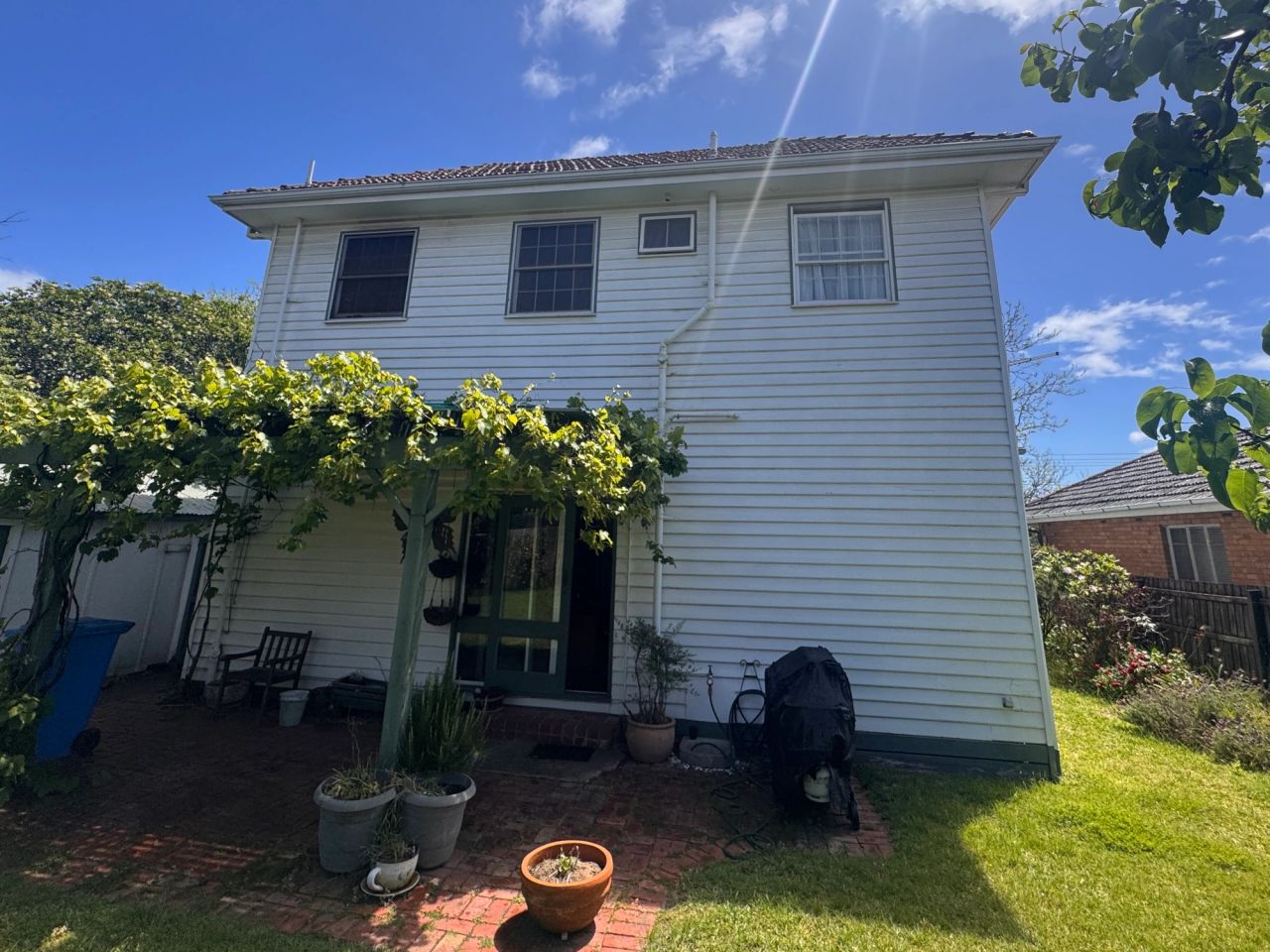
A weatherboard house on Curzon Street. Painted timber walls, eaves lining, the outside faces of the gutters and the windows — the full outside of the house rather than one surface of it. One technician, five hours on site.
- Location
- Brighton East 3187
- Completed
- 11 November 2025
- Duration
- 5 h
- Crew
- 1 tech
- Property
- Double-storey house
The problem
Weatherboard is not render and it does not fail like render. Every board overlaps the one below it, so the wall is a stack of horizontal ledges, and each one holds dust and holds water a little longer than a flat surface would. Growth starts along those lines first, which is why a weatherboard wall goes streaky rather than evenly grey. The eaves are a separate problem again. Soffit lining never sees sun and never sees rain, so it does not get dirty so much as it grows — and being overhead, it is the part of a house owners look at least and notice last.
What we did
Low pressure, and never aimed upward. Behind weatherboard there is a cavity, and forcing water up under a lap puts it inside the wall where nothing dries it. The cleaning solution does the work along the board lines and the rinse follows the fall of the boards rather than fighting it. The eaves were done as their own pass rather than as an afterthought at the end of the wall. Gutter faces came next — the outside of the gutter, where run-off over the front lip leaves the vertical streaks people assume are permanent. Windows last, after everything above them had already been washed down.
- Painted weatherboard walls soft washed, working with the fall of the boards
- Eaves lining cleaned as a separate pass
- Outside faces of the gutters cleaned, streaking removed
- Exterior windows cleaned after the walls above them
- No upward pressure anywhere on the cladding
- Before and after photographs supplied
Result
- Board lines clean along their length rather than streaked
- Eaves lining back to its paint colour instead of a grown-over grey
- Vertical run-off marks off the front of the gutters
- Windows finished last, so nothing washed down onto clean glass
- Whole exterior done in one five-hour visit
Nearby case studies
More projects in Brighton East
 Window cleaning
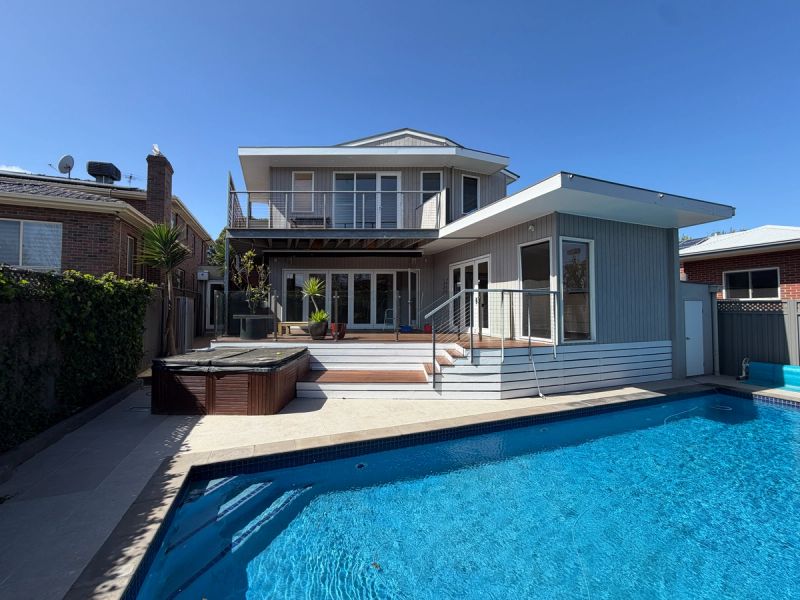
A pre-sale window clean in Brighton East, with all glass done inside and out in a single five-hour visit.
Read case study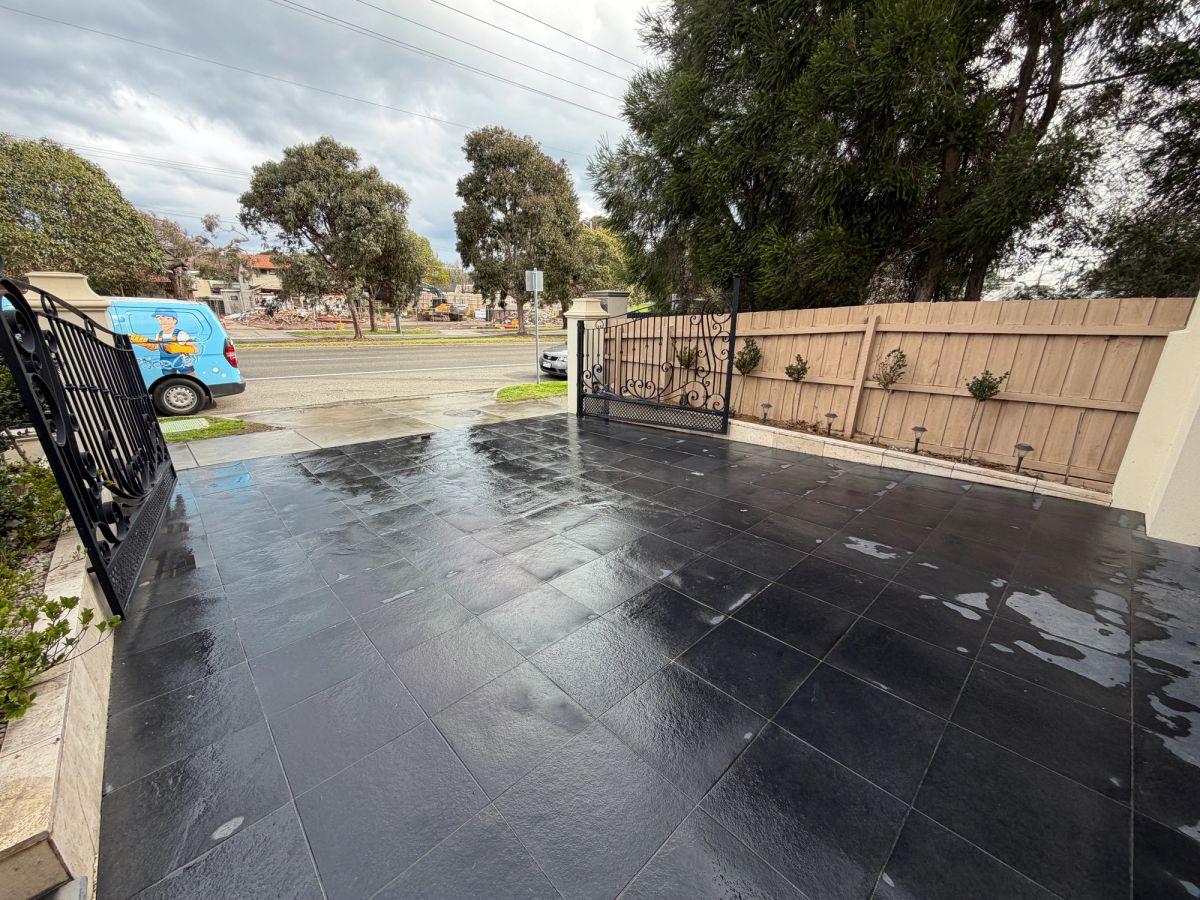
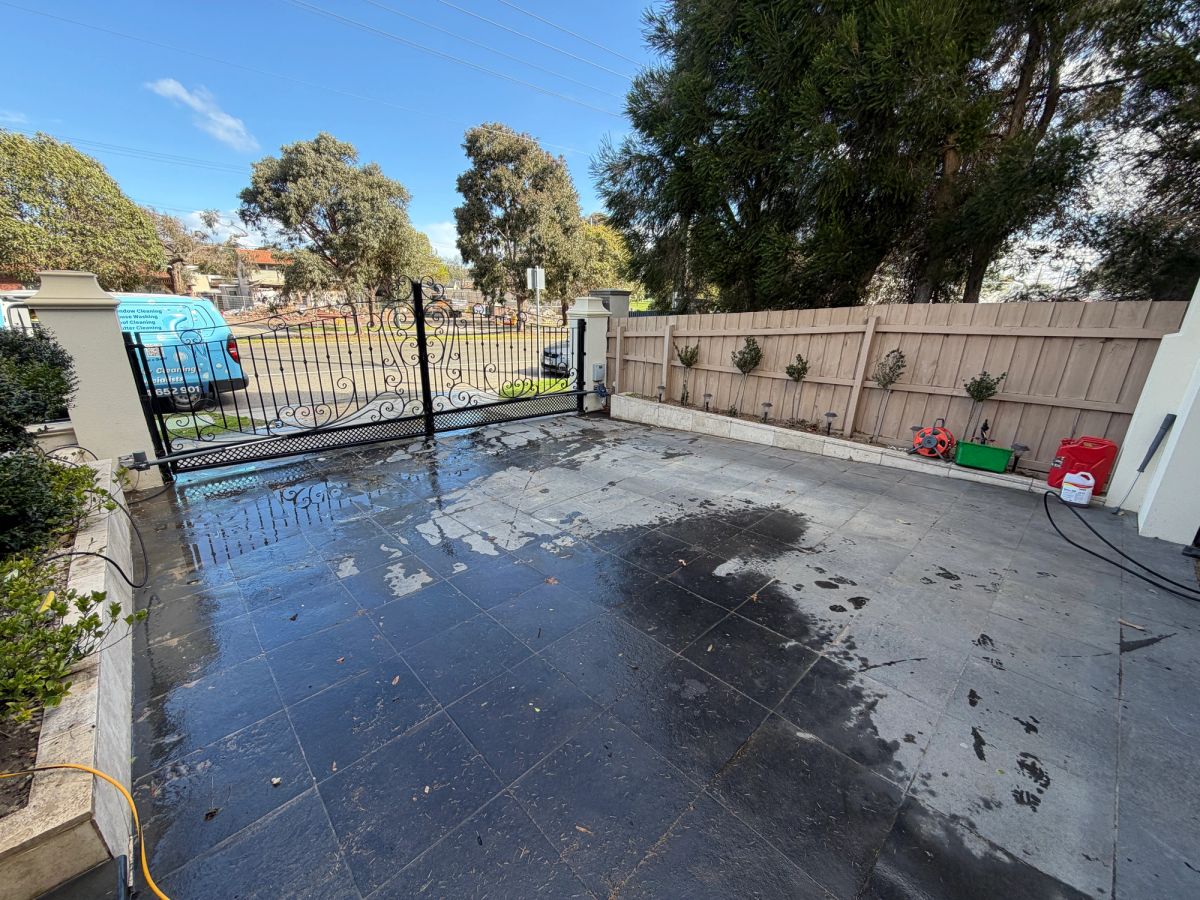
The driveway and paving at the same South Road house, done on the same day as the facade but recorded on its own because it is a different job on a different surface.
Read case study