Paving Cleaning — Fuller Road, Ripponlea
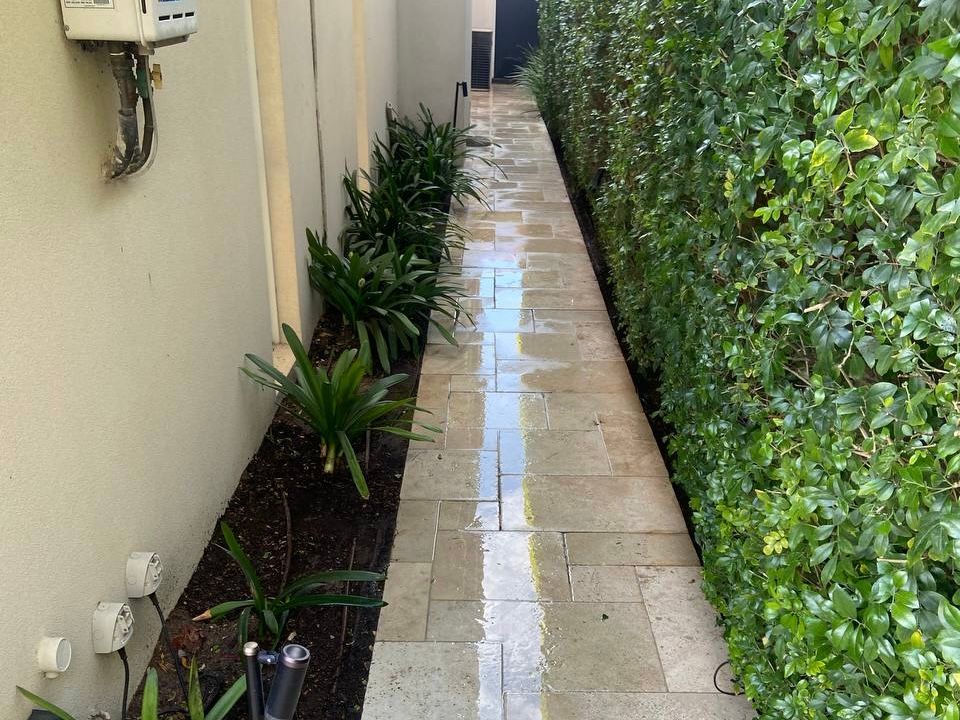
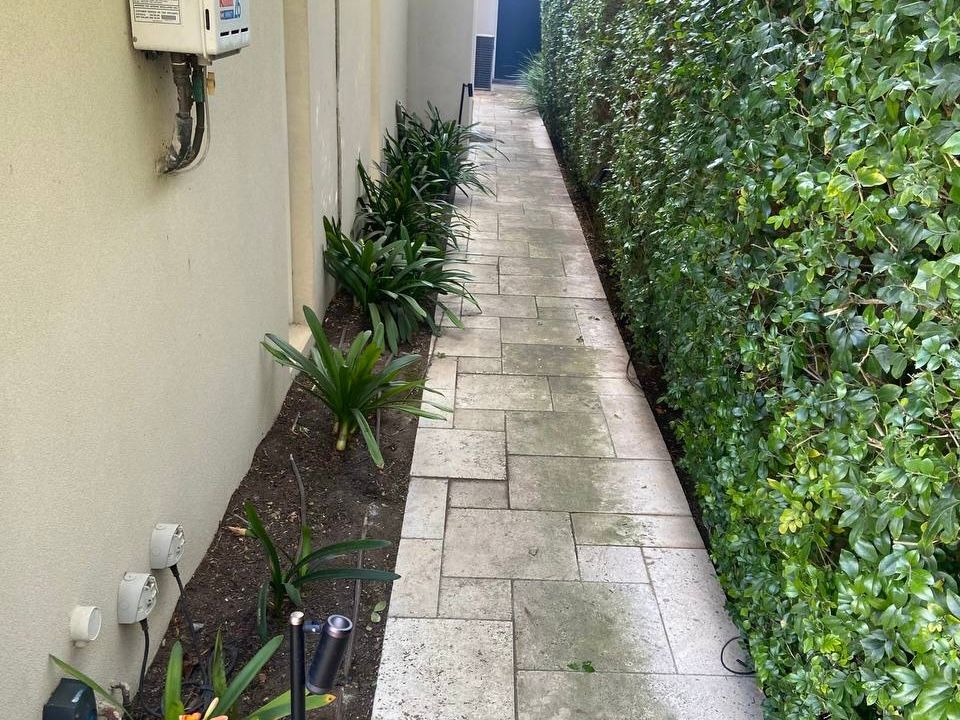
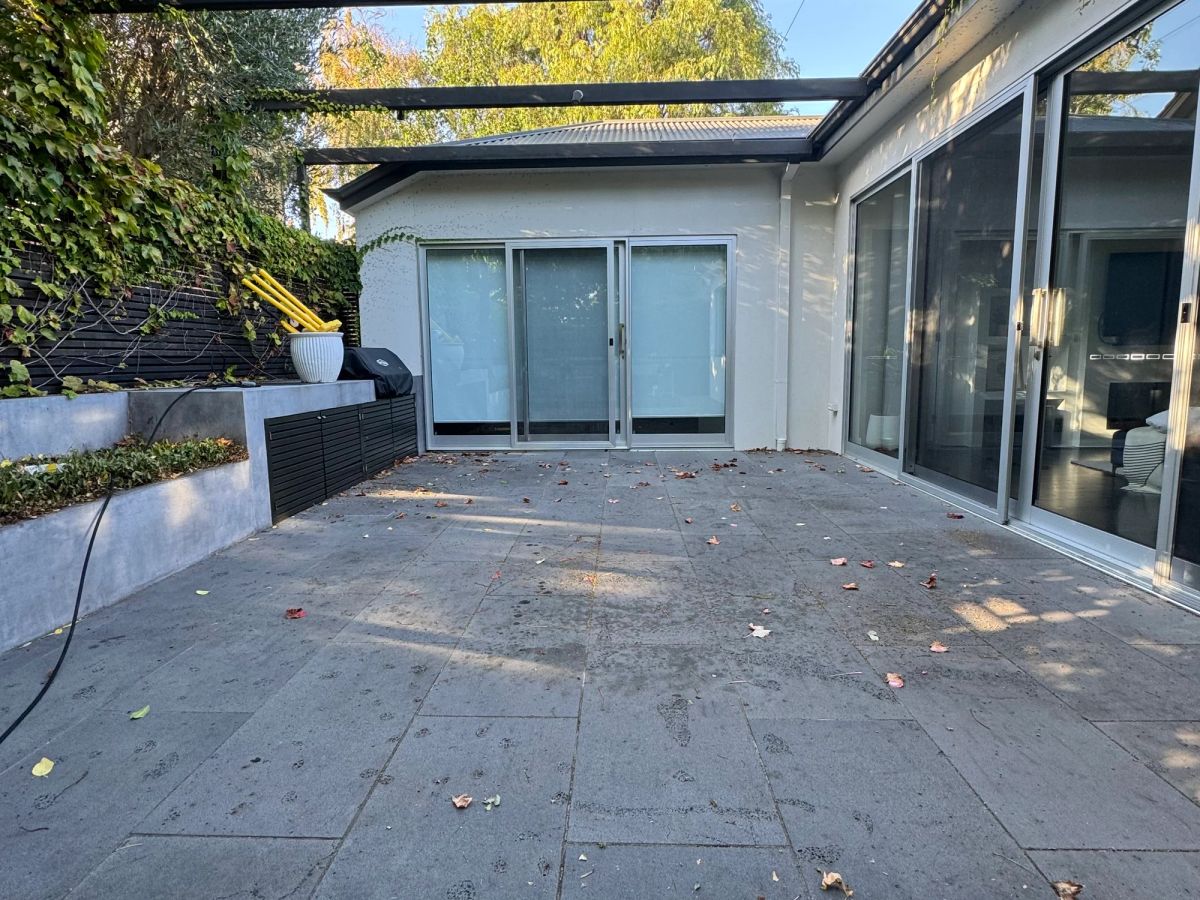
A paved area on Fuller Road, Ripponlea, green across the whole surface. Dense matte tile, most likely porcelain, laid tight with narrow joints that had filled with growth. One technician, three and a half hours, and it came back with a shine nobody was expecting from something that had read as grey-green for years.
- Location
- Ripponlea 3185
- Completed
- 6 September 2025
- Duration
- 3.5 h
- Crew
- 1 tech
The problem
Growth had covered the lot rather than settling in patches. On a dense tile that is what happens: water cannot soak in, so it sits on the surface and in the joints, and anything living gets an even, unbroken start across the whole area. The joints were the real state of it. Narrow joints on tight-laid tile hold moisture longer than the tile does, so they go first and they stay worst, and an area cleaned face-only reads as clean until you look down at the lines between. Dense matte tile is also the surface people most often get wrong. It looks tough and it takes a lot, right up until the wrong product or too much pressure leaves a patch that will not blend back.
What we did
The method was tested on a corner before anything else happened. On a tile like this the material is not always obvious from looking at it, and the honest way to find out how it behaves is a small area out of the eyeline rather than a confident guess in the middle. From there it was the product doing the work and the water rinsing. The growth released rather than being driven off, which matters on a surface where the finish is the whole point of choosing it. The joints were worked separately and properly rather than passed over with the faces. That is where the time went and it is the part that decides how long the result holds, because growth left in a joint starts again from there.
- Method tested on an out-of-sight corner before the main area
- Full paved area cleaned, faces and joints
- Joints cleared out rather than skimmed over
- Growth released with product rather than driven off with pressure
- Before and after photographs supplied
Result
- The surface came back to a clear, bright finish
- Joints clean along their full length
- No patching, marking or dulling anywhere on the tile
- Three and a half hours on site with one technician
Nearby case studies
More projects in Ripponlea
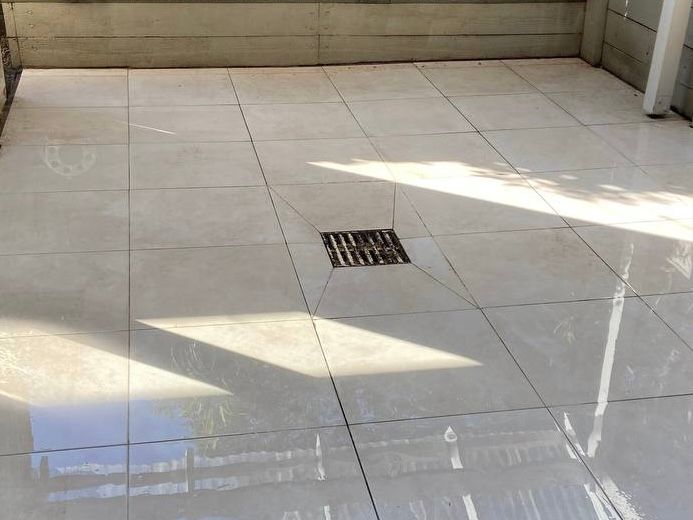
A tiled backyard on Victoria Avenue, Ripponlea, on a gloss finish rather than a matte one. Two and a half hours, one technician.
Read case study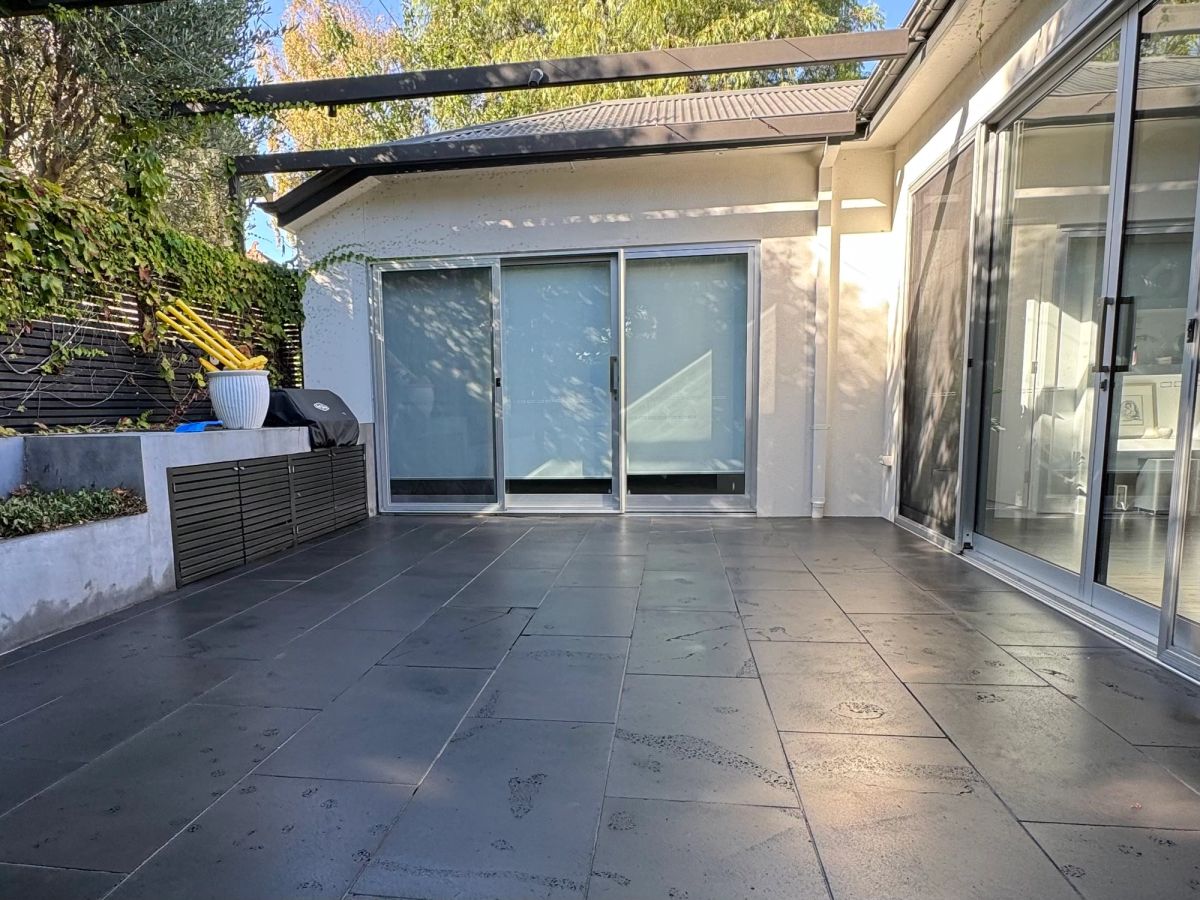
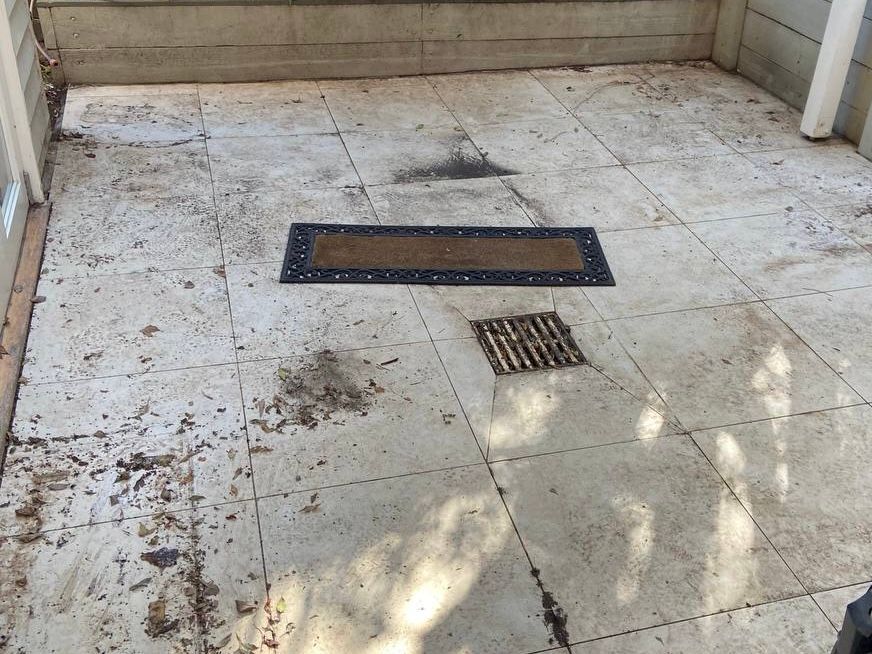
Backyard paving on Allison Road, Ripponlea, under a tree that drops resin. The stains were amber, sticky when fresh and rock hard once they had sat in the sun.
Read case study