Seasonal House Wash and Windows — Villeroy Street, Hampton East
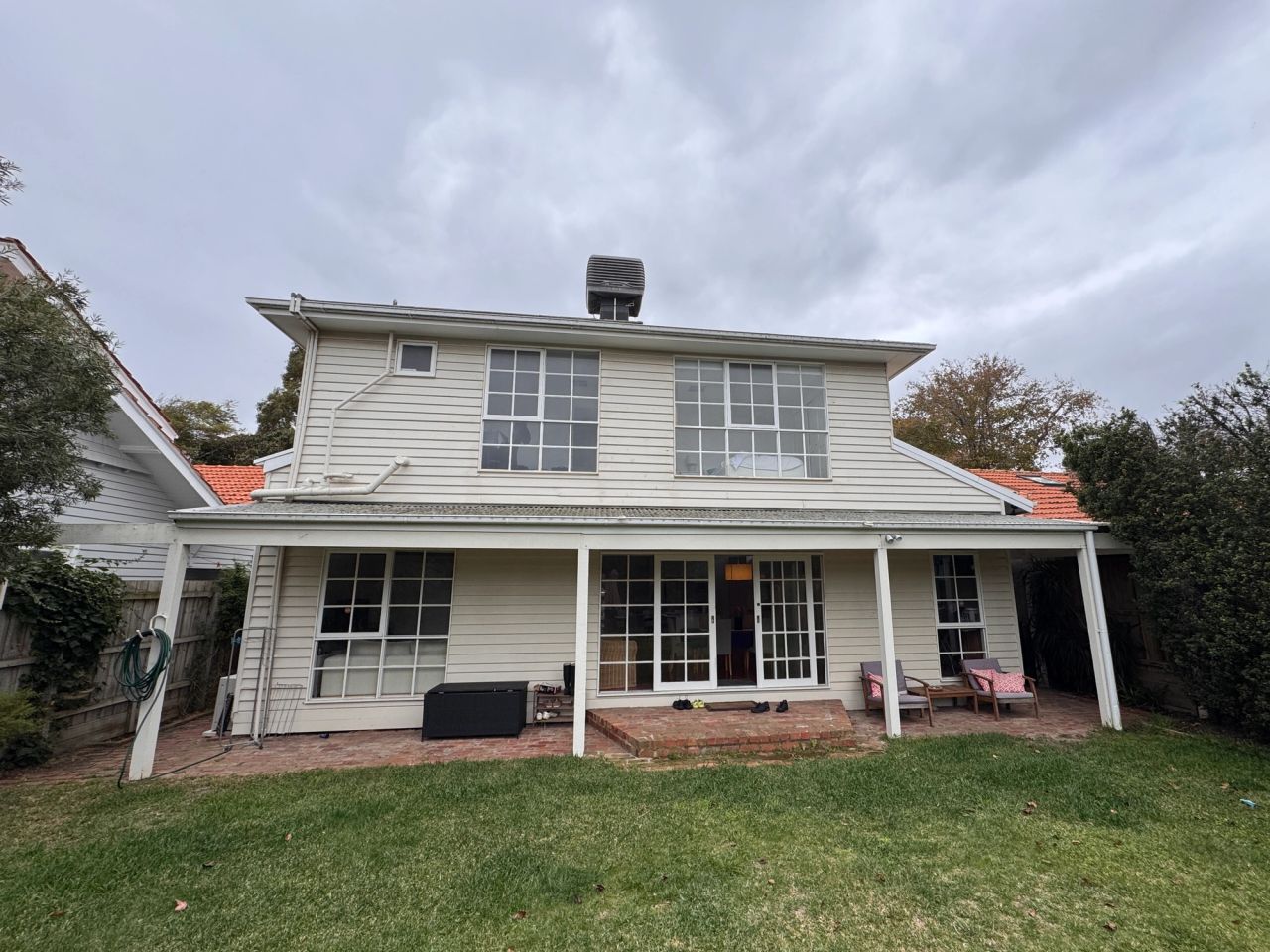
A seasonal wash on a two-storey weatherboard house on Villeroy Street, Hampton East, at the end of April. Roof, walls and glass in a single visit, in that order. Nothing here had failed. This is the clean a house gets because a year of weather has been and gone, not because something went wrong, and the order of work is what makes it a six-hour job rather than a two-day one.
- Location
- Hampton East 3188
- Completed
- 27 April 2025
- Crew
- 2 techs
The problem
Weatherboard shows a year of weather more plainly than brick does, because the surface is paint rather than a fired face. Dust settles along the top edge of every board, cobwebs fill the shadow line under each lap, and the growth on the roof above had reached the point where it was visible from the street but had not yet rooted into the tile.
What we did
Top down, in one pass. The roof was cleared first so that what came off it did not land on walls that were already finished, the weatherboard was washed next at low pressure with a cleaning solution, and the glass was done last, outside and then inside. On painted timber the pressure is the whole question: the job is to lift what is sitting on the coating without driving water behind the boards or taking the paint with it.
- Roof moss cleared first, before any wall was touched
- Weatherboard façade washed at low pressure with a cleaning solution
- Lap shadows, eaves and window surrounds cleared of cobwebs and wind-blown dust
- Upper storey reached from ladders and poles rather than off the roof edge
- All windows cleaned outside, after the walls rather than before
- Windows cleaned inside as well, with sills and floors protected
- Roof, walls and glass completed in one visit
Result
- Two technicians, six hours
- Roof, walls and glass finished in a single visit
- Seasonal growth removed before it could root into the tile
Nearby case studies
More projects in Hampton East
 Gutter cleaning
Gutter cleaning on a house with a flat Colorbond roof on Bolton Avenue, Hampton East, in late November. The gutters had not been cleared for years, and what was in them had long since stopped looking like leaf.
Read case study