Window and Facade Cleaning — Gleniffer Avenue, Brighton East
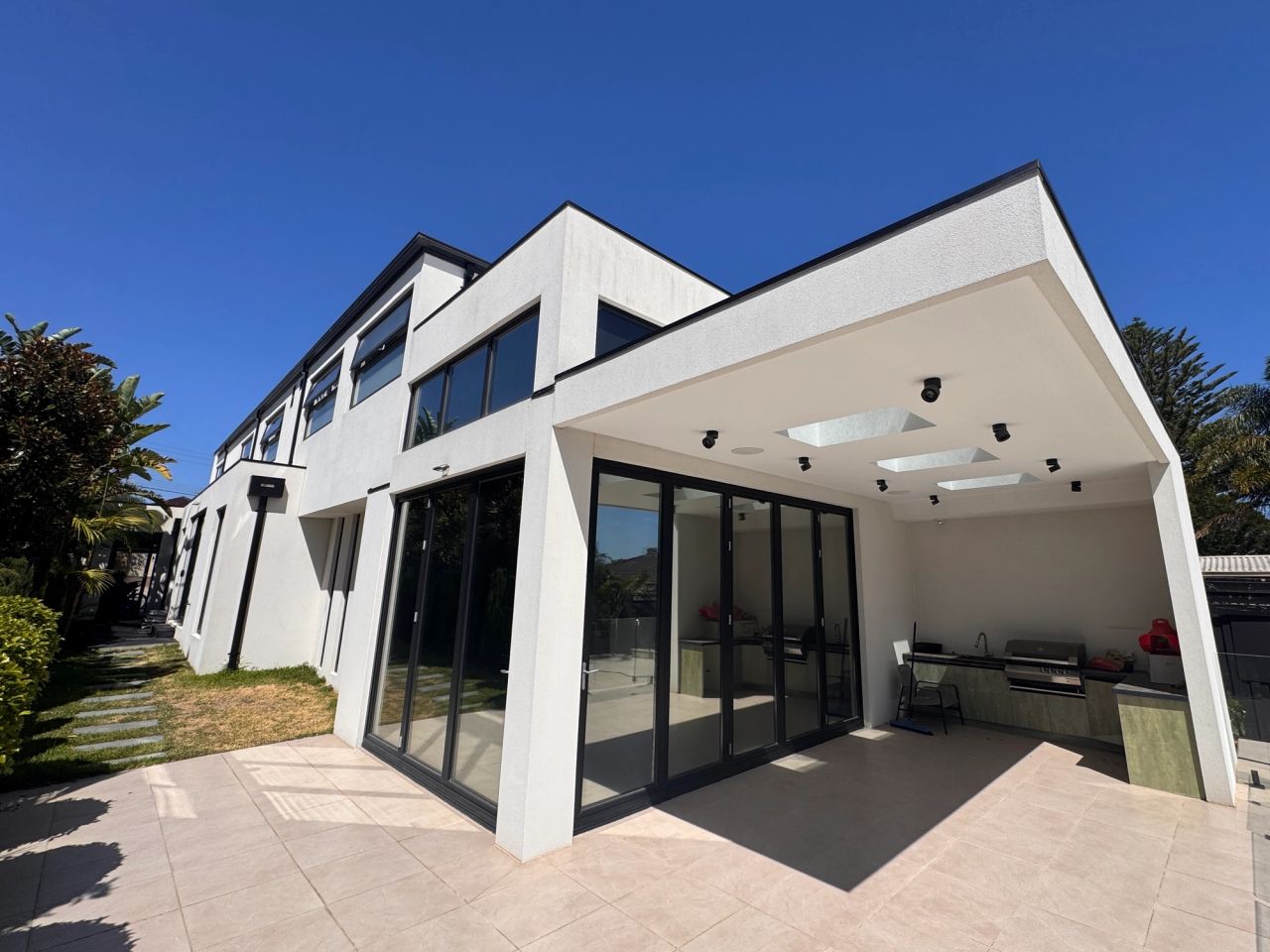
A seasonal wash on Gleniffer Avenue: a large double-storey house, white render across the walls and around seventy floor-to-ceiling windows, which is an unusual amount of glass for a home rather than a building. A crew of two, a full day on site, walls first and glass second. This one runs on a cycle rather than as a one-off, and it shows — a house washed on a schedule is a smaller job every time it comes round.
- Location
- Brighton East 3187
- Completed
- 20 February 2025
- Duration
- 8 h
- Crew
- 2 techs
- Property
- Double-storey house
The problem
Two things made this house its own kind of job. White render shows everything and hides nothing: there is no colour to absorb a film, so the wall either reads as clean or it does not. And with around seventy floor-to-ceiling windows, the glass is not a detail on the facade — it is most of the facade. That rules out doing one without the other. Wash render above glass that size and the run-off lands on it; clean the glass first and you clean it twice.
What we did
Walls first, at low pressure with contact time doing the work. Render is a thin coloured coat over a soft base, and white render is the least forgiving version of it: a lance mark on white does not blend back, it just becomes a visible line. Then the glass, once everything that was going to run down off the walls had run down. Seventy openings of that height is where a second technician earns their place — alone it becomes a two-day job with the first panes drying while the last are still being done, and on floor-to-ceiling glass drying marks are the whole game.
- White render soft washed across the elevations
- Around seventy floor-to-ceiling windows cleaned externally
- Walls washed before glass so run-off was dealt with once
- Frames and sills done with the glass
- Seasonal visit rather than a one-off clean
- Before and after photographs supplied
Result
- Render even across the whole wall, with no banding or lance marks on white
- Seventy openings clear and free of drying marks
- Glass and render finished in a single visit rather than two
- House back on its seasonal cycle, so the next wash stays a small one
Nearby case studies
More projects in Brighton East
 Window cleaning
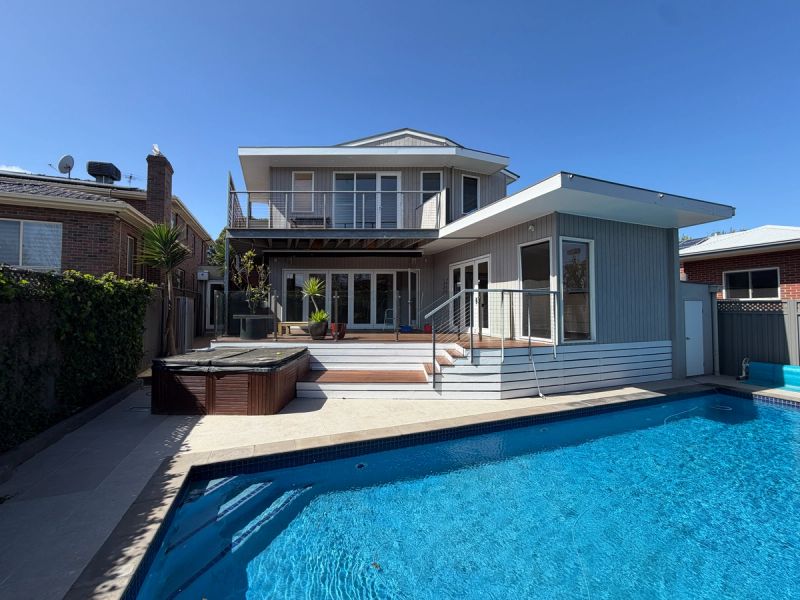
A pre-sale window clean in Brighton East, with all glass done inside and out in a single five-hour visit.
Read case study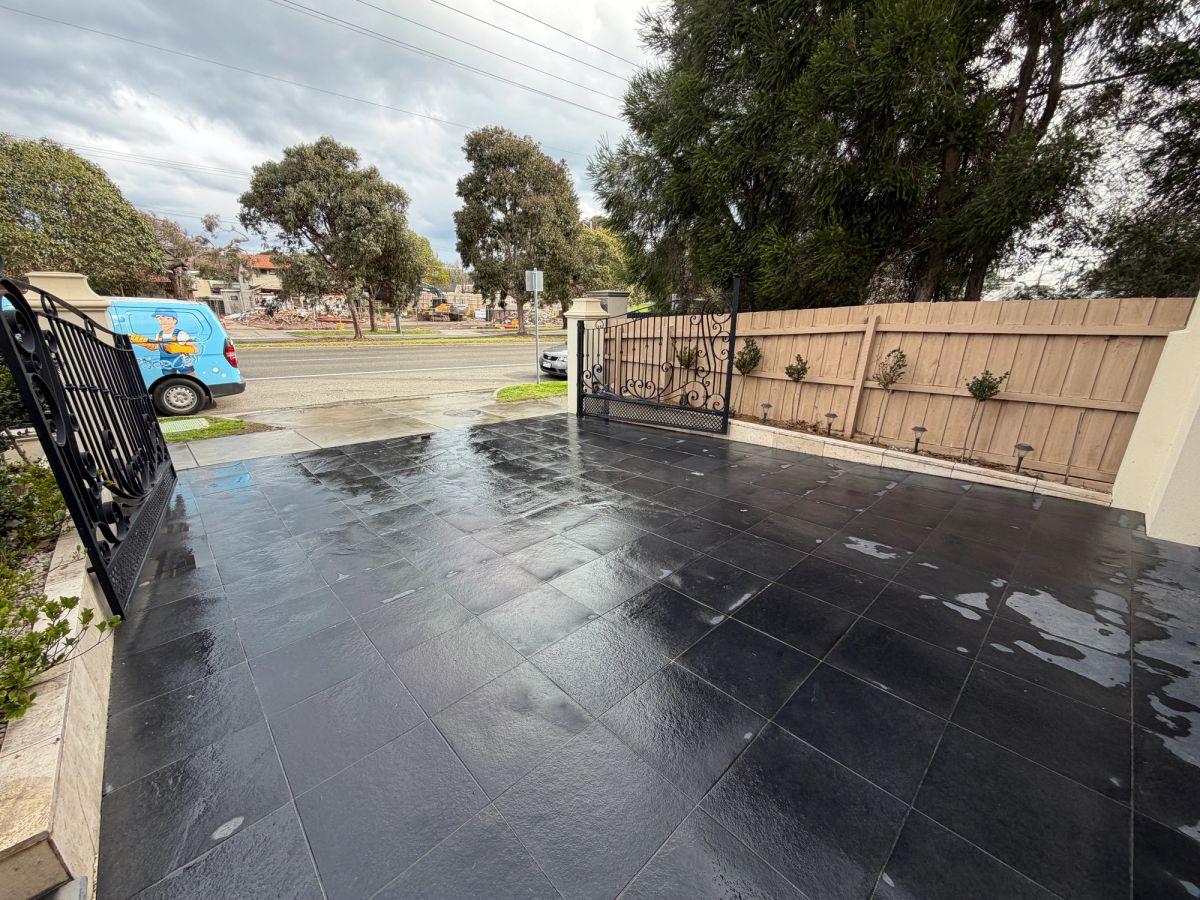
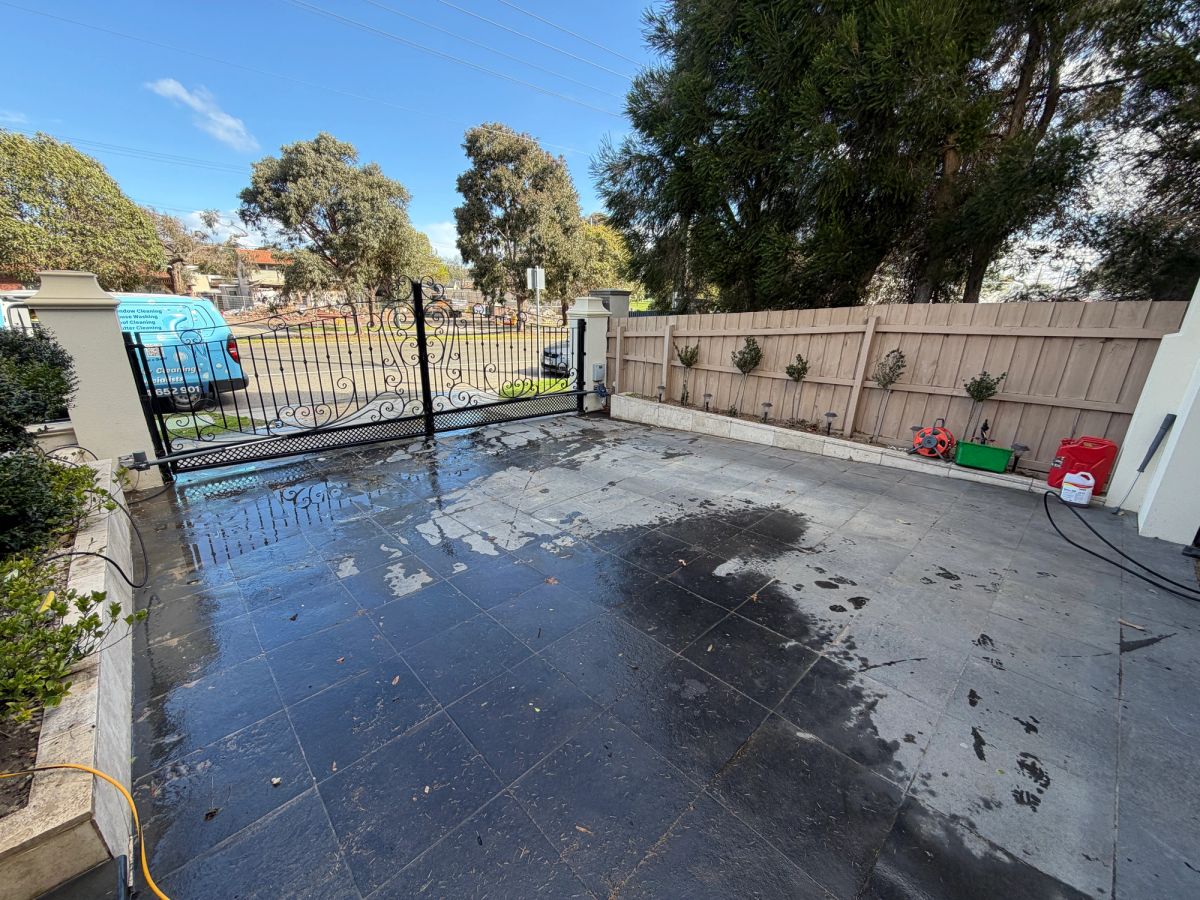
The driveway and paving at the same South Road house, done on the same day as the facade but recorded on its own because it is a different job on a different surface.
Read case study