Exterior Cleaning in Highett
A suburb being rebuilt in whole parcels rather than house by house, and what goes up is not detached housing. Insured crew, photos on every job.
- $20M public liability insurance
- Police-checked, WorkSafe compliant
- 5.0 from 170 Google reviews
- Not happy with the work? You don't pay
Highett is about ten thousand people between the highway and the railway line, and more of it is a building site than a suburb this size usually manages. Nine hectares of it was a CSIRO laboratory until recently, and the plan approved for that land is over a thousand homes in buildings of two to seven storeys.
That is a different kind of change to the one happening in the suburbs either side. Most of them are replacing themselves one house at a time. Highett is replacing itself a parcel at a time, and what goes up on those parcels is not detached housing.
For exterior work that changes nearly everything about the job. Shared walls, glass balustrades instead of fences, powder-coated aluminium instead of timber, almost no ground to stand a machine on, and a committee rather than an owner deciding when anything gets cleaned.
The post-war brick and tile is still here too, on the streets the developers have not reached. So both jobs run side by side, and the quote depends on which half of the suburb you are standing in.

One shopping centre, two halves, one bridge
The two buildings in this frame are the same shopping centre. Westfield Southland opened on the Cheltenham side in 1968, and between 1997 and 2000 it was extended straight across the Nepean Highway on a bridge carrying two levels of shops and a food court.
It covers around a hundred and twenty-nine thousand square metres, which puts it among the largest in the country, and it sits on Highett's doorstep rather than somewhere you drive to.
A building on that scale is not a larger version of a house. The glass is vertical, unshaded and continuous, the ground underneath it is busy every hour it trades, and nothing can be closed off to work on it. That is commercial window cleaning, and it is priced on how the glass is reached rather than on how much of it there is.
It is also the reason the suburb around it keeps changing. The industrial land near it is being turned over to housing rather than the other way round, which is not the direction this part of Melbourne ran in for most of its history.
What the rail here looks like by 2035
Highett station has stood where it is since 1986, and the two level crossings either side of it, at Highett Road and Wickham Road, are due to come out by 2029. The line goes up onto a bridge and the station gets rebuilt underneath it.
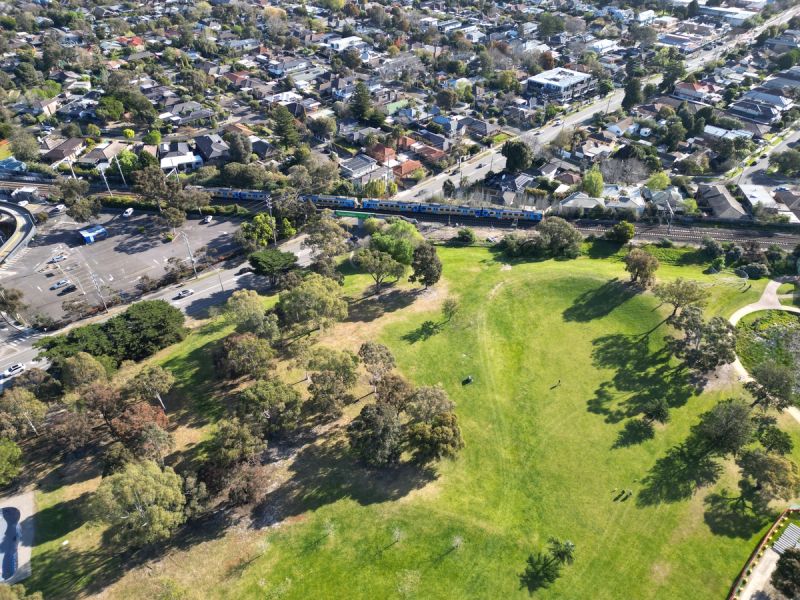
The open ground in this frame is Sir William Fry Reserve, and it carries a project of its own. An underground Suburban Rail Loop station is planned beneath part of it, with major construction from 2028 and an opening in 2035. It will be called Cheltenham even though the site is in Highett, and the parkland it takes is being replaced on the old gasworks site, so two of this suburb's building sites are already trading land with each other.
Put the CSIRO parcel beside those and a large share of Highett will be new stock within the decade. New stock and old stock want different work, and this suburb will be running both at once for years.
New stock arrives needing one thing and then never needing it again. The first clean on a finished building is a builders' clean, with adhesive and render splash off glazing nobody has touched, and that is post-construction window cleaning rather than a window clean.
After that it settles into the other pattern, and so does the post-war half of the suburb: walls, glass and gutters on a cycle set by the aspect rather than the calendar. On brick and render that is house washing at low pressure, and it is the same answer on a townhouse as on a 1950s house.
What changes between them is not the method. It is who signs off, how much ground there is to work from, and whether the job is one address or eleven.
Services we run in Highett
Gutter cleaning
Vacuumed, downpipes flushed and flow-tested, photo report the same day.
See detailsSolar panel cleaning
Panels washed with demineralised water, frames included, output stops dropping off.
See detailsRoof cleaning
Terracotta and Colorbond, moss and lichen treated to slow regrowth.
See detailsWindow cleaning
Glass, frames and tracks, inside and out, streak-free on the dry check.
See detailsPressure cleaning
Driveways, paving and concrete brought back without scarring the surface.
See detailsSoft washing
Render, cladding and painted surfaces washed at low pressure.
See detailsJobs we've finished in Highett
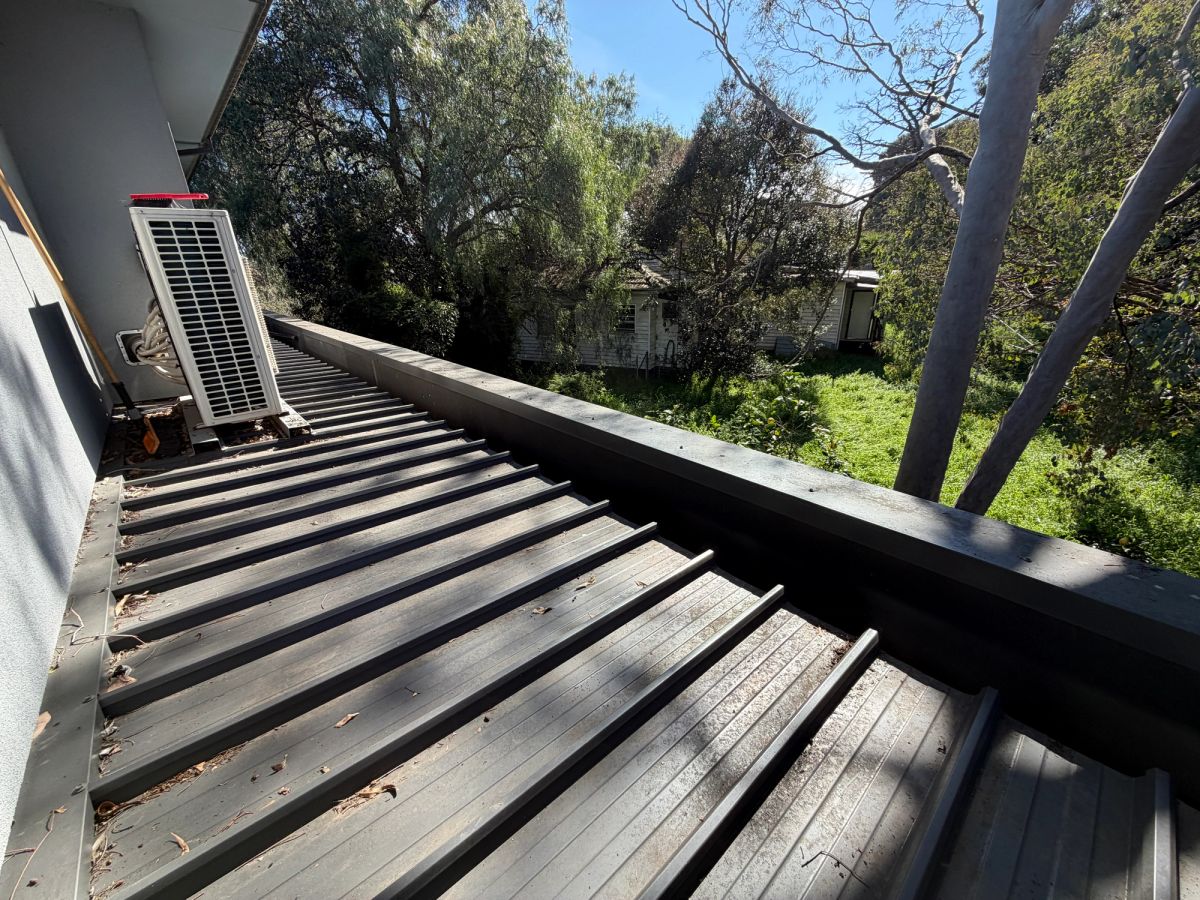
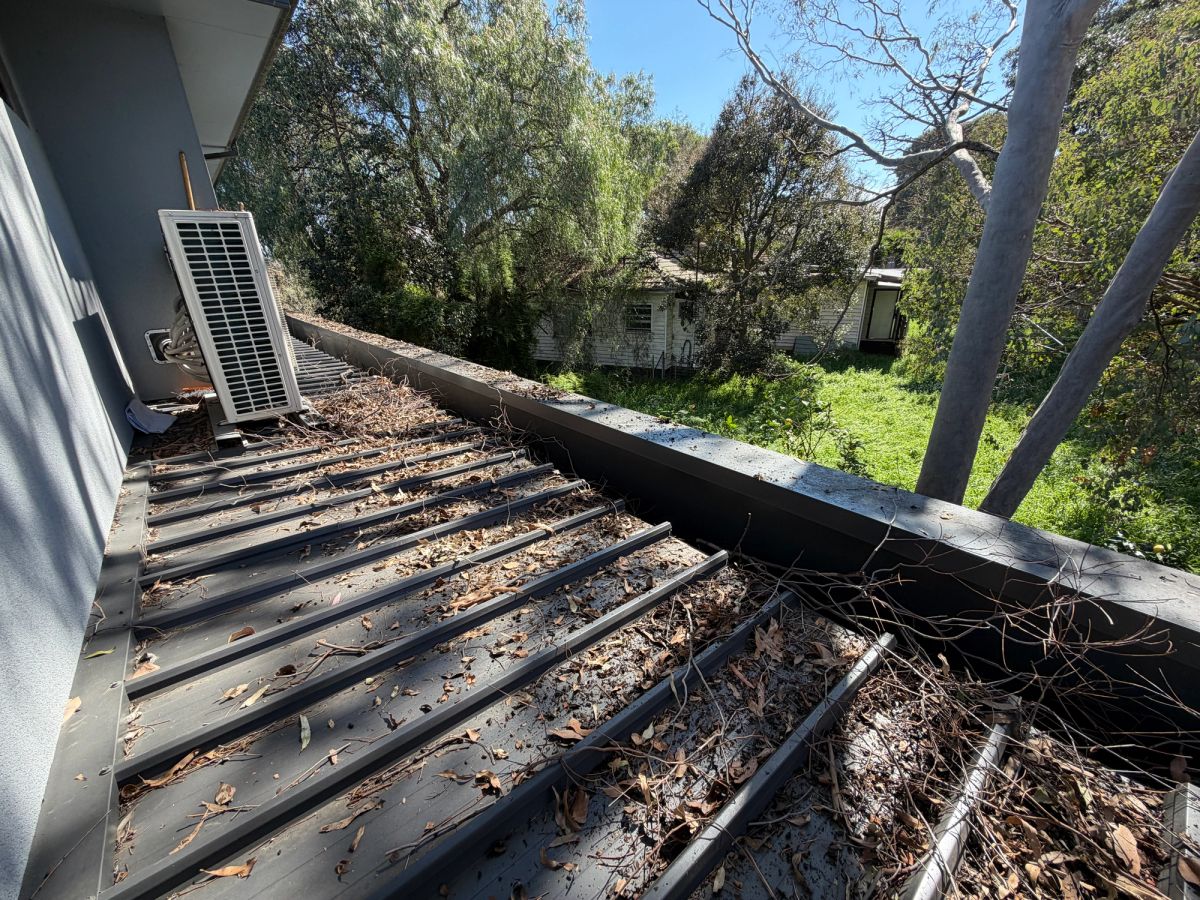
["Gutter clean on a small but awkward roof in Highett, sitting directly under heavy tree cover. Two years of leaves and branches had packed the gutters solid.\n\nThe job was done from the roof rather than the ground: coarse branches out by hand, then vacuum extraction along the gutter line, plus clearing dry leaf litter off the roof. Three hours, one full green bin of debris taken off site."]
Read case study Building washing
A single-storey weatherboard home in Highett booked in for a seasonal exterior clean. Dust, grime and cobwebs had built up over the season on the cladding and glass.\n\nThe weatherboards were soft washed at low pressure and the windows cleaned inside and out, leaving the house looking fresh without any risk to the painted timber.
Read case studyWhat owners and committees ask here
We are a townhouse block. Who has to approve the work?+
Whoever runs the owners corporation, and the practical difference is paperwork rather than method. The scope gets written so it reads the same to a resident, a manager and the committee paying it, and the photographs go to all three. That saves the argument about what was actually done.
There is no side access at all. Can you still work?+
Usually yes, off the street on hose lines, and on glass above the ground floor with a water-fed pole rather than a machine at the back. What matters is that it is established from photographs before the quote, because it changes how long the job takes.
The building is two years old. Does it need anything yet?+
Probably the glass and not much else, unless the builders' clean was skipped or done badly. Render two years old is still doing its job. What does need attention early is anything the build left behind, because residue that has had two summers on it stops lifting the way it would have.
Our place is a 1950s house on a street nobody has touched yet. Is it different?+
The surfaces are, so the method is. Brick of that age has a fired face doing the weatherproofing and mortar that will not take pressure, and the tile roof above it goes porous once its coating wears off. Both come clean with a solution and a low-pressure rinse rather than with force.
Does the construction around us make cleaning pointless for now?+
For walls, often yes, and we will say so. Cutting and plaster dust travels and it will land again. Glass is the exception: dust that gets wet and dries on a pane stops rinsing off, so that is worth keeping on top of even while a site is running next door.
Rated by Melbourne
Highett jobs are posted to our Google profile with before-and-after photos as they finish.