Ivy Removal and Facade Cleaning — Lodge Street, St Kilda West
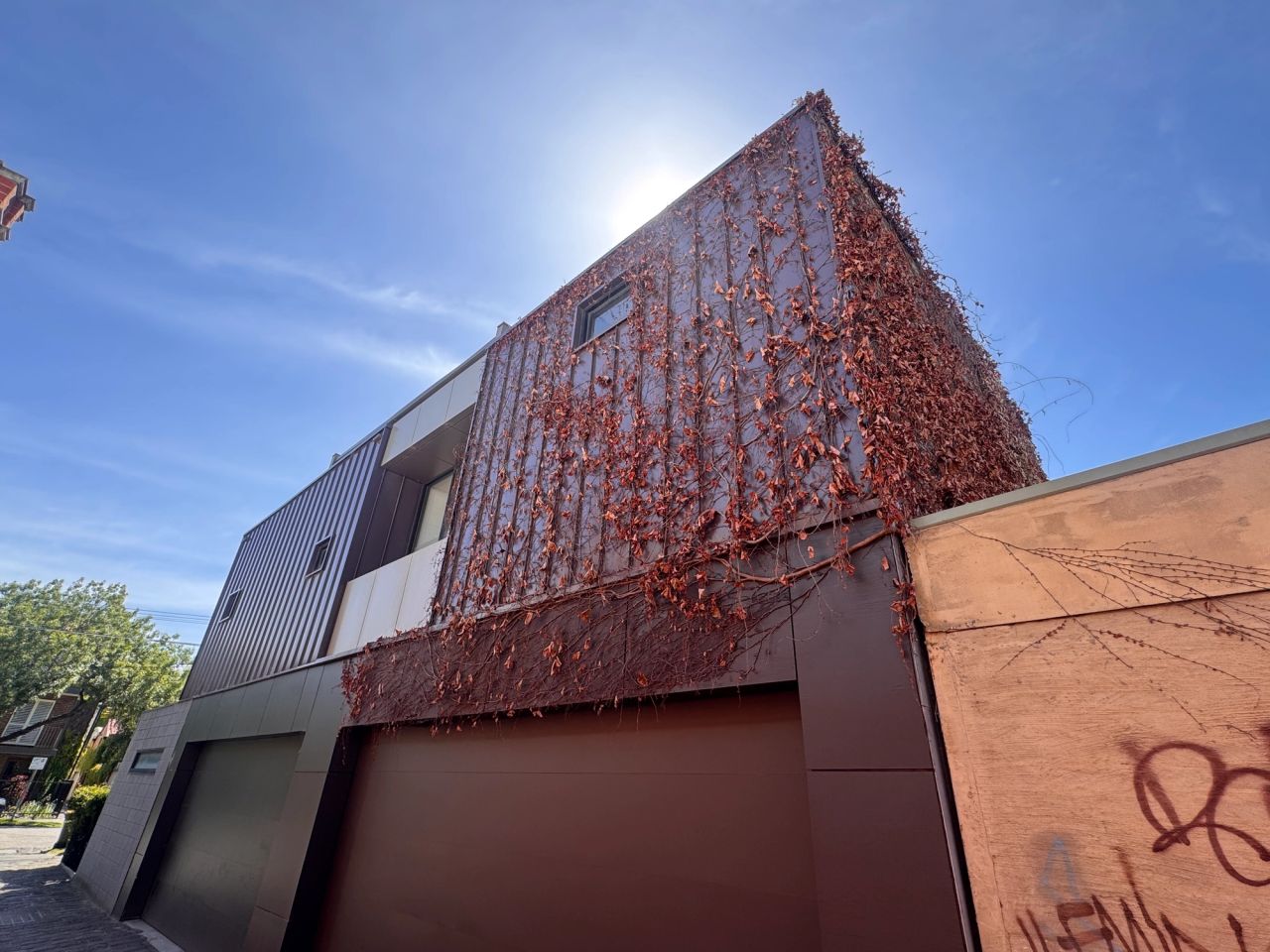
Dried ivy stripped off the walls of a house on Lodge Street, St Kilda West, in January. Pulling the growth down is the quick part — what it leaves behind is the job. Ivy does not lean on a wall, it holds on. Every stem is anchored by hundreds of small adhesive pads, and those stay put when the plant comes away.
- Location
- St Kilda West 3182
- Crew
- 1 tech
The problem
Two things make ivy removal awkward. The pads bond to the surface and do not brush off, so a stripped wall still reads as dirty from a distance — a dark stipple across the whole face. And nobody knows what is underneath until it is off: ivy holds damp against a wall for years, so the surface behind it can be discoloured.
What we did
The growth was taken down by hand first, working the stems loose rather than tearing them, because a hard pull on old ivy brings mortar and render with it. The residue was then washed off under pressure, kept well below what opens up mortar joints. Pressure that shifts adhesive pads instantly is also pressure that strips a wall.
- Dried growth taken down by hand, stems worked loose not torn
- Adhesive residue washed off under controlled pressure
- Pressure kept below the point that opens mortar joints
- Whole wall face worked evenly, not just the stained parts
- Debris collected and removed from site
- Before and after photographs supplied
Result
- Walls clear of growth and of the residue behind it
- Mortar joints and surface finish intact
- Wall surface visible again, damp staining now in plain sight
- No ivy debris left in the garden beds
Nearby case studies
More projects in St Kilda West
 Window cleaning
Skylights cleaned on Canterbury Road, St Kilda West, in October 2024. They had gone a long time without attention, and moss and mould had taken hold around the glass.
Read case study