Exterior Cleaning in St Kilda West
Fifty metres from the water, salt sets the schedule here, not leaf litter. Facades, balconies and glazing, with photos on every job.
- $20M public liability insurance
- Police-checked, WorkSafe compliant
- 5.0 from 170 Google reviews
- Not happy with the work? You don't pay
St Kilda West is the smallest of the three: around 1,410 occupied dwellings on a strip pressed between Beaconsfield Parade and the water. Most of it is apartments and terraces. Nearly half is lived in by the people who own it, so the decision about a building usually sits with someone who looks at it every day.
There's one force here rather than two. The canopy is thin along the foreshore, so leaf litter matters less than it does inland. What matters is what the air does to metal, glass and nineteenth-century brick.
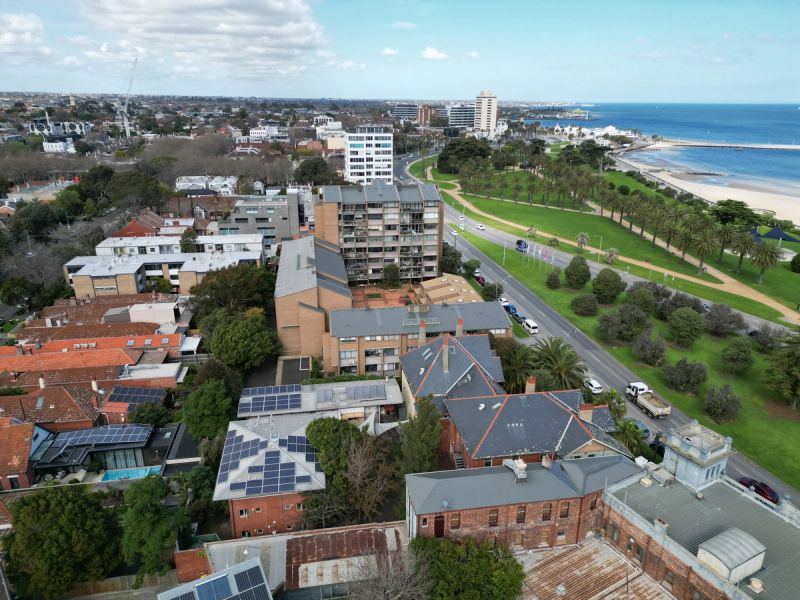
One road, a strip of sand, then the bay
From above the pattern is plain. One road, a strip of sand, then open water — no second row of buildings, no windbreak, nothing to take the edge off what comes in off the bay. The facades on the parade take it first and everything behind them a band less.
AS 4312, the Australian standard for atmospheric corrosion, puts the first 50 metres from a sheltered bay in its high category and the ground behind it a band lower. Beaconsfield Parade and the streets off it sit in that first band. Powder-coated frames, stainless balcony fittings, railings and gates go here before they go anywhere else in the area.
Salt settles on metal and glass, so frames, balcony rails, fixings and glazing get fresh water on a set interval rather than a wash once they look bad. Salt etches glass, and past a point washing no longer clears the haze — restoring a panel becomes a different trade and a different invoice.
Beaconsfield Parade is also simply what people mean when they say they live here. It is the walk down to the pier and the breakwater, where a colony of about 1,400 little penguins has been protected since 1989.
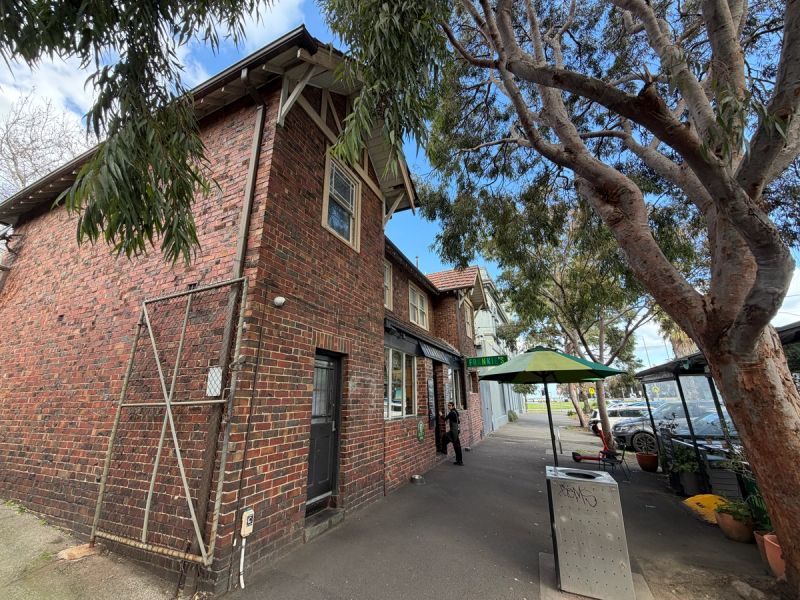
Old brick, lime mortar and a permit question
What is old on this stretch is very old. Some of the few surviving seaside residences of fashionable St Kilda still stand along it, and Shandon at 361 Beaconsfield Parade is on the Victorian Heritage Register — the house, the stables and the ground they sit on.
Victorian brick and lime mortar were never built for constant salt, and high pressure does two things to them at once: it takes the face off the brick, and it drives salt deeper into the wall, where it keeps working long after the job looks finished.
The whole strip sits in the HO444 heritage precinct, shared with Middle Park, and external paint controls apply across it — repainting is a permit question. Cleaning gives a facade its look back without touching the coating, which keeps the matter out of the council's inbox.
Almost nothing on this strip has side access, so the work happens from the front and from the balconies, in full view of the street. Low pressure on the brick, fresh water on the metal, an insured crew, and photos before and after on the same day.
Services we run in St Kilda West
The work we take on around St Kilda West. Each card opens the full service page.
Gutter cleaning
Vacuumed, downpipes flushed and flow-tested, photo report the same day.
See detailsSolar panel cleaning
Panels washed with demineralised water, frames included, output stops dropping off.
See detailsRoof cleaning
Terracotta and Colorbond, moss and lichen treated to slow regrowth.
See detailsWindow cleaning
Glass, frames and tracks, inside and out, streak-free on the dry check.
See detailsPressure cleaning
Driveways, paving and concrete brought back without scarring the surface.
See detailsSoft washing
Render, cladding and painted surfaces washed at low pressure.
See detailsJobs we've finished in St Kilda West
 Window cleaning
Skylights cleaned on Canterbury Road, St Kilda West, in October 2024. They had gone a long time without attention, and moss and mould had taken hold around the glass.
Read case study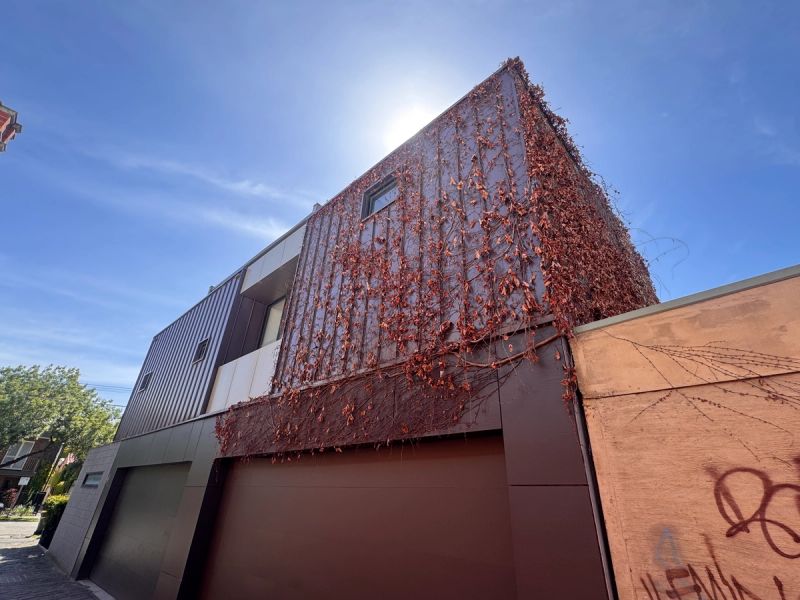
Dried ivy stripped off the walls of a house on Lodge Street, St Kilda West, in January. Pulling the growth down is the quick part — what it leaves behind is the job.
Read case studyQuestions we get from owners here
Why does balcony glass stay cloudy after a wash?+
Because it isn't dirt any more. Salt etches the surface of the glass, and once that's happened, washing takes off what's sitting on top but not what's been eaten into it. Restoration is a separate trade. Rinsing before it gets there is the cheap version.
Do I need a permit to repaint the outside?+
Likely. St Kilda West falls in the HO444 heritage precinct, shared with Middle Park, and external paint controls apply there. Cleaning is a different matter — it returns the surface without changing the coating. Worth confirming your address with Port Phillip before any repaint.
Our building is on the heritage register. What changes?+
More than the overlay does. A place on the Victorian Heritage Register needs a permit before the surface is altered, and the registration can cover outbuildings and the site, not just the facade you were thinking about.
Why not just use high pressure on the brick?+
On nineteenth-century brick and lime mortar it does double damage: it strips the weathered face and pushes salt further into the wall. The wall looks cleaner for a season and worse for the next twenty years.
Do gutters need the same attention as inland?+
Less often, usually. The canopy along the foreshore is thin, so there's not much falling into them. The schedule here is set by salt on the metal and glass, not by leaves in the gutters.
Nearby suburbs we cover
Rated by Melbourne
St Kilda West jobs are posted to our Google profile with before-and-after photos as they finish.