Exterior Cleaning in Middle Park
Edwardian terraces between Canterbury Road and the beach, with box gutters hidden behind the parapets. Insured crew, photos on every job.
- $20M public liability insurance
- Police-checked, WorkSafe compliant
- 5.0 from 170 Google reviews
- Not happy with the work? You don't pay
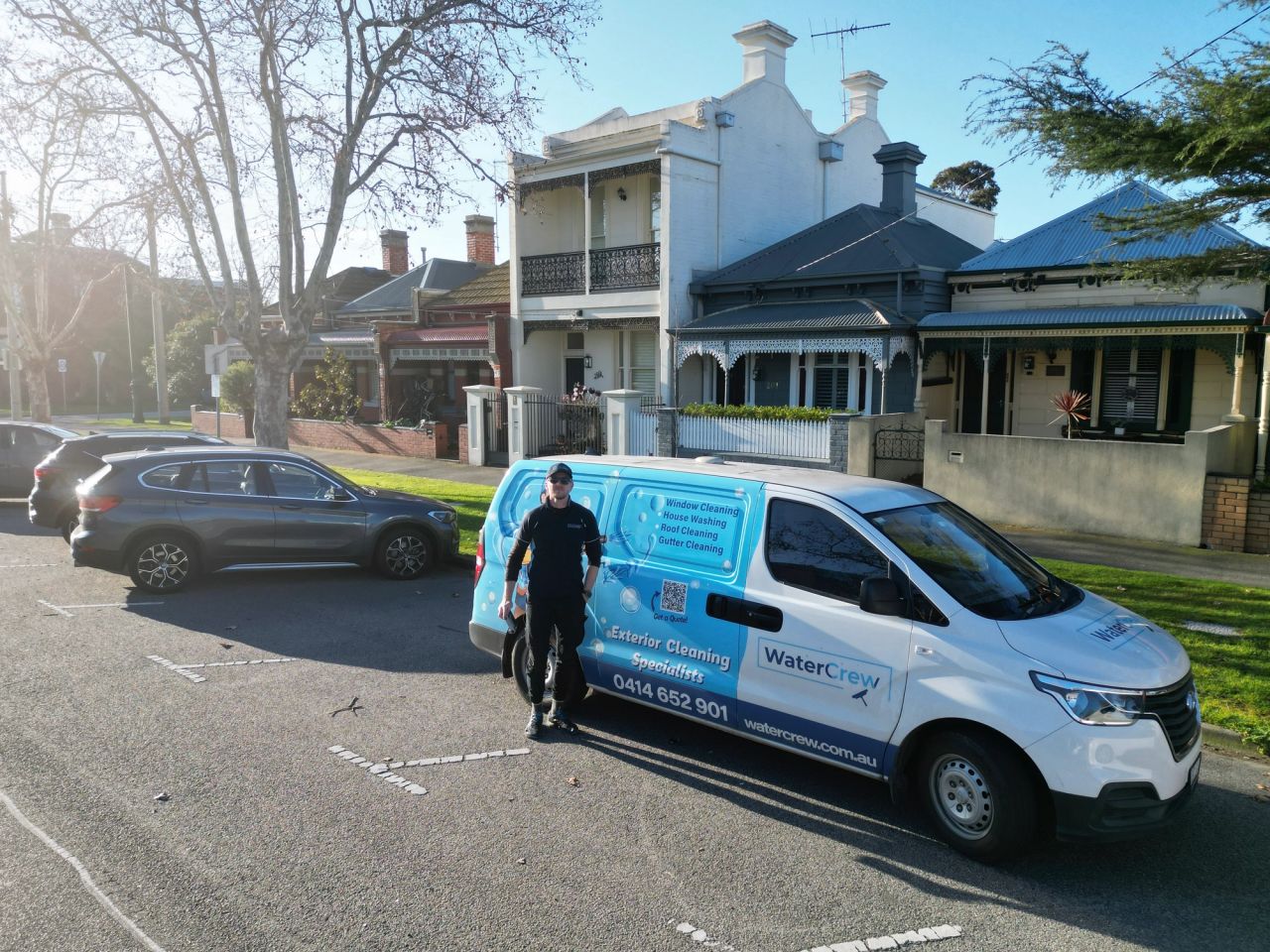
Middle Park is small and it barely changes. The grid runs from Canterbury Road to the beach, most of it Edwardian terraces built to the same handful of patterns, and two thirds of it is lived in by owners. Four in ten of those own outright.
That sets what the work is for. Nobody here is preparing a house for sale or trying to make it look like something else — the streets have been protected since 1987 precisely because they don't. The job is keeping what's there in the condition it's already in.
The gutter you can't see from the street
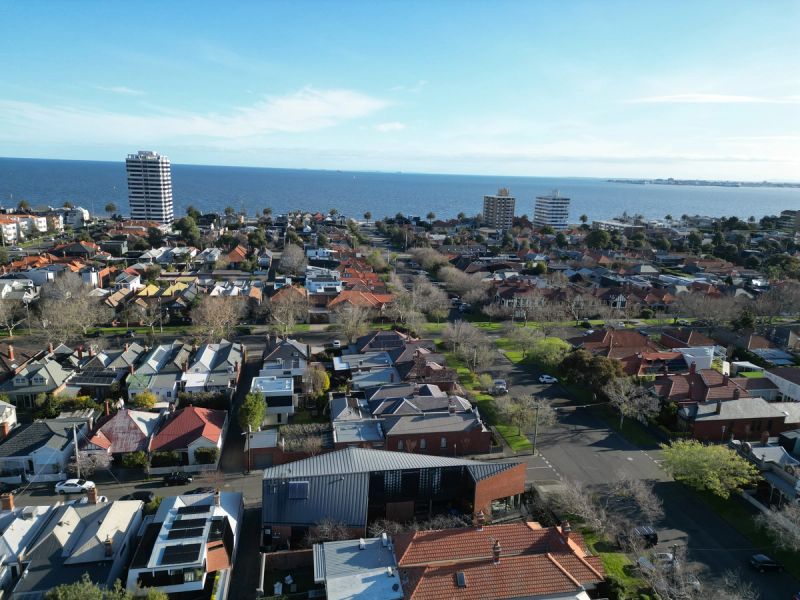
From above you can see the thing the heading denies. On a terrace like these the gutter is not on the edge of the roof — it runs as a box between the roof sheet and the back of the parapet, and from the footpath there is nothing to look at. This is the only angle from which most owners ever see their own.
That position changes what a blockage does. An ordinary gutter overflows down the outside of the wall and you notice. A box gutter behind a parapet has nowhere to spill except inwards, so the first sign is often a stain on a top-floor ceiling rather than anything on the front of the house.
Leaves bank along the join where the sheet meets the parapet wall, and they stay there because nothing washes them off. The Richardson Street job on this page was about thirty metres of exactly that, cleared and the outlet flushed in a single visit.
The other thing this angle shows is how short the suburb is. From the water to Canterbury Road is the whole of it, so the corrosion band the standard puts over the first fifty metres from a sheltered bay covers a good part of the grid. Here there is barely such a thing as further from the shore.
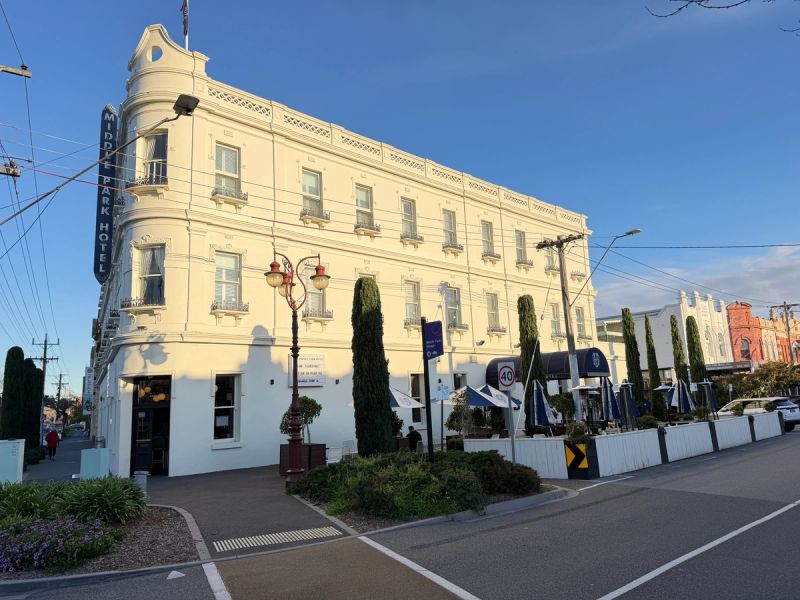
Even the pub sits in a heritage precinct
The value on these streets is in the run, not the single house. Page, Nimmo, Wright and Harold Streets hold some of the most complete Victorian and Edwardian frontages in Melbourne, and the protection that covers them was written in 1987 around how consistent they are.
That consistency is why damage carries. A moulding knocked off one parapet, or a patch of render cleaned unevenly, breaks a line that reads the length of the block. The neighbours notice before the owner does.
It is also why colour is a planning matter here rather than a personal one. External paint controls apply across the precinct, so cleaning is often the only route back to a decent-looking front: it takes off what has settled without touching the coating underneath.
The commercial strip is no different. Armstrong Street village sits in a heritage precinct of its own, HO445, and external paint controls apply there too. The hotel on the corner is what everyone navigates by, and the rule sitting over the shops around it is the same one that sits over a terrace three streets back.
Services we run in Middle Park
The work we take on around Middle Park. Each card opens the full service page.
Gutter cleaning
Vacuumed, downpipes flushed and flow-tested, photo report the same day.
See detailsSolar panel cleaning
Panels washed with demineralised water, frames included, output stops dropping off.
See detailsRoof cleaning
Terracotta and Colorbond, moss and lichen treated to slow regrowth.
See detailsWindow cleaning
Glass, frames and tracks, inside and out, streak-free on the dry check.
See detailsPressure cleaning
Driveways, paving and concrete brought back without scarring the surface.
See detailsSoft washing
Render, cladding and painted surfaces washed at low pressure.
See detailsJobs we've finished in Middle Park
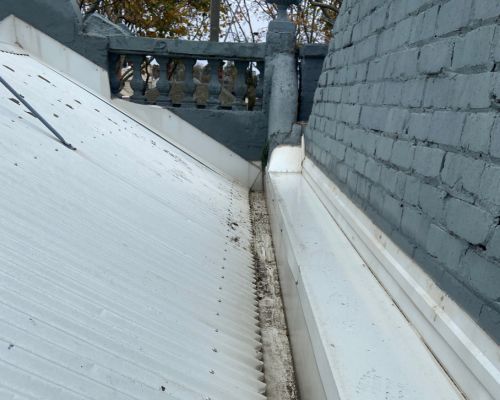
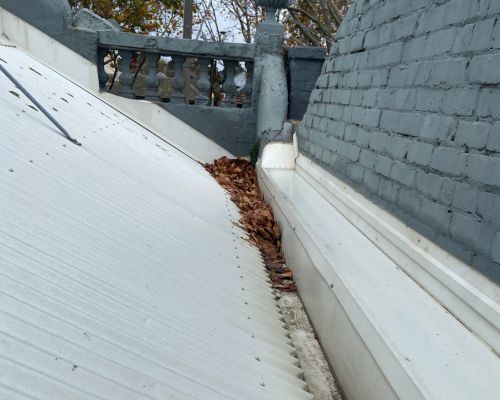
A two-storey terrace in Middle Park with a box gutter running between the roof sheet and the parapet wall — around 30 metres of it, with dried leaves banked along the join.
Read case studyQuestions we get on these streets
How far from the water are we, really?+
Not far, anywhere in the suburb. The whole residential grid fits between Canterbury Road and Beaconsfield Parade, so the sheltered-bay corrosion band covers a good part of it. There isn't really an inland half of Middle Park the way there is in bigger suburbs.
Do I need a permit to repaint the outside?+
Most likely. Middle Park sits in the same heritage precinct as St Kilda West, and external paint controls apply across it, with the Armstrong Street shops covered separately. Worth confirming your address before you choose a colour rather than after.
Can you tell if the box gutter is blocked without going up?+
Usually not from the ground. The parapet hides it, and by the time anything is visible inside the house the water has already been somewhere it shouldn't. That's the argument for checking it on a schedule instead of waiting for a sign.
We don't want the place looking renovated. Is that a risk?+
No. Cleaning takes off what has settled on the surface, it doesn't change the surface. The render, the paint and the patina stay as they are — the house looks like itself on a better day, not like a different house.
The parapet is above three metres. Will council deal with graffiti up there?+
No. Port Phillip draws the line at three metres, and on a two-storey terrace the parapet sits above it. The elements that give the street its character are exactly the ones the council service doesn't reach.
Nearby suburbs we cover
Rated by Melbourne
Middle Park jobs are posted to our Google profile with before-and-after photos as they finish.