Exterior Cleaning in Bentleigh
Clinker brick from the 1950s and render from this decade, standing on the same street. Two surfaces, two methods. Insured crew, photos on every job.
- $20M public liability insurance
- Police-checked, WorkSafe compliant
- 5.0 from 170 Google reviews
- Not happy with the work? You don't pay
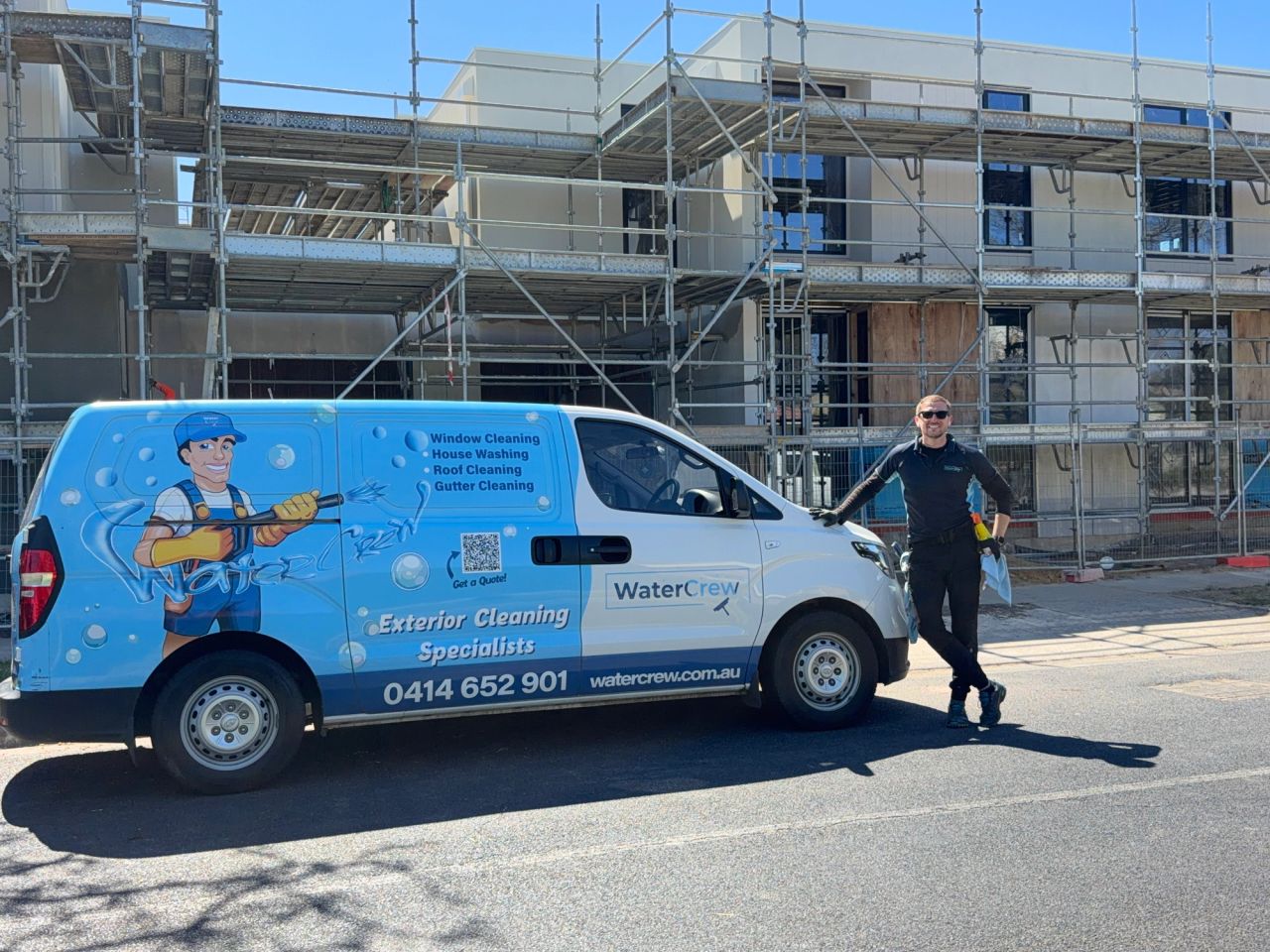
Bentleigh is around eighteen thousand people thirteen kilometres south-east of the city, and it is halfway through replacing itself. The original stock is 1940s and 1950s clinker brick on blocks of six to seven hundred square metres, and a good share of those blocks now carry something built this decade instead.
That matters more than it sounds, because clinker brick and new render are not the same job. Clinker is over-fired and hard-faced and takes a surprising amount. Render is a thin coloured skin that a lance cuts straight through. On a street where both are standing, the method has to change at the fence line.
The other local constant is access. Blocks here run deep rather than wide, and side access is often narrow enough that whether a machine reaches the back garden is settled before anybody quotes. Where it does not reach, the work runs off the street on hose lines instead, and that is worth knowing in advance rather than on the morning.
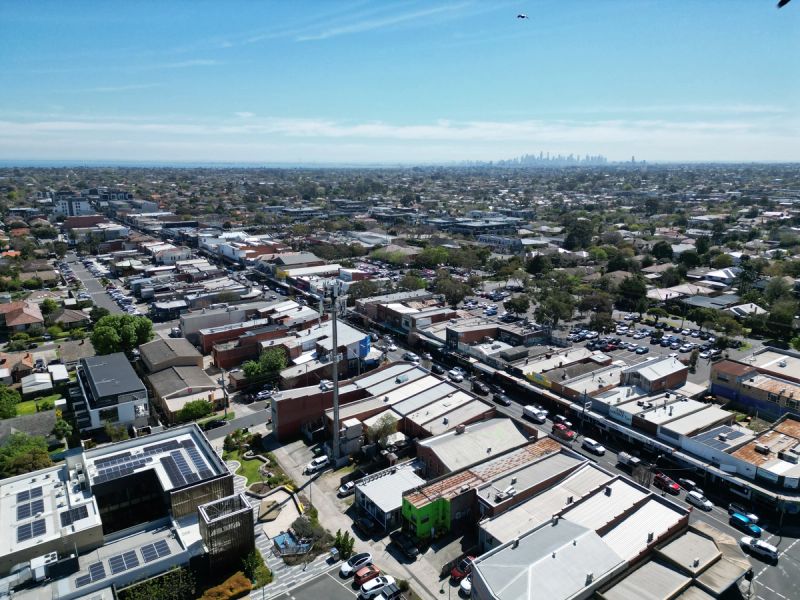
What the aerial shows either side of Centre Road
Centre Road is the biggest strip in this part of Melbourne: more than two hundred and fifty businesses, three supermarkets, and a run of delis, cake shops and restaurants that pulls people in from the suburbs either side of it.
From the air, though, it is the roofs either side that tell you about the place rather than the shops. They come in two generations and you can pick them apart by colour: the concrete and terracotta tile of the post-war houses, and the flat coated steel of everything built to replace them.
They do not clean the same way at all. Concrete tile goes porous once its surface coating has worn off, so growth roots into the body of the tile instead of sitting on it, and clearing that is slow work at low pressure. Coated steel is the opposite: the coating is tough, the growth sits on top of it, and the real risk is abrasion rather than force.
So two houses side by side, same street, same trees overhead, can be a different afternoon's work. That is the whole argument for pricing roof cleaning off the material rather than off the footprint.
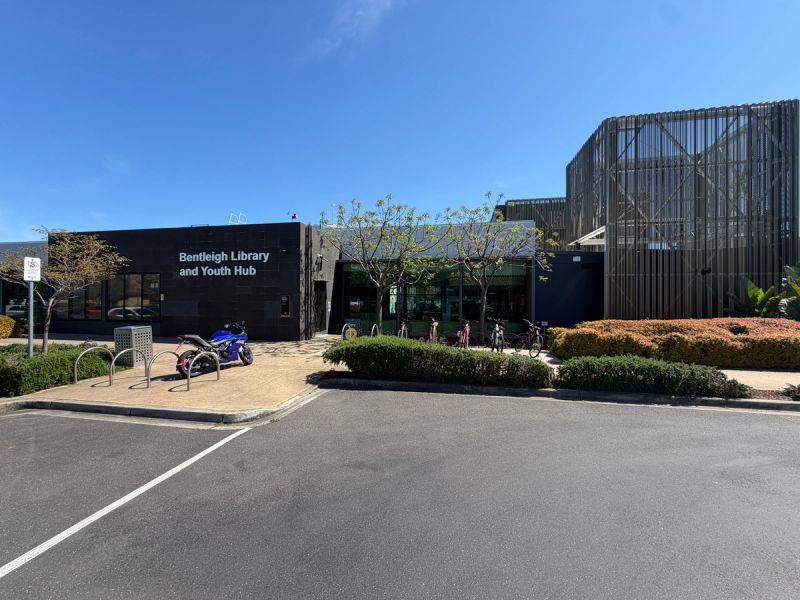
A suburb that keeps rebuilding itself
The library is the public version of what is happening on every street. The original building went up in 1965. It was rebuilt and reopened in October 2022 as the Bentleigh Library and Youth Hub, a third larger than it was, with an internal courtyard where the old floor plan ran out.
The houses are doing the same thing one block at a time. Around Centre Road, the station and Jasper Road especially, post-war houses come down and double-storey townhouses go up where they stood.
For us that puts two opposite jobs on the same round. A finished build wants a builders' clean: adhesive off the glass, render splash off the frames, construction dust flushed out of the sliding channels, and none of it scraped dry on glazing nobody has touched yet. That is post-construction window cleaning, and it is what we did on Jasper Road.
The house next door wants the reverse: seventy years of weathering taken off clinker brick without taking the face off the brick with it. A solution, time and a low-pressure rinse, which is house washing rather than pressure cleaning.
Both of those addresses are on this page. They were different work with different products on streets a few minutes apart, and that is the ordinary condition of this suburb rather than a coincidence.
Services we run in Bentleigh
Gutter cleaning
Vacuumed, downpipes flushed and flow-tested, photo report the same day.
See detailsSolar panel cleaning
Panels washed with demineralised water, frames included, output stops dropping off.
See detailsRoof cleaning
Terracotta and Colorbond, moss and lichen treated to slow regrowth.
See detailsWindow cleaning
Glass, frames and tracks, inside and out, streak-free on the dry check.
See detailsPressure cleaning
Driveways, paving and concrete brought back without scarring the surface.
See detailsSoft washing
Render, cladding and painted surfaces washed at low pressure.
See detailsJobs we've finished in Bentleigh
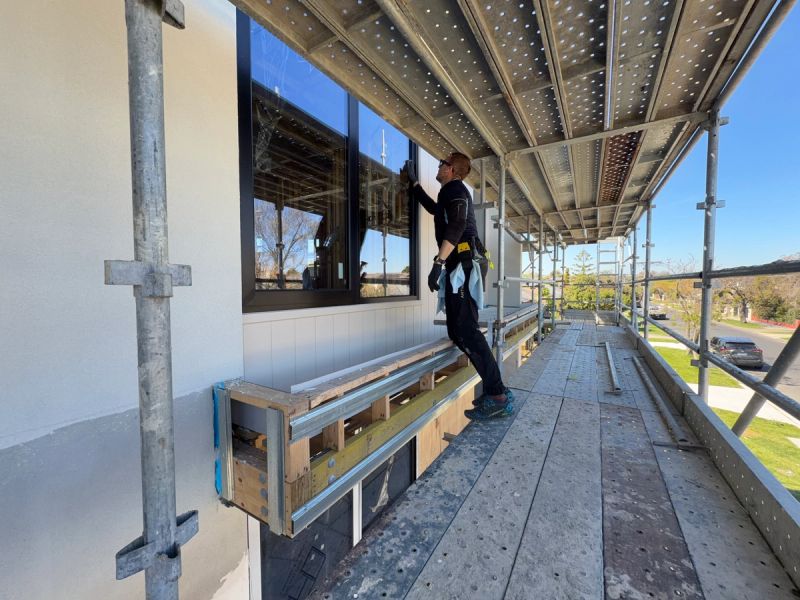 Post-construction
Post-construction window clean on Jasper Road, Bentleigh. The windows still carried their transport film, and the adhesive left behind had to be dissolved before the glass could be cleaned properly.
Read case study Building washing
A full exterior clean on Clapperton Street, Bentleigh in January: rendered walls soft washed, windows done inside and out, and the driveway cleaned. One visit, three jobs.
Read case study Window cleaning
Three kinds of glass on one property in Bentleigh, cleaned at the end of summer: windows inside and out, the frameless pool fencing, and skylights on the terrace nobody had been able to reach.
Read case studyWhat owners here ask before booking
Our house is clinker brick. Does that change anything?+
It changes the pressure, not the outcome. Clinker is over-fired, so the face is hard and it takes more than most brick does, but the mortar between it does not. Blow the joints out and you have created a water path into the wall. So the wall gets a solution and a low-pressure rinse, and the joints are left where they are.
The block next door is a building site. Is there any point cleaning now?+
Usually not the walls, and yes to the glass if it is bothering you. Cutting and plaster dust travels and it will land again next week, so a full wash before the site finishes is money spent twice. What is worth doing early is anything that will bond if it is left, because dust that gets wet and dries on glass stops rinsing off.
Our side access is narrow. Can you still get to the back?+
Usually, and where we cannot we work off the street on hose lines instead. Either way it is settled from photographs before the quote rather than discovered on the day, because it changes how long the job takes and we would rather price it than argue about it afterwards.
We have just moved into a new townhouse. Is that a window clean?+
Probably not. If the glass still carries adhesive from the protective film, label residue or render splash, that is a builders' clean and it needs a different method. An ordinary window pass will not shift it, and the wrong tool on glazing that new leaves marks you cannot take back.
How often does a house here need doing?+
It depends on the aspect more than the age. Streets here are tree-lined and the blocks are deep, so a shaded southern wall and a roof under a canopy want more attention than the front elevation does. A house standing in the open often goes years between washes, and we will say so rather than book you in.
Rated by Melbourne
Bentleigh jobs are posted to our Google profile with before-and-after photos as they finish.