Exterior Cleaning in Elwood
Elwood takes it from three sides: salt off the bay, damp from below, leaf litter from above. Insured crew, before-and-after photos on every job.
- $20M public liability insurance
- Police-checked, WorkSafe compliant
- 5.0 from 170 Google reviews
- Not happy with the work? You don't pay
Elwood sits low. The canal that drains Elster Creek runs through it, the ground is at the bottom of the catchment, and the water comes up fast enough that there's little useful warning. That isn't background here. It decides what the buildings need.
Add the bay at the front and mature trees behind, and a facade in Elwood takes it from three directions at once: salt off the water, damp from underneath, leaf litter from above. Most of the housing is flats, so what gets decided is usually decided by an owners corporation.
What the water leaves when it drops
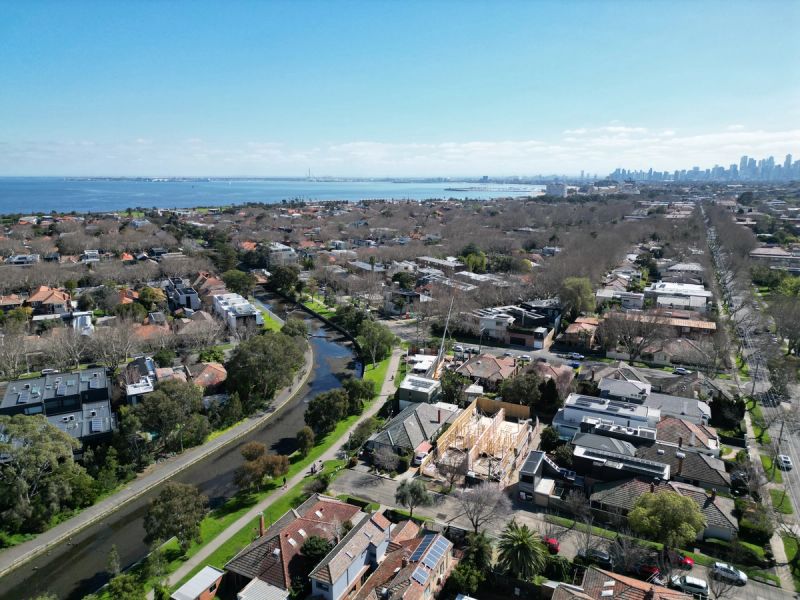
From above the shape of it is obvious. The canal cuts straight through towards the beach with the city standing beyond it, and the ground either side of the channel sits lower than the water gets when the catchment fills. What reads as a pleasant line through the suburb is a drain doing a job.
Silt is the part people underestimate. It goes down as sludge and sets like a thin render over brick, concrete and paving, and the window where it comes off easily is measured in days rather than weeks.
Elwood floods more often than the rest of Port Phillip because it sits at the bottom of the Elster Creek catchment. Melbourne Water is duplicating the main drain and the council runs a five-year catchment plan, but neither changes what happens to a building on the day.
The work after water is its own job: silt off the base of walls and paving, drains and downpipes cleared, and the lower metre watched for what stays damp afterwards. Blocked gutters make all of it worse. In a suburb where the level rises this quickly, clearing them before storm season isn't tidying up.
Half the roofs here shed water, half of them hold it
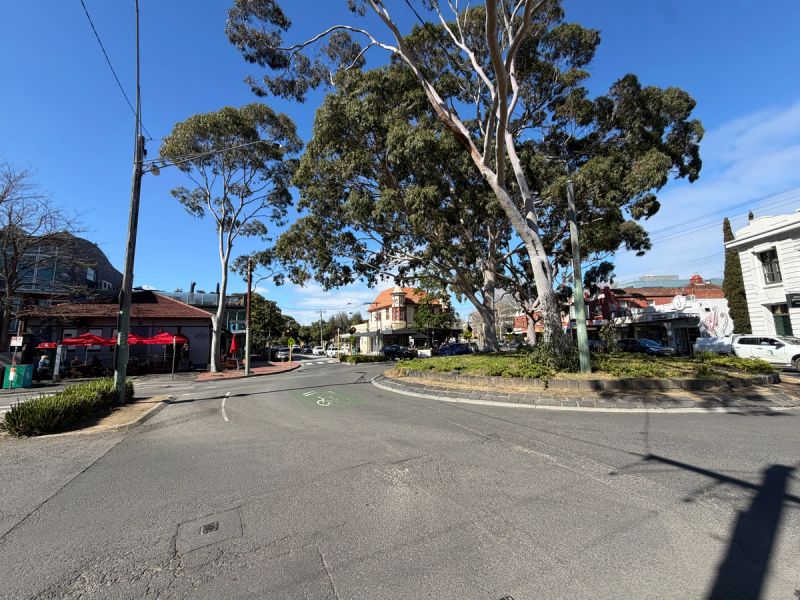
Broadway runs down to the roundabout where half of Elwood's streets meet, and that junction is what people mean when they say they live here. Cafes on the corners, a church across the road, and shopfronts the same age as the flats behind them.
Look along a street here and the rooflines alternate. Pitched tile and iron on the houses, flat and parapeted on the interwar blocks, and roughly an even split between the two. Which one you have decides most of what follows, because they fail in opposite ways.
A pitched roof drops its leaf litter. A flat one keeps it, and the outlets under it were sized to 1930s standards, which matters when the same roof meets the storm that fills the canal. On the flat blocks, clearing those outlets is what keeps water out of the top floor.
The flat-roofed stock is also why Elwood turns up on architectural walking tours: curved corners, bay windows and original render, thickest along Ormond Esplanade. Those surfaces, with terrazzo entries and steel window frames, do not take high pressure or aggressive chemistry. The finish comes away with the grime and does not come back.
Services we run in Elwood
The work we take on around Elwood. Each card opens the full service page.
Gutter cleaning
Vacuumed, downpipes flushed and flow-tested, photo report the same day.
See detailsSolar panel cleaning
Panels washed with demineralised water, frames included, output stops dropping off.
See detailsRoof cleaning
Terracotta and Colorbond, moss and lichen treated to slow regrowth.
See detailsWindow cleaning
Glass, frames and tracks, inside and out, streak-free on the dry check.
See detailsPressure cleaning
Driveways, paving and concrete brought back without scarring the surface.
See detailsSoft washing
Render, cladding and painted surfaces washed at low pressure.
See detailsJobs we've finished here in Elwood
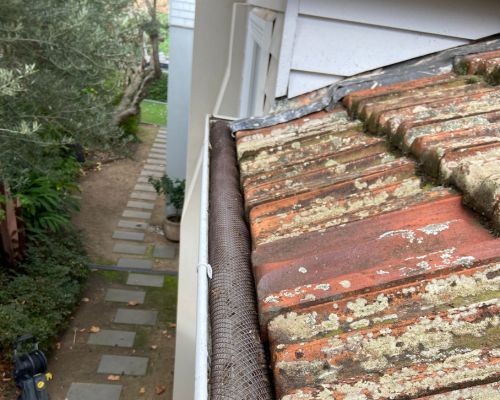
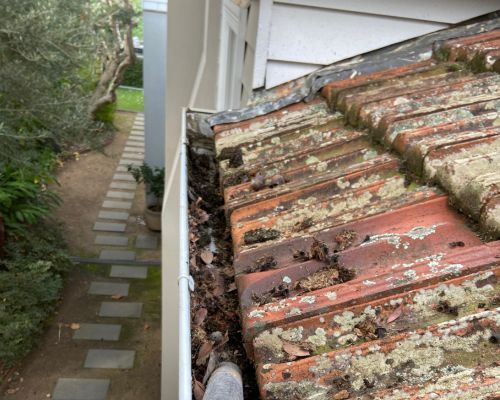
A double-storey home in Elwood with 90 metres of guttering under a terracotta tile roof, and gutter guard along the full run. The debris was fine — moss, humus and lichen shed from the tiles themselves.
Read case study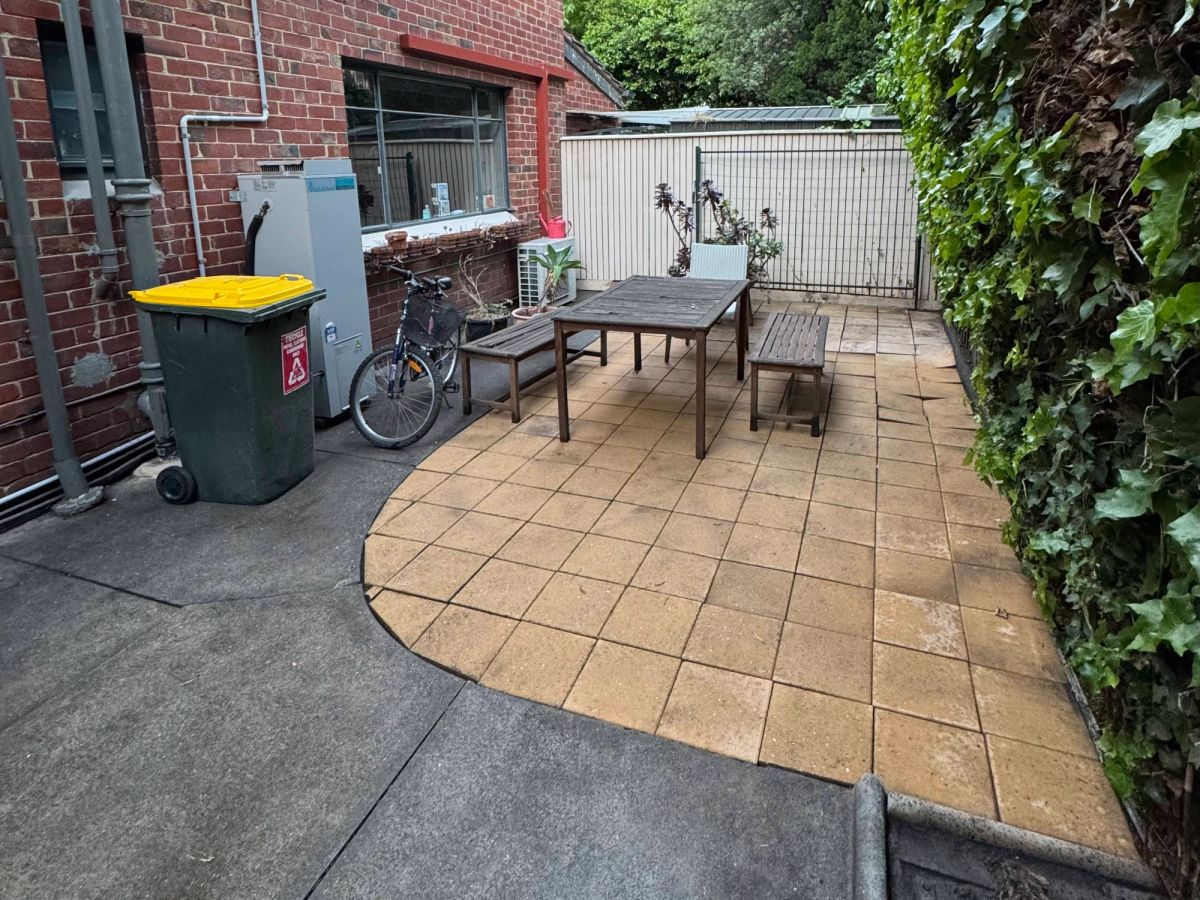
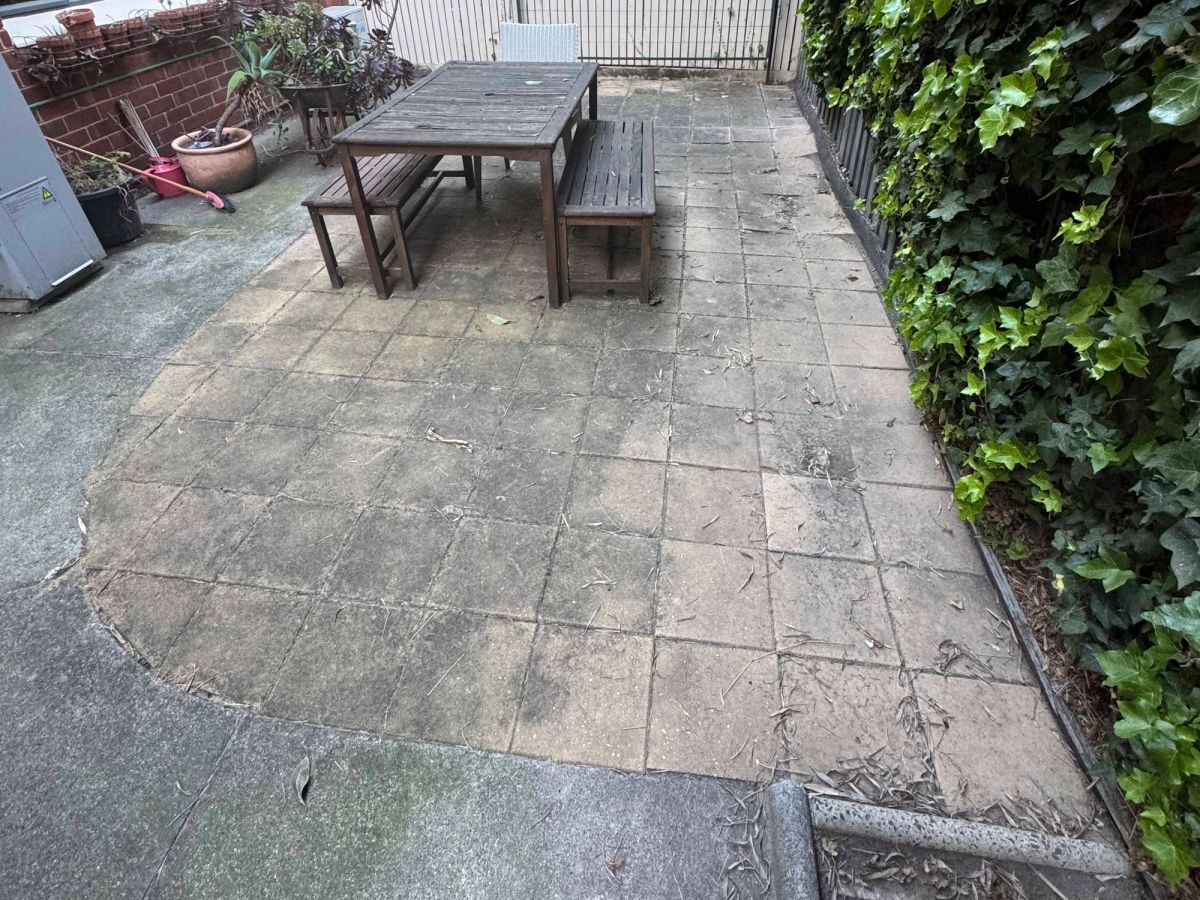
A body corporate block on Ruskin Street, Elwood, kept on a standing cleaning arrangement rather than booked when someone complains. Driveway, rear patio and the paths between them, all of it in a single day.
Read case study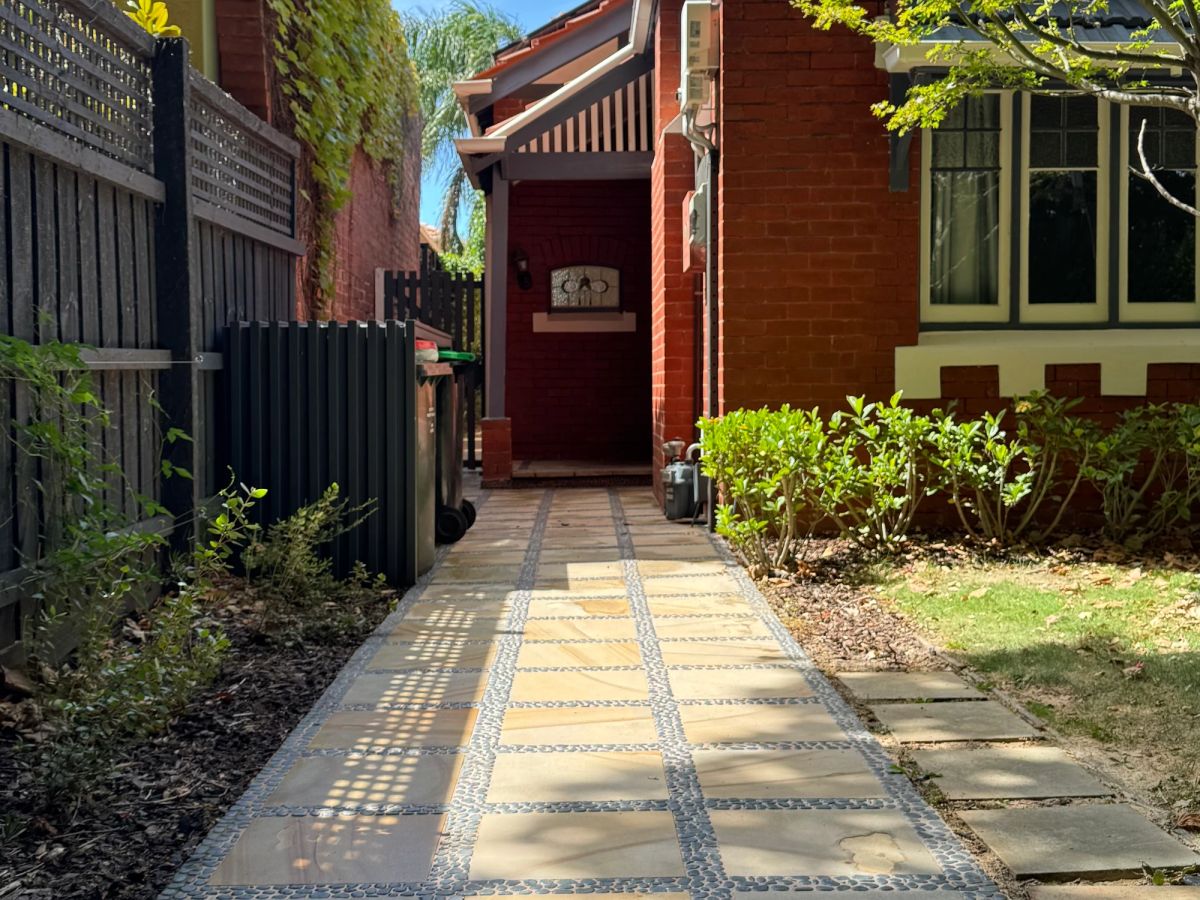
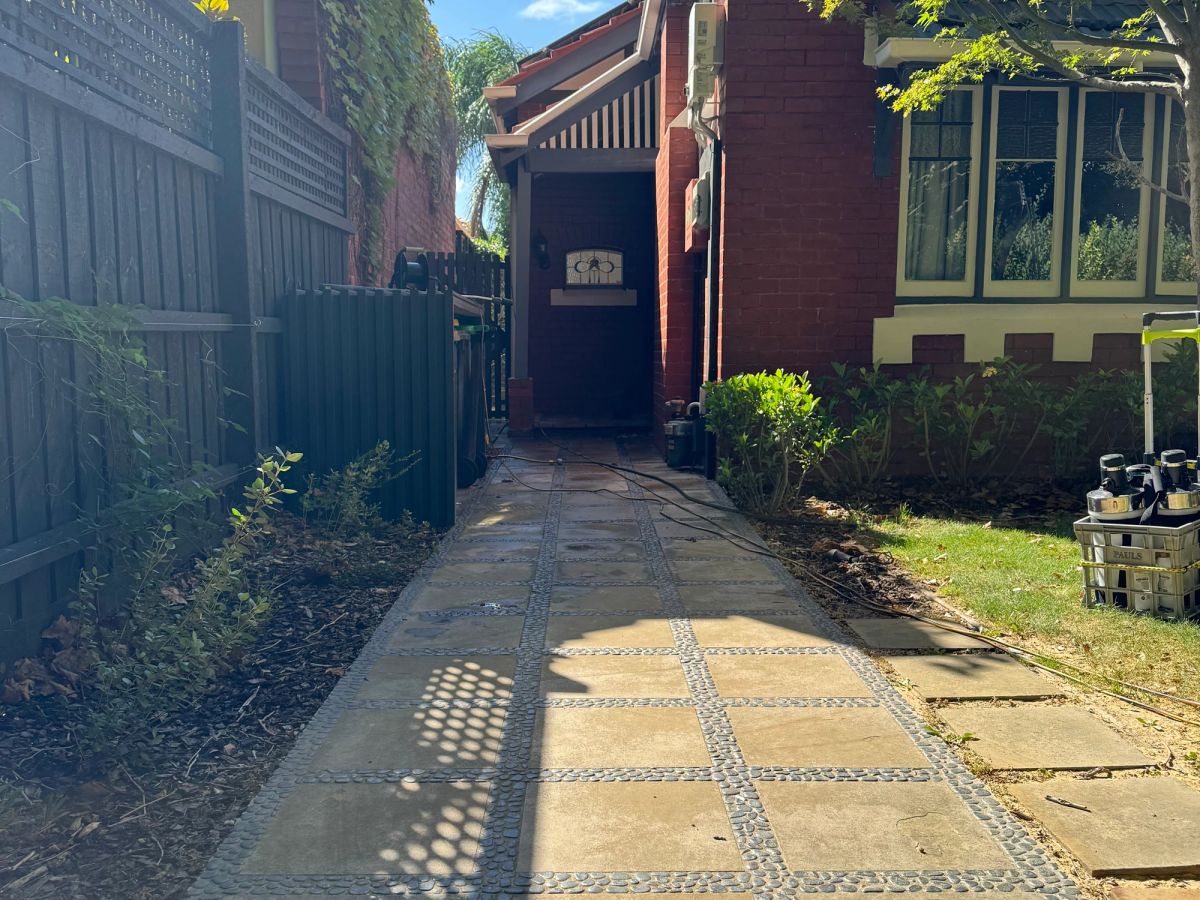
A driveway on Ruskin Street, Elwood, cleaned at the end of February. Driveways never soil evenly: the wheel tracks stay comparatively clean because tyres scrub them, while the centre strip and edges hold everything else.
Read case studyQuestions we get from owners and managers
Do I need a permit to repaint the outside?+
Probably. Port Phillip's schedule marks external paint controls as applying across Elwood's heritage precincts, which is stricter than neighbouring councils. The canal precinct is the exception, though it carries tree controls instead. Cleaning is a different matter: it restores the surface without changing the coating.
Our block is in HO8. What's happening with the review?+
It's paused. The review recommended adding 58 places and moving 18 into a new precinct, but the council stopped short of implementing it while it works through flooding and sea level rise in Elwood's heritage areas. Until the gradings settle, anything that permanently changes a surface is worth avoiding.
How soon after water should the clean-up start?+
Days, not weeks. Wet silt lifts off brick, render and paving with far less work than silt that has dried and set, and the same goes for whatever washed into the drains and downpipes.
Why is the moss always on the bottom of the wall?+
Because the ground stays damp. Low-lying blocks hold moisture around the base long after the surface has dried, and shaded walls and paths never get the sun that would clear it.
Council removes graffiti. Why call a contractor?+
Port Phillip does, within ten working days, and won't go above three metres, onto vacant buildings, or onto assets it doesn't own. Ten working days is fine for a back fence and useless for a shopfront on Glen Huntly Road.
Nearby suburbs we cover
Rated by Melbourne
Elwood jobs are posted to our Google profile with before-and-after photos as they finish.